


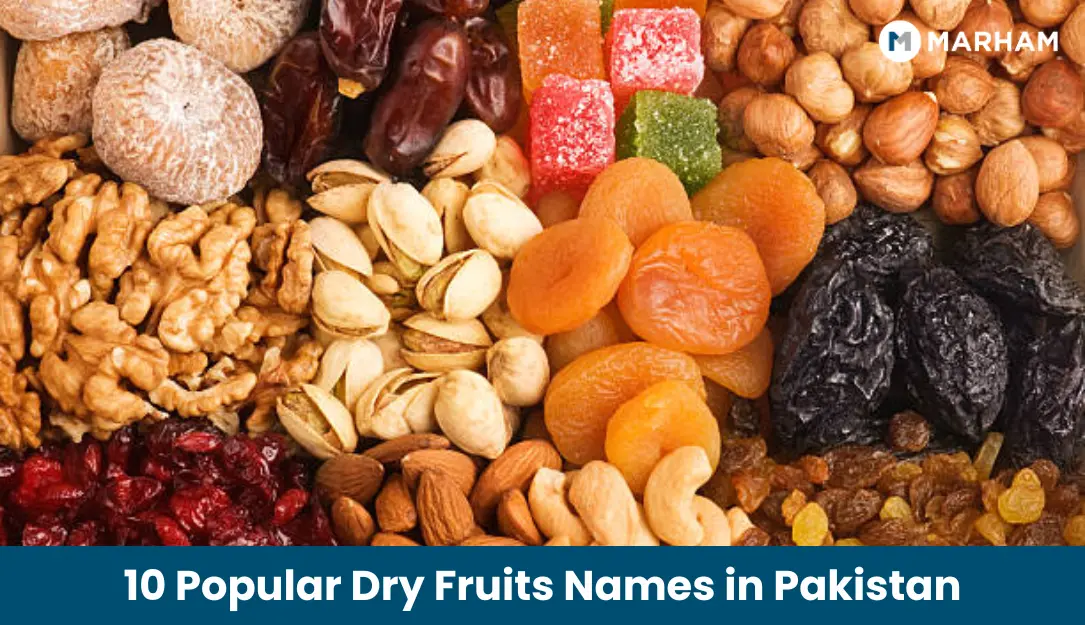
Do you often hear dry fruits being recommended in winters or during Ramadan but feel unsure about their names or uses? Many people consume them regularly without fully understanding the dry fruits name mentioned in diet plans, home remedies, or health advice. In Pakistan, dry fruits are part of everyday food culture, valued for their long shelf life, energy content, and role in traditional eating habits.
Pakistan’s dry fruits sector relies on both domestic production and imports. Regions such as Balochistan, Khyber Pakhtunkhwa, and Gilgit-Baltistan grow key varieties including almonds, walnuts, apricots, and pistachios. Apricots lead production with over 124,000 tonnes annually, followed by almonds and walnuts. Pistachios are produced in smaller quantities, which is why Pakistan imports a significant share of them from regional markets.
Consumption of dry fruits increases sharply during winter, rising by up to 49%, as they are considered warming and nourishing. Dates from Sindh, which accounts for nearly half of national production, are eaten year-round and widely during Ramadan. Almonds, walnuts, and pistachios remain among the most commonly consumed dry fruits in Pakistan due to their use in snacks, desserts, and daily meals.
Introduction to Popular Dry Fruits in Pakistan
This section explains the dry fruits that are most commonly used in Pakistan and why they are familiar to most households. It focuses on dry fruits that are easily available in local markets, regularly included in meals, and often mentioned in health or dietary discussions. The aim is to help readers recognize these items by name and understand their everyday relevance.
The dry fruits discussed here are not limited to festive or occasional use. Many of them are part of routine diets, whether eaten on their own, added to milk, mixed into desserts, or used in traditional dishes. Some are locally produced, while others are imported, but all are widely consumed across different regions of the country.
By understanding the dry fruits name and their common usage, readers can make more informed food choices and follow dietary advice with greater clarity. This introduction sets the base for identifying each dry fruit and understanding why it remains popular in Pakistan.
Popular Dry Fruits Name Commonly Used in Pakistan
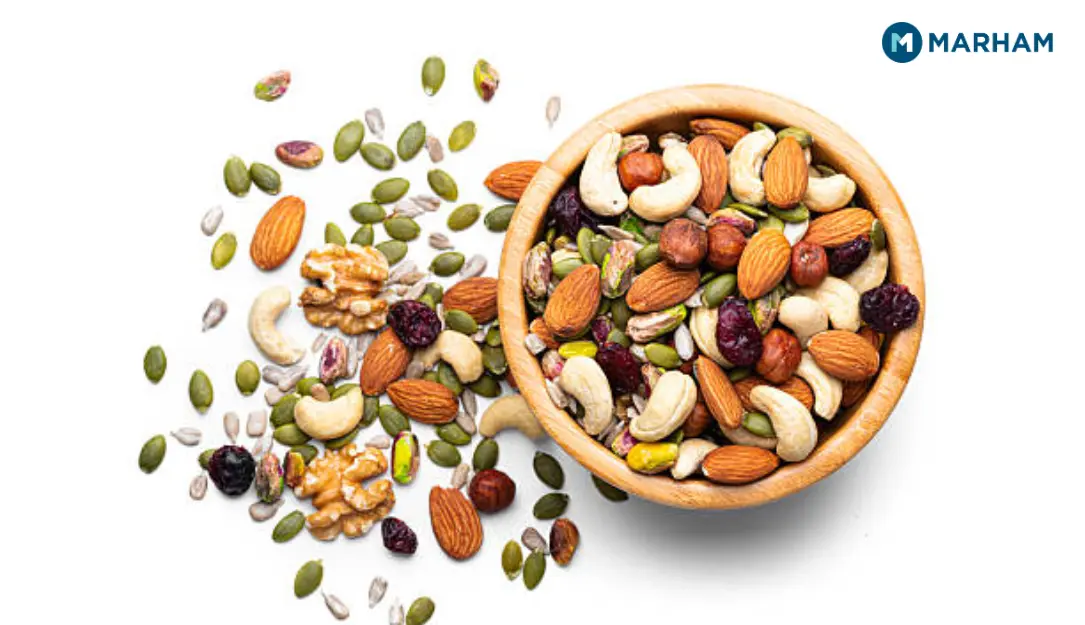
This section covers the dry fruits that are most familiar to Pakistani households and are easily found in local markets. These items are used regularly in homes, whether as snacks, added to meals, or included in seasonal diets. Knowing the dry fruits name helps readers clearly identify what is being referred to in recipes, diet plans, or general health discussions.
Almond (بادام)
Almond is one of the most widely consumed dry fruits in Pakistan and is commonly associated with daily nourishment. Many families soak almonds overnight and eat them in the morning, especially during winters. Almonds are also added to milk, kheer, and desserts. They are valued for their healthy fats and are often included in routine diets in small quantities.
Walnut (اخروٹ)
Walnuts are easily recognized by their shape and are popular in colder regions and winter seasons. They are often eaten raw or mixed into sweets and baked items. In Pakistani households, walnuts are usually consumed occasionally rather than daily, due to their strong taste and rich nature. They are commonly stored for winter use.
Raisins (کشمش)
Raisins are dried grapes and are widely used across Pakistan. They are added to pulao, desserts, and baked goods, and are also eaten on their own as a snack. Many people soak raisins in water before eating them. Their natural sweetness makes them a common choice for children and elders alike.
Cashew (کاجو)
Cashews are mostly used in festive dishes, gravies, and sweets. They add richness and texture to food and are often ground into pastes for cooking. In everyday life, cashews are eaten in limited amounts due to their higher cost and calorie content. They are usually purchased for special occasions.
Pistachio (پستہ)
Pistachios are considered a premium dry fruit in Pakistan and are commonly used as toppings on desserts, ice creams, and bakery items. They are also eaten roasted or plain as snacks. Because of their price, pistachios are generally consumed in small portions and stored carefully.
Dates (کھجور)
Dates are one of the most commonly eaten dry fruits in Pakistan and hold cultural and religious importance. They are consumed daily in many households and especially during Ramadan. Dates are eaten on their own, added to milkshakes, or used in desserts. Locally produced dates are widely available across the country.
Dried Figs (انجیر)
Dried figs are commonly used in Pakistan and are often soaked before eating, especially during winter. They have a mild sweetness and are usually consumed in small amounts as part of traditional diets rather than daily snacking. Anjeer is frequently discussed for its nutritional value and traditional uses, and readers who want more detailed information can read about anjeer benefits to better understand how it is commonly included in everyday diets.
Dried Apricots (خوبانی)
Dried apricots are easily found in local markets, especially from northern regions. They have a slightly sour taste and are often eaten as snacks or mixed with other dry fruits. Some people soak them before consumption, while others eat them directly.
Coconut (کھوپرا)
Dried coconut is widely used in Pakistani sweets, bakery items, and traditional dishes. It is also eaten in small pieces as a snack. Due to its rich fat content, coconut is usually consumed in moderation and stored for longer periods.
Pine Nuts (چلغوزہ)
Pine nuts, locally known as chilghoza, are mainly sourced from northern areas of Pakistan. They are usually roasted before eating and are considered one of the most valued local dry fruits. Because of their limited availability and high price, they are consumed occasionally.
Nutritional Value of Common Dry Fruits in Pakistan

Dry fruits provide concentrated energy and essential nutrients because most of their water content is removed. Understanding the dry fruits name along with their nutritional value helps people make better food choices, especially when these items are included in daily diets during winter or fasting periods. Each type offers a different balance of fats, carbohydrates, and fiber.
Key Nutrients in Common Dry Fruits (Per 100g)
| Dry Fruit | Calories (kcal) | Protein (g) | Fat (g) | Carbohydrates (g) | Fiber (g) | Key Nutrients |
| Almond (بادام) | 579 | 21 | 50 | 22 | 13 | Vitamin E, Magnesium |
| Walnut (اخروٹ) | 654 | 15 | 65 | 14 | 7 | Omega-3 fats |
| Raisins (کشمش) | 299 | 3 | 0.5 | 79 | 4 | Iron, Potassium |
| Cashew (کاجو) | 553 | 18 | 44 | 30 | 3 | Magnesium, Zinc |
| Pistachio (پستہ) | 567 | 21 | 45 | 29 | 10 | Vitamin B6 |
| Dates (کھجور) | 277 | 2 | 0.4 | 75 | 8 | Fiber |
| Dried Figs (انجیر) | 249 | 3 | 1 | 64 | 10 | Calcium |
| Dried Apricots (خوبانی) | 241 | 3 | 0.5 | 63 | 7 | Vitamin A |
| Coconut (کھوپرا) | 660 | 7 | 64 | 24 | 16 | Manganese |
| Pine Nuts (چلغوزہ) | 673 | 14 | 68 | 13 | 4 | Zinc |
Why These Nutrients Matter
Dry fruits such as almonds, walnuts, and pistachios provide healthy fats that support daily energy needs when eaten in moderation. Dates and raisins offer natural sugars for quick energy, while fiber-rich options like figs and apricots support digestion as part of a balanced routine.
Possible Side Effects and Precautions
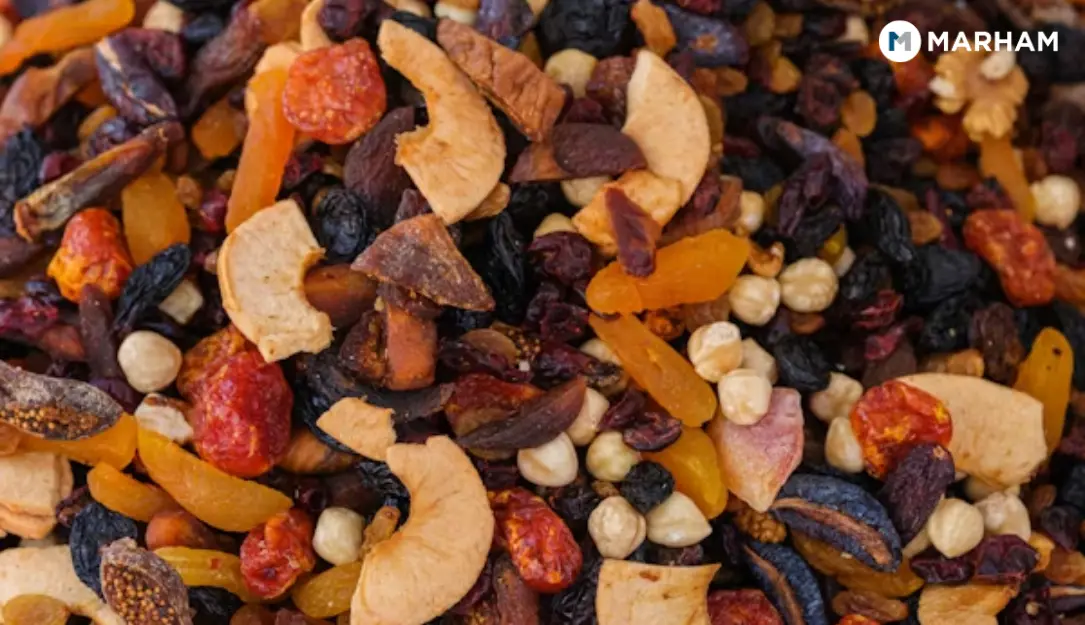
Consuming too much dry fruit can lead to unwanted effects. Because dry fruits are high in calories and natural sugars, overeating them may cause weight gain, stomach discomfort, or digestive issues such as bloating. In some cases, excessive intake can also affect blood sugar levels, especially for people with existing health conditions.
Eating dry fruits in moderate amounts and as part of a balanced diet helps reduce these risks and allows their nutritional benefits to be enjoyed safely.
Bottom Line
Dry fruits continue to play an important role in everyday diets across Pakistan due to their nutritional value and long-standing cultural use. Understanding the dry fruits name and how each type fits into daily meals helps people make informed food choices, whether these foods are eaten as snacks, added to desserts, or included in seasonal routines.
Although dry fruits provide energy, healthy fats, fiber, and essential minerals, they are best consumed in moderation. Each variety offers different benefits, so including them as part of a balanced diet is more effective than relying on them as a quick solution for health concerns.
If you are unsure about which dry fruits suit your dietary needs or how much to consume, professional guidance can be helpful. Through Marham, you can easily connect with qualified nutritionists and general physicians in Pakistan for trusted advice and personalized support.
