


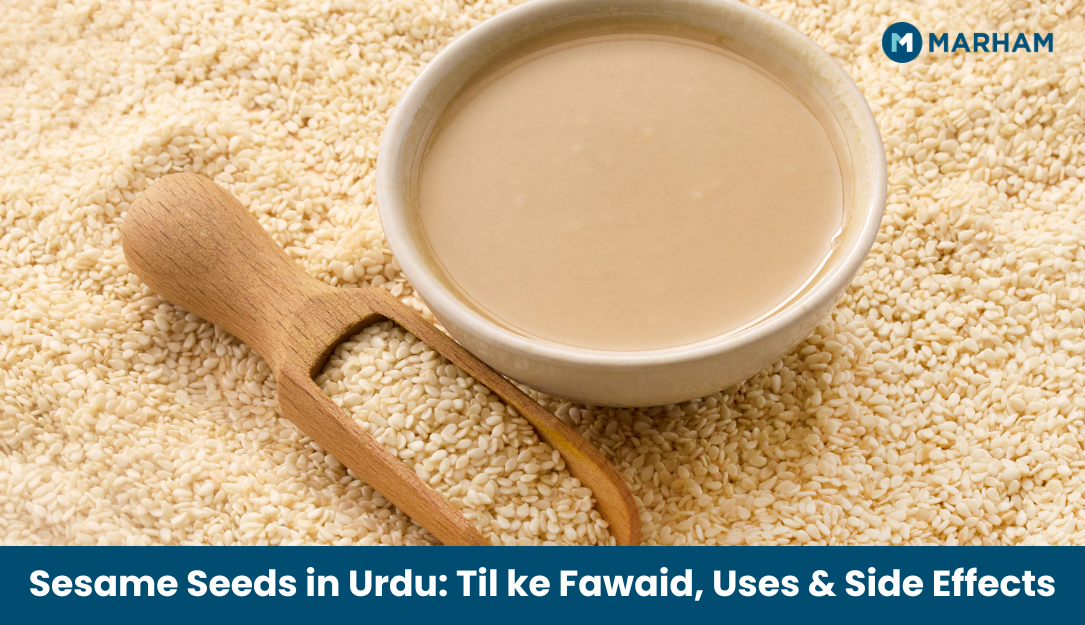
Sesame seeds in Urdu are called “Til” (تل). They are tiny nutrient-dense seeds used in South Asian cooking for centuries. Just 28 grams (about 3 tablespoons) of unhulled sesame seeds provide 160 calories, 5 grams of protein, 3.3 grams of fiber, 273 mg of calcium (27% DV), and 4.1 mg of iron (23-51% DV). Rich in healthy fats, magnesium (99mg), zinc, and antioxidants like sesamin, they boost bone, heart, and overall health.
In this guide, we will cover the types of sesame seeds, their proven health benefits, ways to include them in your meals, and precautions for safe consumption.
Sesame Seeds in Urdu: What is Til?
Sesame seeds in Urdu are known as “Til” (تل). It refers to the seeds of the plant Sesamum indicum. They come in different colors, white, black, brown, and golden, and have a mild nutty flavor that becomes stronger when roasted. In Pakistani households, sesame seeds are commonly used in sweets, breads, and traditional winter foods.
Sesame Seeds Meaning in Urdu
تل ایک چھوٹا سا بیج ہے جو غذائیت سے بھرپور اور کھانے میں استعمال ہوتا ہے۔ پاکستان اور جنوبی ایشیا میں تل صدیوں سے استعمال ہوتا رہا ہے، خاص طور پر لڈو، گجک، روایتی پکوان اور روٹی یا نان پر چھڑکنے کے لیے۔ تل مختلف رنگوں میں دستیاب ہوتا ہے، جیسے سفید، کالا، بھورا یا سنہری، اور اکثر بھون کر اس کا ذائقہ مزید بڑھایا جاتا ہے۔ تل کا تیل بھی نکالا جاتا ہے، جو نہ صرف کھانے میں بلکہ صحت کے لیے بھی قیمتی سمجھا جاتا ہے۔
Black vs White Sesame Seeds in Urdu: Key Differences
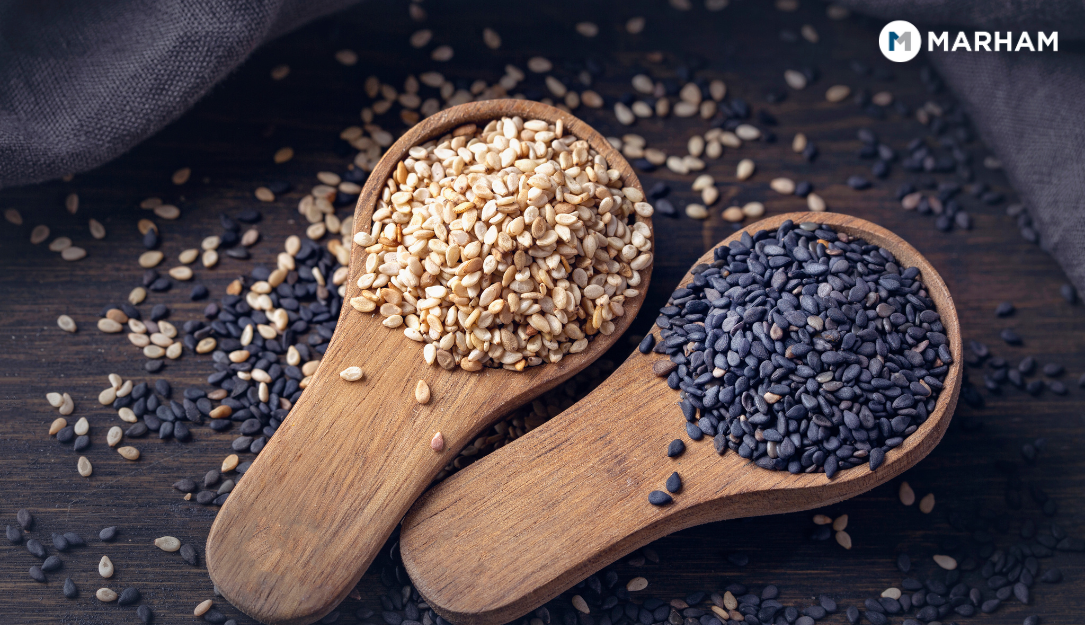
| Feature | Black Til (Kala Til) | White Til (Safed Til) |
| Hull | Usually unhulled (outer layer intact) | Often hulled (outer layer removed) |
| Minerals | Slightly higher mineral content | Slightly lower mineral content |
| Flavors | Earthy, stronger taste | Milder, nuttier taste |
| Uses | Traditional dishes, recipes | Baking, tahini, lighter foods |
Unhulled (black) seeds in Urdu usually have more minerals and antioxidants because the outer layer is intact.
Nutrition Facts (per 28 grams / 3 tablespoons of sesame seeds)
- Calories: 160 kcal
- Protein: 5 g (10% DV)
- Fiber: 3.3 g (12% DV)
- Calcium: 273 mg (21% DV for adults)
- Iron: 4.1 mg (23% DV for women / 51% DV for men)
- Magnesium: 99 mg (24% DV)
- Zinc: 2.2 mg (20% DV)
- Healthy fats: 14 g (mostly monounsaturated and polyunsaturated, including omega-6)
Sesame Seed Benefits
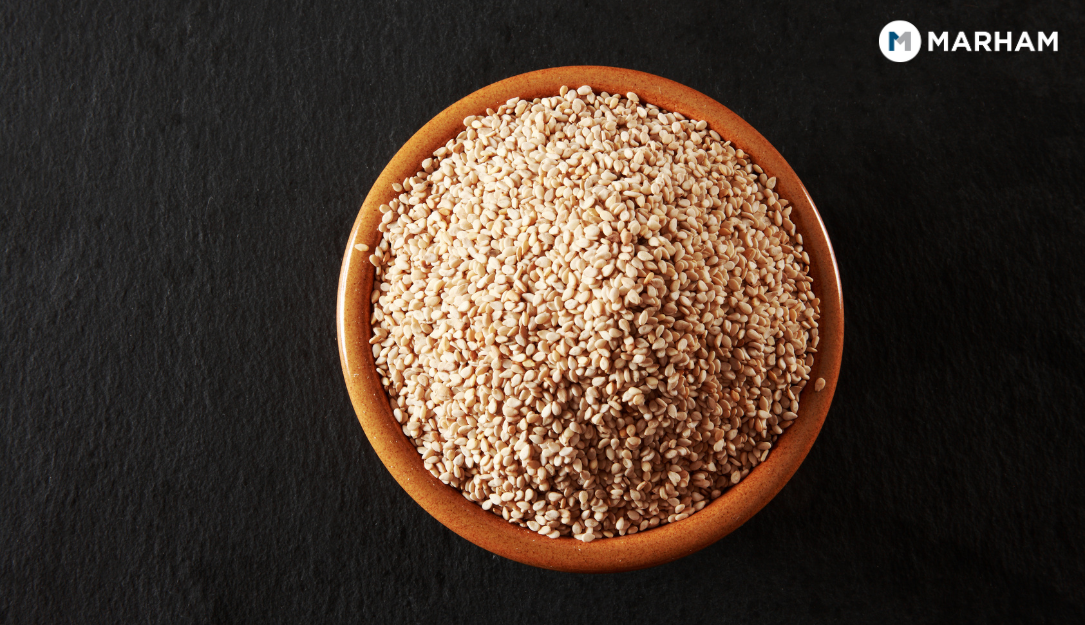
1. Supports Bone Health
Sesame seeds are a good source of calcium, magnesium, and zinc, which are important for maintaining bone strength.
2. Heart Health (Cholesterol & Blood Pressure)
Plant lignans like sesamin and phytosterols plus healthy fats in sesame seeds may help lower LDL (bad cholesterol) and support heart health when eaten as part of a balanced diet.
3. Antioxidants
Sesame seeds contain lignans and antioxidant compounds that help protect cells from oxidative stress.
4. Fiber Helps Digestion
Dietary fiber from sesame seeds supports healthy digestion and regular bowel movements.
5. May Help Blood Sugar Control
Some components in sesame seeds may support blood sugar regulation as part of an overall healthy diet, though stronger human evidence is still emerging.
Note: These benefits are supportive; sesame seeds are not a replacement for medical treatment.
Sesame Seeds Benefits in Urdu
تل غذائیت سے بھرپور بیج ہیں جو صحت کے لیے کئی فوائد رکھتے ہیں۔ یہ ہڈیوں اور دانتوں کو مضبوط بنانے کے لیے کیلشیم، میگنیشیم اور زنک فراہم کرتے ہیں۔ تل کے صحت مند چکنائی کے اجزاء اور قدرتی لائگنینز دل کی صحت کو بہتر بنانے میں مدد دیتے ہیں اور کولیسٹرول کو قابو میں رکھتے ہیں۔
اس کے علاوہ تل میں موجود فائبر ہاضمے کو سہارا دیتا ہے اور خون میں شکر کے توازن میں مددگار ثابت ہو سکتا ہے۔ تل میں موجود اینٹی آکسیڈنٹس جسم کے خلیات کو نقصان پہنچانے والے مادوں سے بچاتے ہیں اور جلد و بال کی صحت کو بھی بہتر بناتے ہیں۔ اس طرح، تل کو روزانہ کھانے سے مجموعی صحت میں بہتری اور غذائیت کا اضافہ ممکن ہے۔
How to Use Sesame Seeds in Urdu Diets
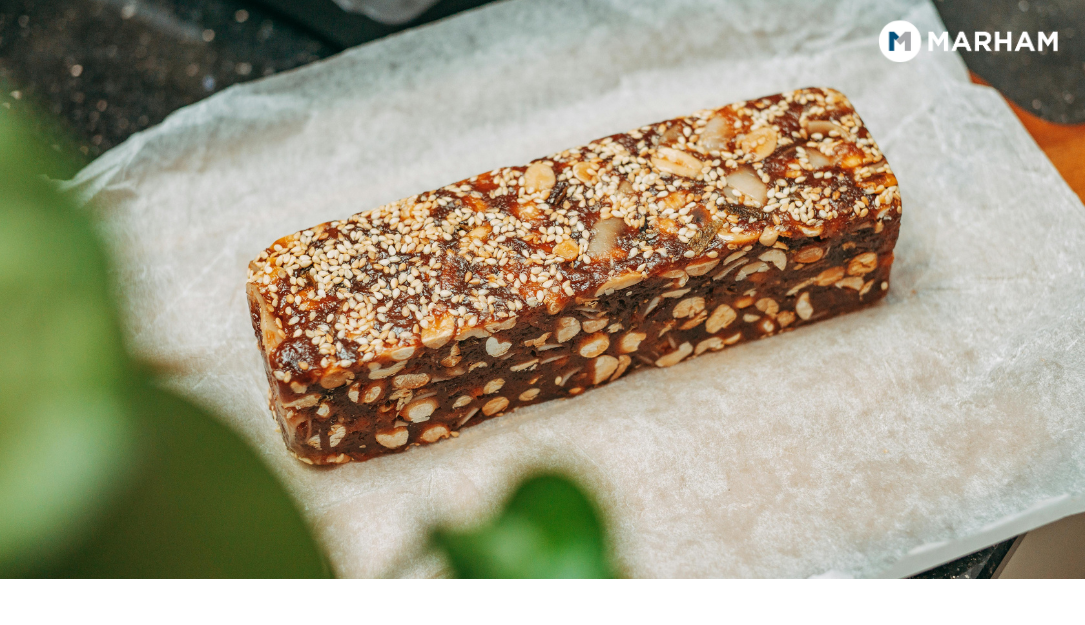
Traditional & Modern Uses:
- Til ke ladoo / gajak / rewari, especially in winter.
- Sprinkle roasted seeds on salads, yogurt, or rice.
- Make tahini (sesame paste) for dips.
- Add to smoothies or cereals for extra nutrition.
Suggested Serving:
About 1–2 tablespoons (10–20g) daily is a common safe amount in regular diets. Too much may add extra calories.
Side Effects & Precautions
Allergy Risk
Sesame is a common allergen and can cause reactions ranging from mild to severe in sensitive individuals.
High in Calories
As sesame seeds are calorie-dense so excessive intake may contribute to weight gain.
Interaction with Medications
If you take blood pressure or sugar-lowering medications, ask your doctor before adding large amounts of sesame regularly.
Digestive Discomfort
Some people may experience gas or bloating if they suddenly eat a lot of seeds.
Get Expert Nutrition Guidance from Marham
Wondering how many sesame seeds you should eat for your health? No matter if you are managing diabetes, looking to strengthen bones, or simply want healthier eating habits, personalized advice makes all the difference.
Marham connects you with Pakistan’s top nutritionists who combine traditional wisdom with modern science. From custom meal plans to practical tips, you will get recommendations designed specifically for your health goals.
Conclusion
Sesame seeds in Urdu, also called Til, are a nutritious food rich in healthy fats, minerals, fiber, and beneficial plant compounds. Both black and white varieties offer valuable nutrition. However, unhulled (black) seeds usually pack slightly more minerals and antioxidants. Including a moderate amount in your diet can support overall health, especially bone and heart health, when you eat it as part of a balanced lifestyle. For personalized dietary guidance, connect with a qualified nutritionist through Marham today!
