


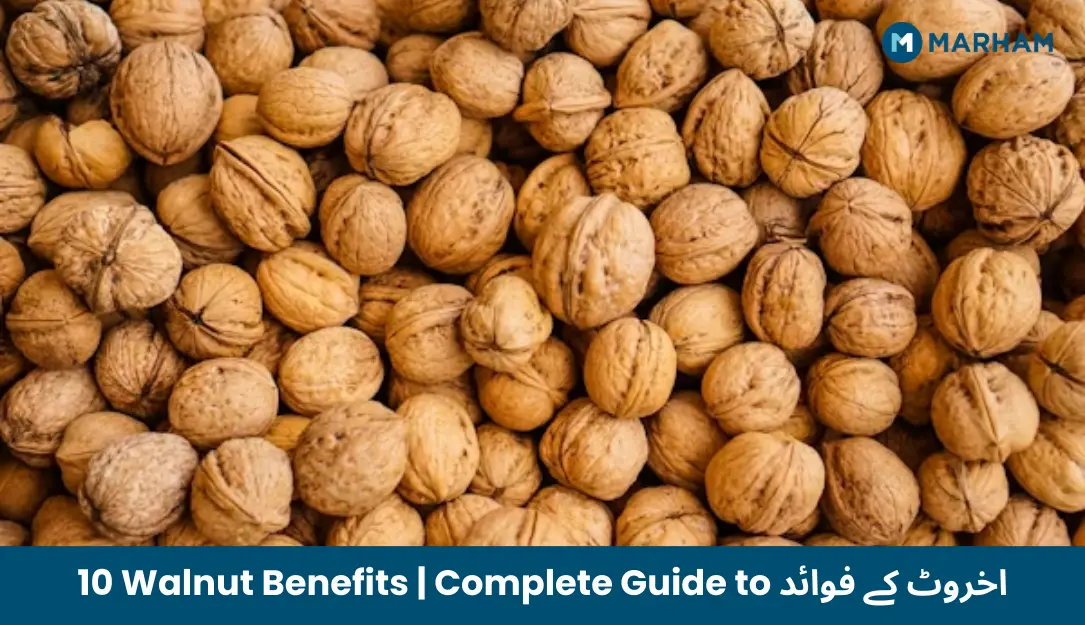
Ever noticed how a walnut looks exactly like a tiny brain? That’s not just a coincidence. This brain-shaped nut is packed with nutrients that actually boost your brain power and offer dozens of health benefits. In Pakistan, we call walnuts اخروٹ (Akhrot), and they’ve been a treasured part of our diet for generations. From wedding sweets to winter snacks, Akhrot holds a special place in Pakistani households.
But walnut benefits go far beyond tradition. Modern science has confirmed what our grandparents always knew – eating walnuts regularly can transform your health. Whether you want to sharpen your memory, protect your heart, or improve your overall wellbeing, this complete guide covers everything you need to know about the health benefits of walnuts.
Walnut Nutrition Facts
Before exploring walnut benefits, let’s look at what makes this nut so nutritious. Here’s what you get in just 28 grams (about 7 walnut halves):
| Nutrient | Amount |
| Calories | 185 |
| Protein | 4.3g |
| Total Fat | 18.5g |
| Omega-3 (ALA) | 2.5g |
| Carbohydrates | 3.9g |
| Fiber | 1.9g |
| Magnesium | 45mg (11% DV) |
| Phosphorus | 98mg (10% DV) |
| Copper | 0.45mg (50% DV) |
| Manganese | 1mg (43% DV) |
Walnuts stand out from other nuts because they contain the highest amount of omega-3 fatty acids. This makes them especially valuable for brain and heart health.
10 Walnut Benefits You Should Know
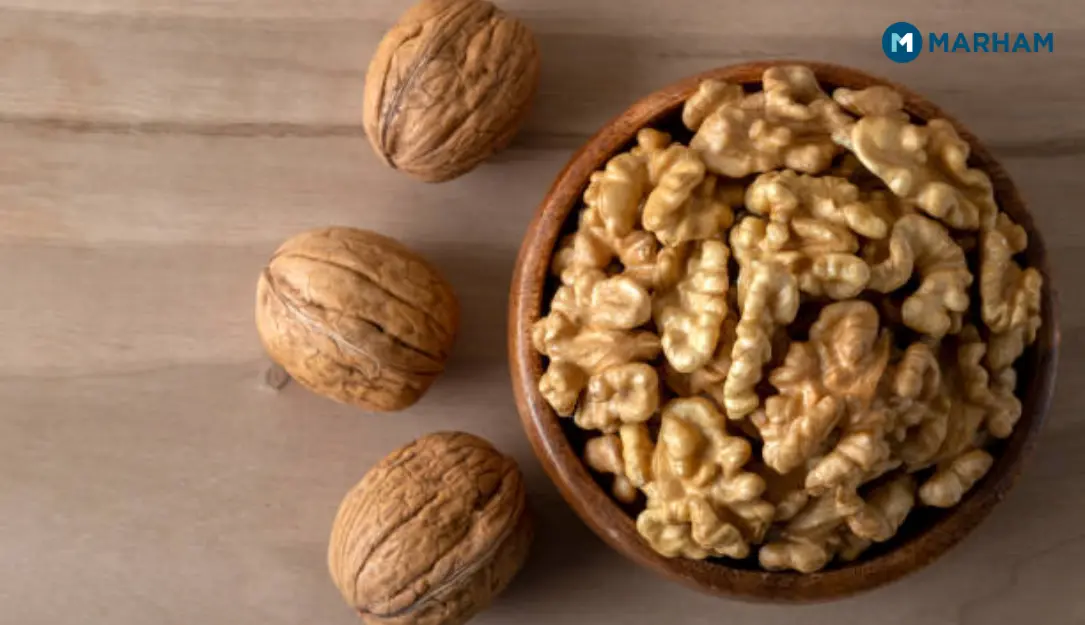
1. Boosts Brain Function
The walnut benefits for brain health are remarkable. Walnuts contain omega-3 fatty acids, polyphenols, and vitamin E that protect brain cells from oxidative damage. Studies show that eating walnuts regularly can improve memory, concentration, and information processing speed. The DHA in walnuts is particularly important for brain development in children and cognitive maintenance in adults.
2. Protects Heart Health
One of the most researched health benefits of walnuts is cardiovascular protection. Walnuts help lower LDL (bad) cholesterol while maintaining HDL (good) cholesterol levels. The omega-3 fatty acids reduce inflammation in blood vessels and improve their flexibility. Research shows eating 30 grams of walnuts daily can reduce heart disease risk by up to 21%.
3. Supports Weight Management
Despite being calorie-dense, walnuts can actually help with weight control. The protein, fiber, and healthy fats in walnuts keep you feeling full longer, reducing overall calorie intake. Studies found that people who eat walnuts regularly have lower body weight and smaller waist measurements. The key is portion control – a small handful provides benefits without excess calories.
4. Reduces Inflammation
Chronic inflammation leads to many diseases including arthritis, diabetes, and heart disease. Walnut benefits include powerful anti-inflammatory effects thanks to polyphenols, omega-3s, and magnesium. These compounds work together to calm inflammation throughout your body. This is especially helpful for Pakistanis dealing with joint pain or inflammatory conditions.
5. Improves Gut Health
Your gut health affects everything from immunity to mood. Walnuts act as a prebiotic, feeding the beneficial bacteria in your digestive system. Research shows that eating walnuts increases healthy gut bacteria that produce butyrate, a compound that nourishes your intestinal lining. A healthier gut means better digestion, stronger immunity, and even improved mental health.
6. Controls Blood Sugar
For the millions of Pakistanis managing diabetes or pre-diabetes, walnut benefits include better blood sugar control. Walnuts have a low glycemic index and help improve insulin sensitivity. Studies show that eating walnuts with meals can reduce post-meal blood sugar spikes. The healthy fats slow down sugar absorption, keeping glucose levels stable throughout the day.
7. Strengthens Bones
Walnuts contain several minerals essential for bone health including magnesium, phosphorus, and copper. The omega-3 fatty acids also help your body absorb calcium more effectively. Regular walnut consumption can improve bone mineral density and reduce the risk of osteoporosis, especially important for women after menopause.
8. Enhances Skin Health
Walnut benefits for skin come from their rich vitamin E and antioxidant content. These nutrients protect skin cells from sun damage and premature aging. The omega-3 fatty acids keep skin moisturized and reduce inflammation that causes acne and eczema. Many people notice softer, more radiant skin after adding walnuts to their daily diet.
9. Promotes Hair Growth
The biotin, vitamin E, and omega fatty acids in walnuts nourish hair follicles and promote stronger, shinier hair. Walnut benefits extend to preventing hair loss and reducing dandruff. The copper content helps maintain natural hair color and may slow down graying. Applying walnut oil directly to hair can also provide deep conditioning.
10. Fights Oxidative Stress
Walnuts contain more antioxidants than any other common nut. These antioxidants neutralize free radicals that damage cells and cause aging and disease. The unique combination of polyphenols, melatonin, and vitamin E in walnuts provides comprehensive protection against oxidative stress that contributes to cancer, Alzheimer’s, and other chronic conditions.
Walnut Benefits for Men
Men have specific reasons to include walnuts in their diet. Walnut benefits for men are backed by solid scientific research and can significantly improve male health.
Walnuts dramatically improve sperm quality. A study published in Biology of Reproduction found that men who ate 75 grams of walnuts daily for 12 weeks showed significant improvements in sperm vitality, motility, and shape. The omega-3 fatty acids and antioxidants protect sperm from oxidative damage and support healthy sperm production.
For prostate health, the gamma-tocopherol form of vitamin E in walnuts has been linked to reduced prostate cancer risk. Walnuts also contain plant compounds that may help reduce prostate inflammation. Men over 40 should consider walnuts as part of their prostate health strategy.
The heart-protective walnut benefits are especially important for men, who face higher cardiovascular disease risk. The combination of healthy fats, fiber, and plant sterols in walnuts addresses multiple heart disease risk factors simultaneously. Regular walnut consumption can lower blood pressure and improve arterial function.
Walnut Oil Benefits
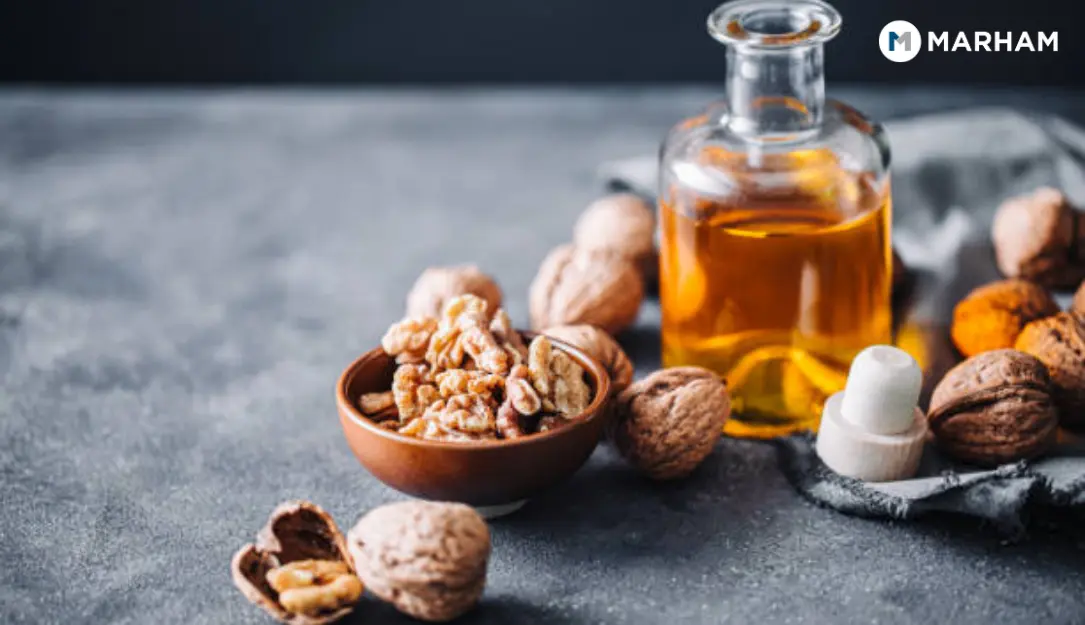
Beyond eating whole walnuts, walnut oil benefits deserve attention. Cold-pressed walnut oil retains most of the nut’s beneficial compounds and offers versatile uses.
For Cooking:
- Rich, nutty flavor perfect for salad dressings and finishing dishes
- Low smoke point – avoid high-heat cooking
- One of the healthiest oils for cold applications due to omega-3 content
For Skin:
- Deep moisturizing without greasy residue
- Reduces dark circles under eyes
- Fights signs of aging and fine lines
- Apply a few drops to face before bed for softer, more youthful skin
- Absorbs quickly into skin
For Hair:
- Massage warm oil into scalp to promote circulation
- Strengthens hair roots and reduces hair fall
- Adds natural shine to dull hair
- Leave on for 30 minutes before washing for best results
Walnut Benefits in Urdu | اخروٹ کے فوائد
اخروٹ کے فوائد بے شمار ہیں جو سائنسی تحقیق سے ثابت ہیں۔ یہ دماغ کی صحت کے لیے بہترین ہے کیونکہ اس میں موجود اومیگا 3 فیٹی ایسڈز دماغی خلیات کی حفاظت کرتے ہیں اور یادداشت کو بہتر بناتے ہیں۔ اخروٹ دل کی بیماریوں کا خطرہ 21% تک کم کرتا ہے اور خراب کولیسٹرول کو کم کرتا ہے۔
مردوں کے لیے اخروٹ کے فوائد میں مردانہ صحت کی بہتری شامل ہے جیسے سپرم کی کوالٹی میں اضافہ اور پروسٹیٹ کی حفاظت۔ یہ وزن کم کرنے، بلڈ شوگر کنٹرول کرنے، ہڈیوں کو مضبوط بنانے، اور جلد و بالوں کی صحت کے لیے بھی فائدہ مند ہے۔ روزانہ 7 سے 10 اخروٹ کھانے سے یہ تمام فوائد حاصل ہو سکتے ہیں۔
How to Use Walnuts in Pakistani Diet
Adding walnuts to your daily routine is easy with these Pakistani-friendly ideas.
Traditional Desserts: Add crushed walnuts to kheer, gajar ka halwa, or sheer khurma for extra nutrition and crunch. Walnuts pair beautifully with traditional barfi and ladoo recipes.
Morning Routine: Soak 2-3 walnuts overnight and eat them first thing in the morning. This traditional practice aids digestion and provides sustained energy. You can also add them to your breakfast paratha or omelette.
With Honey: The classic combination of walnuts and honey (شہد اور اخروٹ) is a time-honored remedy for energy and immunity. Take a spoonful daily, especially during winter months.
Smoothies and Shakes: Blend walnuts into banana smoothies or mango lassi for added protein and healthy fats. This makes a perfect post-workout recovery drink.
Salads and Raita: Sprinkle chopped walnuts on fruit chaat or cucumber raita for added texture and nutrition.
Curries and Rice: Garnish chicken korma or biryani with toasted walnuts for a restaurant-quality finish.
How Many Walnuts Should You Eat Daily?
For optimal walnut benefits, eat 7 to 10 walnut halves daily (about 28-30 grams). This amount provides health benefits without excessive calories. You can eat them all at once or spread throughout the day.
Start with 3-4 walnuts if you’re new to eating nuts and gradually increase. Some people prefer soaking walnuts overnight, which makes them easier to digest and may increase nutrient absorption. Store walnuts in an airtight container in the refrigerator to maintain freshness and prevent the oils from going rancid.
Walnuts vs Almonds: Which Is Better?
Both nuts are nutritious, but they have different strengths:
| Factor | Walnuts | Almonds |
| Omega-3 Content | Highest among nuts | Very low |
| Vitamin E | Good | Excellent |
| Protein | 4.3g per 28g | 6g per 28g |
| Fiber | 1.9g per 28g | 3.5g per 28g |
| Best For | Brain health, inflammation | Skin, weight loss |
| Calories | 185 per 28g | 164 per 28g |
The verdict? Both deserve a place in your diet. Walnuts are superior for brain and heart health due to omega-3s, while almonds offer more protein and fiber. Ideally, rotate between both for comprehensive benefits.
Cautions and Side Effects
While walnut benefits are numerous, keep these precautions in mind:
Nut Allergies: Tree nut allergies can cause severe reactions. If you’re allergic to other nuts, consult a doctor before trying walnuts. Watch for symptoms like itching, swelling, or difficulty breathing.
Calorie Awareness: Walnuts are calorie-dense at 185 calories per 28 grams. Stick to recommended portions to avoid weight gain.
Digestive Issues: Eating too many walnuts can cause bloating, gas, or diarrhea due to their high fiber and fat content. Start slowly and increase gradually.
Medication Interactions: If you take blood thinners, consult your doctor as omega-3s can enhance blood-thinning effects. Also check with your doctor if you’re on thyroid medications.
Pregnancy: While walnuts are generally safe and beneficial during pregnancy, stick to moderate amounts. The benefits of eating walnuts while pregnant include fetal brain development support, but excessive consumption isn’t recommended.
Get Expert Dietary Advice from Marham
If you are unsure how to safely include walnuts or other nutritious foods in your daily routine, getting professional guidance can be very helpful. Individual health needs differ, especially for those managing concerns such as heart disease, diabetes, weight management, or nut allergies, and expert advice ensures the right approach for your body.
Marham helps you connect with experienced dietitians and healthcare professionals who are familiar with both traditional practices and modern nutrition. You can receive personalized diet plans, clear usage guidance, and practical recommendations based on your specific health goals.
Take the next step today:
- Call 0311-1222398 to book a consultation
- Choose between online video consultations or in-clinic visits
- View verified patient reviews and select the expert that suits you best
Professional support can make a meaningful difference in your health journey.
Conclusion
Walnut benefits extend from brain health to heart protection, weight management to male fertility. This remarkable nut, known as اخروٹ (Akhrot) in Pakistan, deserves a regular place in your diet. With just 7-10 walnuts daily, you can support your brain function, protect your heart, improve your skin, and enhance overall wellbeing.
Whether you enjoy them soaked in the morning, added to desserts, or simply as an afternoon snack, walnuts offer convenient nutrition that fits perfectly into Pakistani dietary traditions. Start adding this brain-shaped superfood to your daily routine and experience the health benefits of walnuts for yourself.
