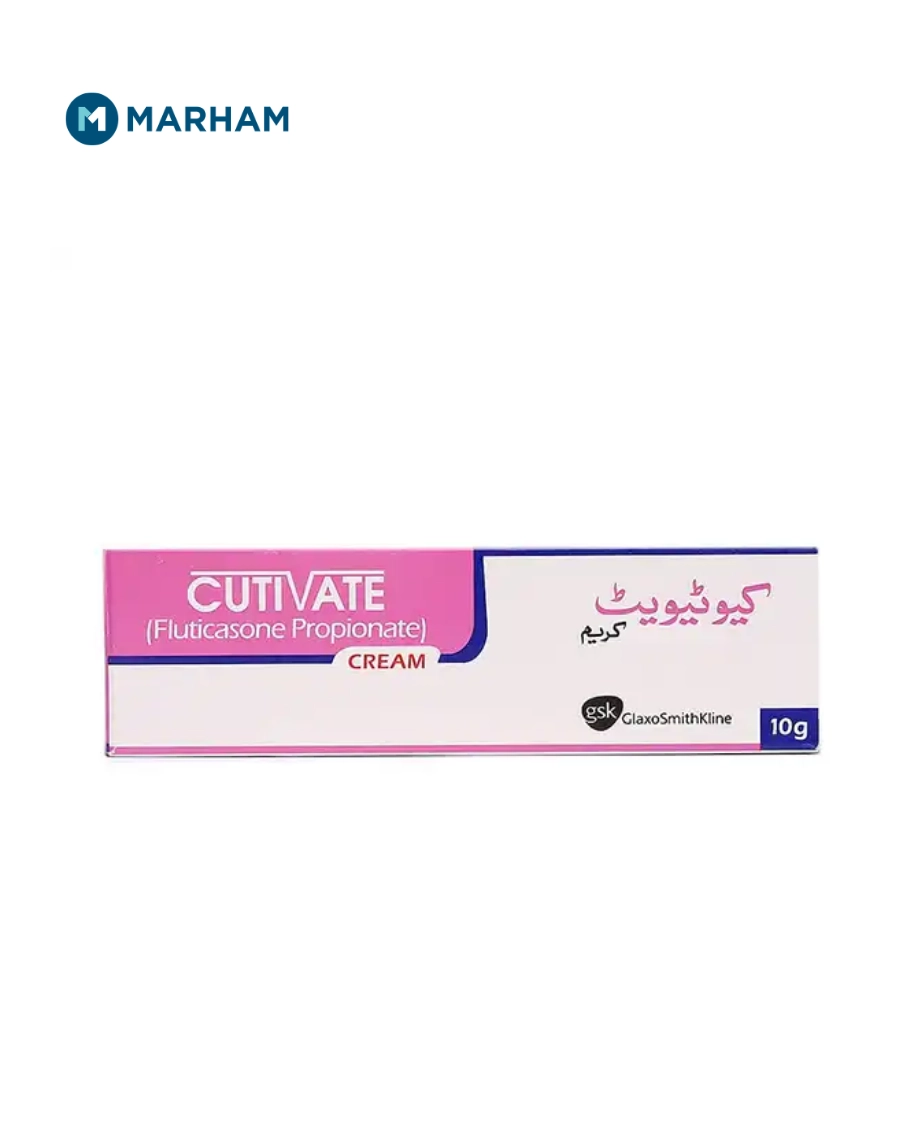
Cutivate Cream Uses
About Cutivate Cream
Cutivate Cream uses include treating inflammatory and pruritic (itchy) skin conditions. It contains Fluticasone Propionate, a topical corticosteroid that works by reducing inflammation, redness, swelling, and itching in the affected skin areas. This helps provide relief from symptoms of various skin disorders that respond to corticosteroid therapy.
Cutivate Cream Uses
Cutivate Cream is commonly used for:
- Eczema (atopic and contact dermatitis)
- Psoriasis involving localized plaques
- Seborrhoeic dermatitis
- Irritant and allergic contact dermatitis
- Lichen planus
- Neurodermatitis
- Prurigo nodularis
- Discoid lupus erythematosus as adjunctive therapy
- Insect bite reactions with inflammation
Cutivate Cream Dosage and Administration
Always use Cutivate Cream exactly as directed by your doctor:
Adults and Children (over 3 months old):
- Apply a thin layer of Cutivate Cream to the affected skin areas once or twice daily, or as prescribed.
- Gently rub in until absorbed.
- Do not use occlusive dressings (coverings) unless instructed by a physician.
- Discontinue use when control is achieved.
- If no improvement is seen within about 2 weeks, consult your doctor for reassessment.
Cutivate Cream Warnings
Do not use Cutivate Cream if you:
- Are allergic to Fluticasone Propionate or any component of the cream
- Have untreated bacterial, viral, or fungal skin infections
- Have rosacea
- Have acne vulgaris
- Have perioral dermatitis
- Have pruritus without inflammation
- Are treating skin conditions in infants under 3 months without medical supervision
Cutivate Cream Precautions
Talk with your doctor first if you:
- Are pregnant or planning to become pregnant
- Are breastfeeding
- Need to apply the cream on large areas of the body
- Are using other topical medications on the same area
- Have sensitive skin or thin skin areas such as the face or skin folds
Also remember:
- Prolonged use may lead to skin thinning or stretch marks.
- Avoid using with tight bandages unless prescribed by your physician.
Cutivate Cream Side Effects
Most people tolerate Cutivate Cream well, but some may experience:
- Burning sensation at application site
- Dryness
- Itching
- Skin irritation
- Skin thinning (with prolonged use)
- Folliculitis (inflammation of hair follicles)
Note: If side effects persist or worsen, seek medical advice.
Storage Instructions
- Store in a cool, dry place below 30 °C
- Protect from direct sunlight
- Keep out of reach of children
Packaging and Quantity
Cutivate Cream is typically available in tube packs (e.g., 10 g).
Prescription Requirement
Cutivate Cream is a prescription‑only medicine and should be used under medical supervision.
Get Expert Advice on Marham Before Using Any Medicine
Marham helps you connect with qualified doctors for expert medical advice. You can easily book online or in-person appointments through the Marham website, mobile apps, or by calling 0311‑1222398.
Frequently Asked Questions about Cutivate Cream
Disclaimer
Marham shares expert‑reviewed information to support your health journey. The information on this page is only to guide and inform you. For personal medical advice, always check with a medical professional.
Consult a Doctor Online
Top-rated, PMDC-verified doctors you can book online today — ghar baithe.

Dr. Zafar Ahmed
Dermatologist · MBBS, CRCP, D.DERM (Thailand ), Diploma in Dermato-Surgery (Bangkok), Research Course (UK)
★ 3,262 Reviews 27+ Years Exp

Dr. Muhammad Amjad
Dermatologist · MBBS, MCPS (Dermatology), FCPS (Dermatology)
★ 2,780 Reviews 35+ Years Exp

Dr. Farah Khurram
Dermatologist · MBBS, FCPS (Dermatology)
★ 244 Reviews 10+ Years Exp