
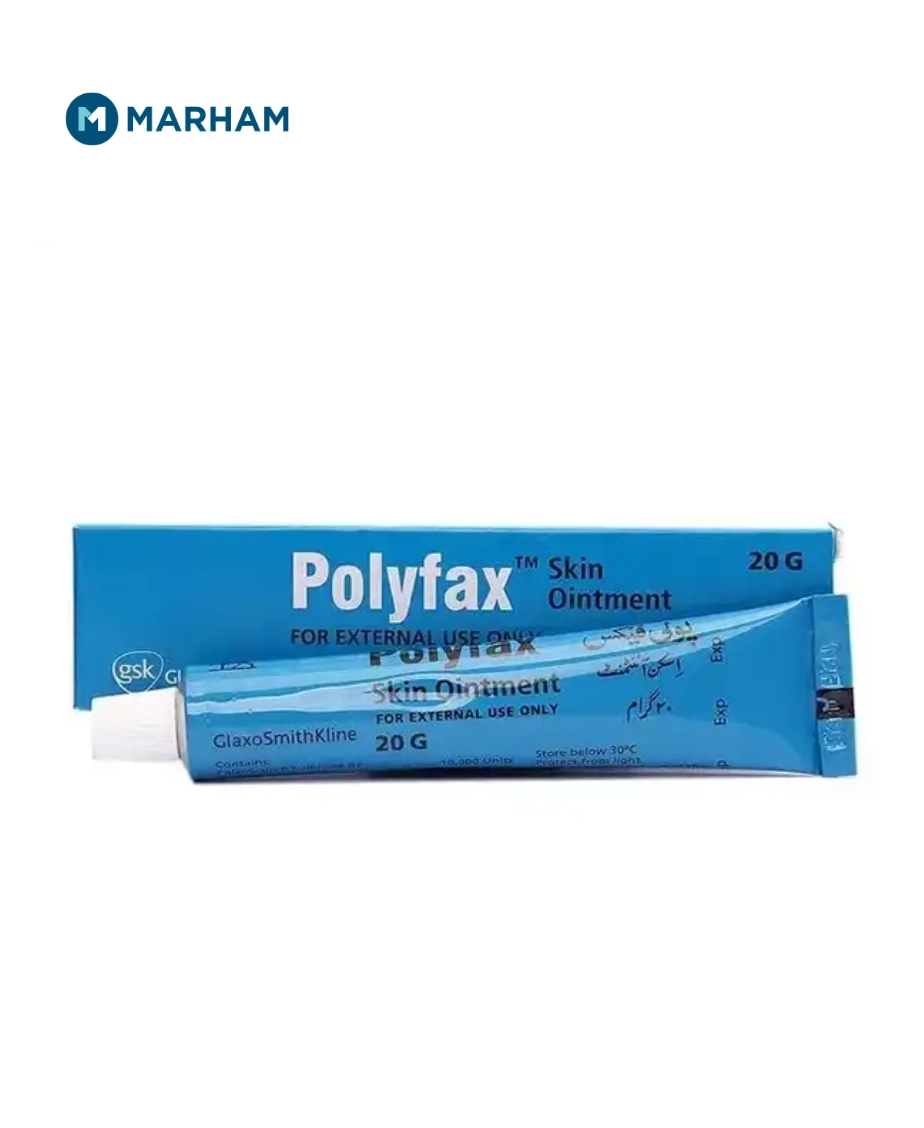
Polyfax Skin Ointment Uses
About Polyfax Skin Ointment
Polyfax skin ointment is a topical antibacterial preparation that combines Polymyxin B and Bacitracin Zinc, which work together to fight bacteria that cause skin infections. Polymyxin B kills bacteria by damaging their cell membranes, while Bacitracin Zinc stops bacteria from growing by blocking their cell wall formation. This combination helps treat and prevent minor skin infections like cuts, scrapes, burns, and wounds. By acting directly on the affected area, polyfax speeds up healing, reduces inflammation, and lowers the chance of the infection spreading.
Polyfax Skin Ointment Uses
Polyfax skin ointment is commonly used for:
- Minor bacterial skin infections
- Superficial wounds, cuts, scrapes
- Prevention of infection in burns
- Post-surgical care
- Graft wound care
- Impetigo or similar superficial skin infections
Polyfax Skin Ointment Dosage and Administration
Always use the medicine as directed by your doctor:
Dosage:
Apply a thin layer of ointment to the affected area 1–3 times daily, or as directed by your doctor.
How to Apply:
- Clean and dry the area before application.
- Use a sterile applicator or clean hands.
- Cover with a sterile dressing if recommended.
- Do not apply on large deep wounds without medical advice.
- If you miss a dose, apply when remembered unless it’s almost time for the next dose.
- Do not double up the dose.
Polyfax Skin Ointment Warnings
Do not use polyfax skin ointment if you:
- Are allergic to Polymyxin B or Bacitracin Zinc.
- Apply it on large open or broken areas of skin, as it may be absorbed into the body and need medical monitoring.
- Use it for a long time, as it can cause fungal growth or resistant bacteria.
- Are pregnant or breastfeeding.
- Are taking medications that affect muscles or nerves, as polyfax may increase their effects.
Polyfax Skin Ointment Precautions
Talk to your doctor before using polyfax skin ointment if you:
- Have kidney problems.
- Plan to use it for a long time.
- Are giving it to children or elderly people as they may need extra care.
- Need to apply it near the eyes, mouth, or other sensitive areas.
Polyfax Skin Ointment Side Effects
The most common side effects of polyfax skin ointment are:
- Skin irritation
- Redness
- Itching
- Rash
Rare / Serious Side Effects (if systemically absorbed):
- Kidney toxicity (nephrotoxicity)
- Nerve toxicity (neurotoxicity)
- Severe allergic reactions
Seek immediate medical attention if any serious reactions occur.
Storage Instructions
- Store below 25°C in a cool, dry place.
- Protect from direct sunlight.
- Keep out of reach of children.
Packaging and Quantity
Polyfax skin ointment is available as a 20 g tube.
Prescription Requirement
Polyfax skin ointment is sold without a prescription in small quantities. However, due to its antibiotic nature and potential toxicity, it should be used under medical supervision.
Get Expert Advice on Marham Before Using Any Medicine
Marham helps you connect with qualified doctors for expert medical advice. You can easily book online or in-person appointments through the Marham website, mobile apps, or by calling 0311-1222398.
Frequently Asked Questions about Polyfax Skin Ointment
Is polyfax skin ointment an antibiotic?
Can polyfax skin ointment be used on burns?
Is polyfax skin ointment safe for children?
What happens if I apply polyfax over a large wound?
What is polyfax skin ointment price in Pakistan?
What are Polyfax skin ointment uses in Urdu?
Disclaimer
Marham shares expert-reviewed information to support your health journey. The information on this page is only to guide and inform you. For any personal advice, it's always best to check with a medical professional.
Reviewed by

Farwa Hassan