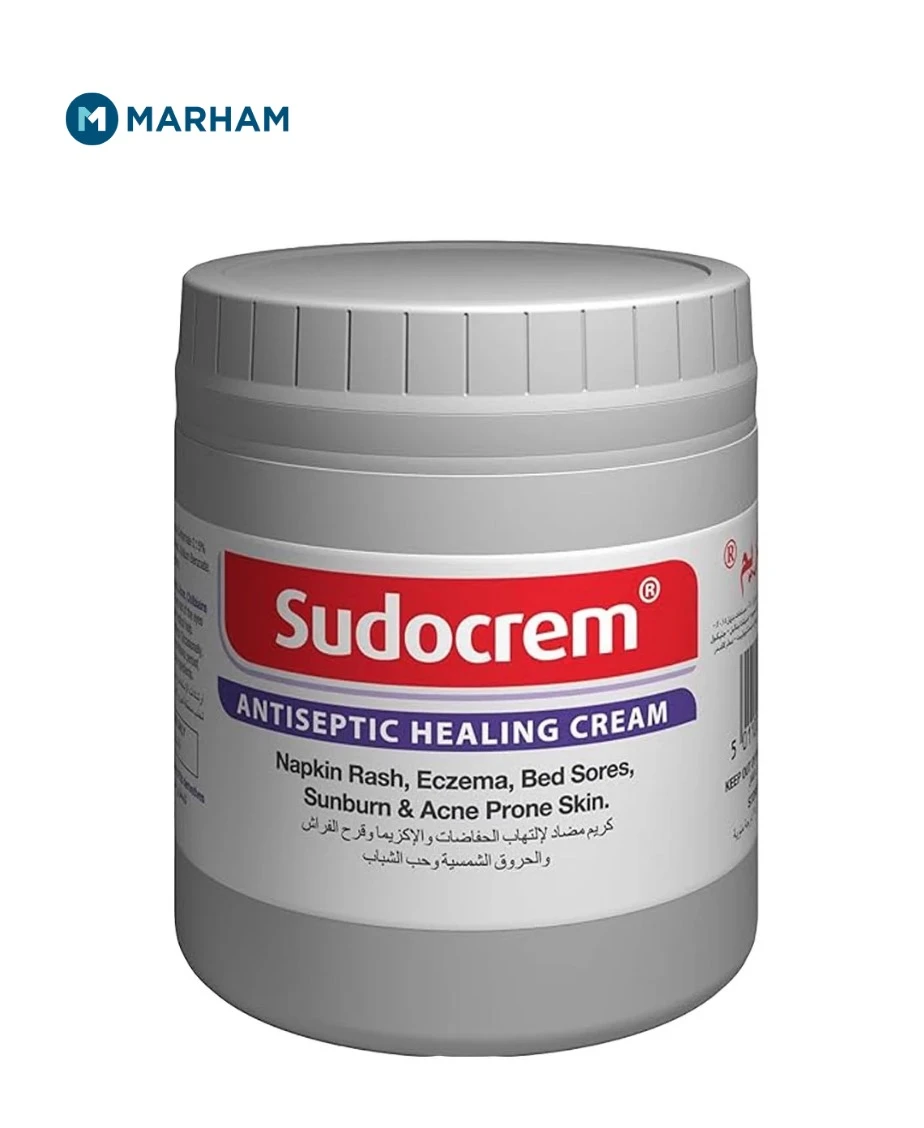
Sudocrem Uses
About Sudocrem
Sudocrem is a gentle yet effective antiseptic healing cream. It's widely used to soothe and protect delicate skin from a variety of irritations. Its unique formula helps to calm inflamed skin, reduce redness, and promote healing. It forms a protective barrier, making it ideal for everyday skin concerns.
Sudocrem Uses
Sudocrem uses include treating:
Diaper rash
Eczema
Minor burns
Sunburn
Surface wounds
Acne
Bedsores
Chilblains
Sudocrem Dosage and Administration
Always use as directed by your doctor or as per the product instructions.
Dosage:
Apply at each diaper change for diaper rash.
For other conditions, apply 2-3 times a day.
How to Apply:
Ensure the affected area is clean and dry.
Apply a thin layer of Sudocrem to the area.
Gently massage in small circular movements until the cream disappears.
If the area remains white, too much cream has been applied.
Sudocrem Warnings
Do not use Sudocrem if you are allergic to:
Any of its ingredients
Avoid contact with eyes and mucous membranes
For external use only
If symptoms persist, consult a doctor
Sudocrem Precautions
Talk with your doctor or pharmacist first if:
You have severe skin conditions
You are unsure about using it for a specific condition
Also, remember:
Keep out of reach of children
Do not ingest
In rare cases, skin irritation may occur. Discontinue use if this happens.
Sudocrem Side Effects
Sudocrem is generally well-tolerated. However, some people might experience:
Local irritation
Redness
Itching
Burning sensation
Serious Side Effects:
Severe Rash
Swelling
Dizziness
Trouble breathing
Storage Instructions
Keep in a cool, dry place.
Store below 25°C.
Keep away from direct sunlight.
Keep out of children's reach.
Packaging and Quantity
Available in 60g tub size.
Prescription Requirement
Sudocrem is an over-the-counter (OTC) medication and does not require a prescription.
Get Expert Advice on Marham Before Using Any Medicine
Marham enables you to communicate with experienced and trusted doctors who provide expert advice about dosage and the effects of medicine. You can book an online and in-person appointment with specialist doctors through Marham's website, Android app, iOS app, and by calling 03111222398.
Frequently Asked Questions about Sudocrem Cream
Disclaimer
Marham shares expert-reviewed information to support your health journey. The information on this page is only to guide and inform you. For any personal advice, it's always best to check with a medical professional.
Consult a Doctor Online
Top-rated, PMDC-verified doctors you can book online today — ghar baithe.

Dr. Zafar Ahmed
Dermatologist · MBBS, CRCP, D.DERM (Thailand ), Diploma in Dermato-Surgery (Bangkok), Research Course (UK)
★ 3,262 Reviews 27+ Years Exp

Dr. Muhammad Amjad
Dermatologist · MBBS, MCPS (Dermatology), FCPS (Dermatology)
★ 2,780 Reviews 35+ Years Exp

Dr. Farah Khurram
Dermatologist · MBBS, FCPS (Dermatology)
★ 244 Reviews 10+ Years Exp