


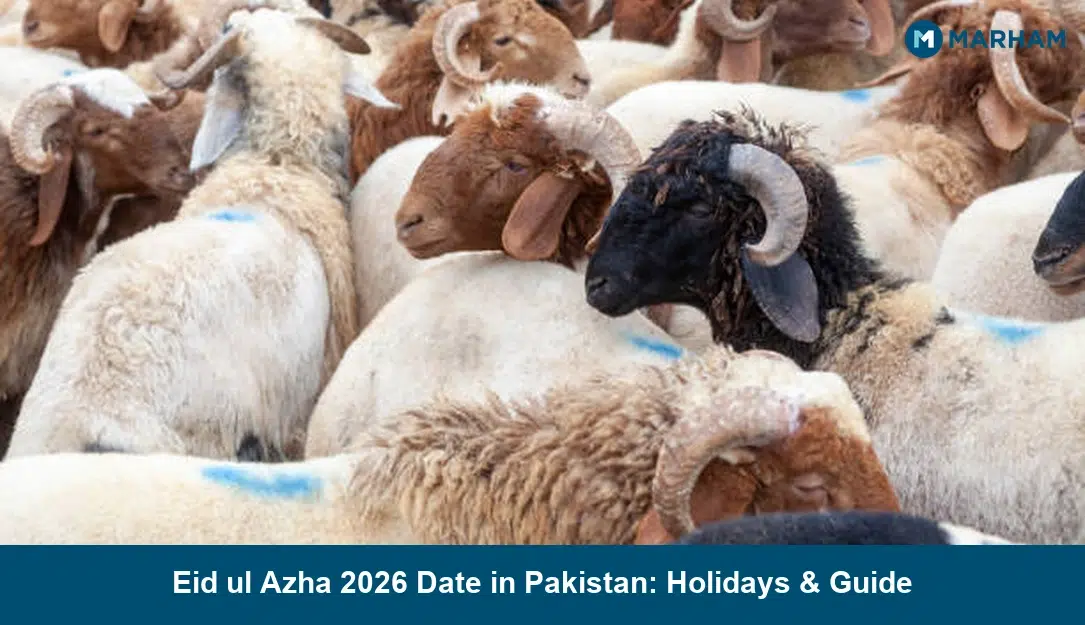
Eid ul Azha 2026 falls on Wednesday, May 27 — and for millions of Pakistani families, preparations are already well underway. Livestock markets in Lahore, Karachi, and Islamabad have been buzzing for weeks, with goats, cows, and camels filling up the mandis ahead of Bakra Eid. The Central Ruet-e-Hilal Committee officially confirmed the date after reviewing moon sighting reports from across the country, putting an end to any uncertainty.
This year, the Eid date lands on a weekday, which means Pakistan gets a generous five-day break when the three official public holidays run straight into the weekend. Families in Rawalpindi, Multan, Faisalabad, and Peshawar are planning long journeys home to celebrate together. For those who have been counting down, the wait is finally over.
Below you will find the confirmed holiday schedule, a straightforward Qurbani guide, health tips for the days of celebration, and answers to the questions Pakistanis are asking most right now.
عید الاضحیٰ 2026: اہم نکات
عید الاضحیٰ 2026 پاکستان میں بروز بدھ، 27 مئی کو منائی جائے گی، جو کہ 10 ذوالحجہ 1447 ہجری کے مطابق ہے۔ مرکزی رویتِ ہلال کمیٹی نے ملک بھر سے چاند دیکھنے کی رپورٹیں جمع کرنے کے بعد یہ تاریخ باضابطہ طور پر اعلان کی۔ سرکاری تعطیلات 27 مئی سے 29 مئی تک ہیں، اور ہفتہ و اتوار کو ملا کر پانچ دن کی لمبی چھٹی بنتی ہے۔ قربانی کا گوشت تین حصوں میں تقسیم کیا جاتا ہے: ایک حصہ اپنے لیے، ایک رشتہ داروں کے لیے، اور ایک غریبوں کے لیے۔ عید کے دنوں میں زیادہ گوشت کھانے سے صحت کے مسائل پیدا ہو سکتے ہیں، اس لیے متوازن خوراک اور پانی کا خیال رکھنا ضروری ہے۔
Eid ul Azha 2026 Date in Pakistan: Official Confirmation
Eid ul Azha 2026 in Pakistan is confirmed for Wednesday, May 27, 2026, corresponding to 10 Zil Hajj 1447 AH. The Central Ruet-e-Hilal Committee made the final announcement after collecting and verifying moon sighting testimonies from cities across Pakistan, including Karachi, Lahore, Quetta, and Peshawar.
Monday, May 18, was declared the first day of Zil Hajj 1447 Hijri. That placed the 9th of Zil Hajj — the Day of Arafah — on Tuesday, May 26, and Eid itself on May 27. The Islamic calendar follows the lunar cycle, so the Gregorian date shifts roughly 10 to 11 days earlier each year.
Key Dates at a Glance:
- 1 Zil Hajj 1447: Monday, May 18, 2026
- Day of Arafah (9 Zil Hajj): Tuesday, May 26, 2026
- Eid ul Azha / Bakra Eid (10 Zil Hajj): Wednesday, May 27, 2026
- Last day of Qurbani (12 Zil Hajj): Friday, May 29, 2026
Eid ul Azha 2026 Holidays in Pakistan
The official Eid ul Azha 2026 public holidays in Pakistan run from Wednesday, May 27 to Friday, May 29. The Cabinet Division had notified these three days in January 2026, and the confirmation of the moon sighting made the schedule final for all government offices, schools, banks, and most private organisations nationwide.
Because the three holidays are immediately followed by Saturday and Sunday, most Pakistanis will enjoy an uninterrupted five-day break from May 27 to May 31. Bus terminals and railway stations in Lahore and Karachi are expected to see heavy passenger traffic as people travel home for the celebrations.
| Day | Date | Status |
|---|---|---|
| Wednesday | May 27, 2026 | Eid ul Azha — Day 1 (Official Holiday) |
| Thursday | May 28, 2026 | Eid ul Azha — Day 2 (Official Holiday) |
| Friday | May 29, 2026 | Eid ul Azha — Day 3 (Official Holiday) |
| Saturday | May 30, 2026 | Weekend |
| Sunday | May 31, 2026 | Weekend |
What Is Eid ul Azha and Why Do Muslims Celebrate It?
Eid ul Azha, also called Bakra Eid or the Festival of Sacrifice, is one of the two major Islamic festivals observed every year. It commemorates the devotion of Prophet Ibrahim (AS), who demonstrated complete obedience to Allah by preparing to sacrifice his son. Allah, in His mercy, replaced the sacrifice with a ram — and this act of submission is remembered and honoured by Muslims around the world each year on the 10th of Dhul Hijjah.
Eid ul Azha also coincides with the culmination of Hajj, the annual pilgrimage to Makkah. While pilgrims perform their rites in Mina, Muslims in Pakistan and across South Asia join in the spirit of the occasion through prayer, Qurbani, and acts of charity.
Qurbani Guide for Pakistani Families in 2026
Qurbani — the ritual sacrifice of a halal animal — is a confirmed Sunnah and, according to many scholars, an obligatory act for every Muslim who can afford it. In Pakistan, goats, sheep, cows, and camels are the most commonly sacrificed animals. A goat or sheep counts as one share, while a cow or camel can be shared among up to seven people.
The meat is divided into three equal parts: one for the household, one for relatives and friends, and one for those in need. This distribution is central to the spirit of Eid ul Azha and ensures that families across all income levels — from Karachi’s urban neighbourhoods to rural areas of Sindh and Khyber Pakhtunkhwa — can share in the celebration.
How to Perform Qurbani: Step-by-Step
- Confirm the animal meets age and health requirements before purchase.
- Make the intention (niyyah) for Qurbani before the sacrifice.
- Ensure the slaughter is performed by a Muslim, beginning with “Bismillah, Allahu Akbar”.
- Use a sharp blade and handle the animal humanely throughout.
- Divide the meat into three equal portions as per Islamic guidance.
- Distribute the portion for the needy promptly — ideally on the first or second day of Eid.
- Store your household portion safely, especially in Pakistan’s May heat, to prevent spoilage.
Health Tips for Eid ul Azha 2026 in Pakistan
Eid ul Azha brings days of feasting — biryani, karahi, seekh kebabs, nihari, and paya are staples on Pakistani dinner tables during this period. The sudden increase in red meat consumption, combined with the late-May heat across Karachi, Multan, and interior Sindh, can put real strain on the digestive system and cardiovascular health.
Generalists and gastroenterologists in Pakistan commonly see a spike in patients reporting indigestion, acidity, and blood pressure spikes in the days immediately after Eid. A few simple habits go a long way.
- Eat red meat in moderate portions and pair it with salad, raita, or sabzi.
- Drink plenty of water — at least 8 to 10 glasses a day — especially in the heat.
- Avoid skipping meals and then overeating at a single sitting.
- People managing diabetes in Pakistan or hypertension should be especially mindful of portion sizes and salt intake during the three days of Eid.
- Rest adequately between family visits and heavy meals.
Anyone who experiences persistent chest discomfort, severe bloating, or a sudden rise in blood pressure during the Eid holidays should seek medical attention promptly rather than waiting for the break to end.
Consult a Specialist on Marham This Eid
The Eid holidays can make it harder to reach a doctor in person — clinics may be closed, and hospital outpatient departments often operate on reduced schedules from May 27 to May 29. If you or a family member develops a health concern during the break — whether it is digestive discomfort after heavy meals, a flare-up of a chronic condition, or a question about medication — an online consultation is a practical option.
Marham connects Pakistani patients with verified specialists across dozens of fields. You can consult a gastroenterologist in Pakistan for digestive issues or speak with a cardiologist in Pakistan if you have concerns about blood pressure or heart health during the days of heavy eating. Appointments are available online, so you do not need to leave your home during the holiday.
Frequently Asked Questions
When is Eid ul Azha 2026 in Pakistan?
Eid ul Azha 2026 in Pakistan is on Wednesday, May 27, 2026. This corresponds to 10 Zil Hajj 1447 AH. The Central Ruet-e-Hilal Committee confirmed the date after moon sighting reports were verified from across the country, with May 18 declared the first day of Zil Hajj.
What are the official Eid ul Azha 2026 holidays in Pakistan?
The official public holidays for Eid ul Azha 2026 in Pakistan are Wednesday, May 27, Thursday, May 28, and Friday, May 29. Since these are followed by the weekend, most Pakistanis will have a five-day break running from May 27 to May 31.
How many days does Eid ul Azha last in Pakistan?
Eid ul Azha is celebrated over three days in Pakistan, from the 10th to the 12th of Zil Hajj. In 2026, that covers May 27, 28, and 29. Qurbani can be performed on any of these three days, though the first day is most common.
How is Qurbani meat distributed on Eid ul Azha?
Qurbani meat is divided into three equal portions. One third goes to the family performing the sacrifice, one third is shared with relatives and friends, and one third is given to people in need. This three-way distribution is a core part of the Eid ul Azha tradition and is observed by Pakistani families across all provinces.
When should I see a doctor during or after Eid ul Azha?
You should consult a doctor if you experience persistent chest pain, severe acidity or vomiting, sudden high blood pressure, or symptoms that do not settle within 24 hours. People with existing conditions such as diabetes, heart disease, or kidney disease should be especially cautious about diet during the three days of heavy meat consumption. An online consultation with a specialist on Marham is available even during the public holidays.
Conclusion
Eid ul Azha 2026 arrives on Wednesday, May 27, bringing with it three official public holidays and a five-day break for most Pakistanis. The date is confirmed, the Qurbani preparations are in full swing, and families from Karachi to Peshawar are ready to celebrate. Enjoy the spirit of sacrifice, share generously with those around you, and take care of your health through the days of feasting — Eid Mubarak.


