


Heatstroke symptoms in Pakistan are being missed every day — and the delay is costing lives.
Heatstroke is a life-threatening emergency in which the body’s core temperature rises above 40°C (104°F) and the sweating mechanism fails completely. According to the WHO, it can cause permanent damage to the brain, kidneys, heart, and muscles within minutes. Pakistan records thousands of heatstroke cases every summer, with Karachi alone reporting over 1,500 cases in a single season.
With the Pakistan Meteorological Department warning of above-normal temperatures across Punjab, Sindh, and Balochistan in 2026, every Pakistani family needs to recognise these signs before it is too late.
گرمی کی لہر اور ہیٹ اسٹروک: اہم نکات
ہیٹ اسٹروک ایک جان لیوا طبی ایمرجنسی ہے جس میں جسم کا درجہ حرارت 40 ڈگری سینٹی گریڈ سے اوپر چلا جاتا ہے۔ پاکستان میں ہر گرمی کے موسم میں ہزاروں افراد اس بیماری کا شکار ہوتے ہیں، خاص طور پر کراچی، لاہور اور سندھ کے میدانی علاقوں میں۔ ہیٹ اسٹروک کی علامات میں تیز بخار، پسینہ بند ہونا، چکر آنا، الجھن اور بے ہوشی شامل ہیں۔ فوری طبی امداد نہ ملنے پر دماغ، گردے اور دل کو مستقل نقصان پہنچ سکتا ہے۔ گرمی کی لہر کے دوران دوپہر 11 بجے سے 4 بجے تک باہر نکلنے سے گریز کریں اور کافی مقدار میں پانی پیتے رہیں۔
Heatstroke Symptoms in Pakistan to Watch For
Heatstroke symptoms are distinct and escalate fast. Knowing them can save a life — yours or someone near you.
The seven key warning signs are:
- Body temperature above 40°C (104°F) — skin feels hot and dry to the touch
- Stopped sweating — unlike heat exhaustion, the body can no longer cool itself
- Confusion or altered behaviour — agitation, slurred speech, or disorientation
- Severe headache — sudden and intense, often paired with dizziness
- Nausea and vomiting — the digestive system reacts to overheating
- Rapid heartbeat and fast breathing — the cardiovascular system under strain
- Loss of consciousness or seizures — a sign of advanced, critical heatstroke
According to a study published in the Journal of the Pakistan Medical Association, heatstroke patients in Pakistan most commonly present with fever, confusion, and cardiovascular instability — all of which worsen rapidly without cooling.
For Pakistani patients managing diabetes or hypertension, the risk of rapid deterioration is significantly higher during heatwaves.
Heat Exhaustion vs Heatstroke: Key Differences
Heat exhaustion is the warning stage before heatstroke — recognising the difference is critical.
| Feature | Heat Exhaustion | Heatstroke |
|---|---|---|
| Body temperature | Below 40°C | Above 40°C |
| Sweating | Heavy, profuse | Absent (skin dry) |
| Mental state | Normal or mild confusion | Severe confusion, delirium, or coma |
| Skin feel | Cool and clammy | Hot and dry |
| Urgency | Urgent first aid | Medical emergency — call for help immediately |
| Outcome if untreated | Progresses to heatstroke | Organ damage or death |
A key difference is brain dysfunction: heatstroke causes persistent confusion, aggressive behaviour, and slurred speech that heat exhaustion does not. In Pakistan’s urban centres like Lahore and Karachi, where outdoor labourers work through peak heat hours, this distinction is often missed until the patient collapses.
Who Is Most at Risk for Heatstroke in Pakistan?
Anyone can develop heatstroke, but certain groups face a much higher risk in our climate.
High-risk groups in Pakistan include:
- Outdoor labourers and rickshaw drivers exposed to direct sun for hours
- Elderly adults over 60 — their bodies regulate temperature less efficiently
- Children under 5 — they heat up faster and dehydrate more quickly
- People with chronic illness — hypertension, diabetes, kidney disease, and asthma all increase vulnerability
- Residents with long load-shedding hours — homes without fans or air conditioning become heat traps
- Those observing Roza (fasting) — reduced fluid intake during Ramadan or summer fasts raises dehydration risk
A survey of healthcare workers in Karachi found that 78% attributed high heatstroke mortality to the absence of early warning systems and community preparedness, per a 2024 study in PMC.
General physicians advising Pakistani patients recommend drinking at least 3 litres of water daily during heatwaves, avoiding chai and fizzy drinks as the primary fluid, and wearing loose, light-coloured cotton clothing outdoors.
How to Treat Heatstroke: Step-by-Step First Aid
First aid for heatstroke must begin immediately — do not wait for an ambulance to arrive before starting cooling.
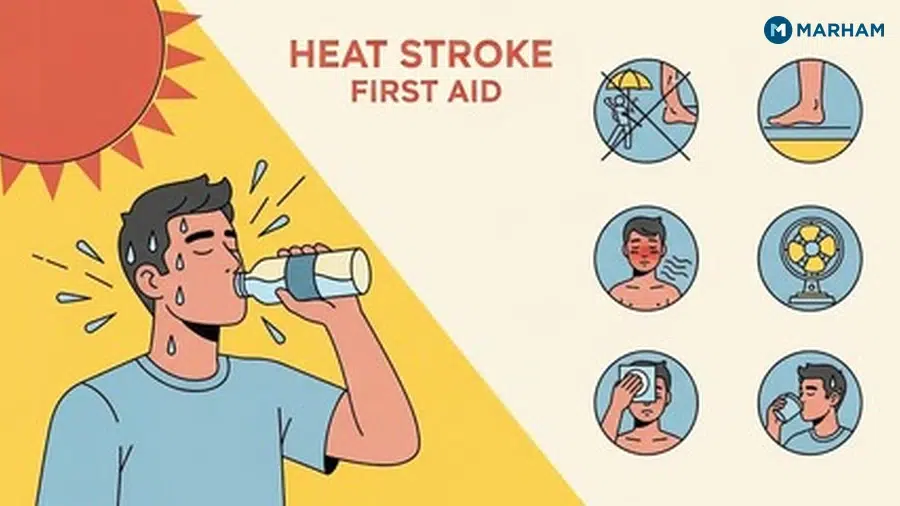
- Move the person to shade or a cool indoor space — get them out of direct sun right away.
- Remove outer clothing — loosen or remove heavy garments to expose skin to air.
- Apply cold, wet cloths or ice packs — place on the neck, armpits, and groin where blood vessels are close to the skin.
- Fan the person continuously — fanning while misting with cool water speeds evaporative cooling.
- Give ORS (Oral Rehydration Solution) or cool water — only if the person is fully conscious and can swallow safely; never force fluids.
- Do NOT give paracetamol or ibuprofen — fever-reducing medicines are ineffective for heatstroke and may cause harm.
- Get emergency medical care — transport the patient to the nearest hospital immediately; cooling must continue during transit.
Per WHO guidelines, early reduction of core body temperature is the single most important intervention in heatstroke management. In Karachi hospitals, patients arriving within 30 minutes of symptom onset have significantly better outcomes.
How to Prevent Heatstroke During Pakistan’s Heatwave Season
Prevention is far simpler than treatment. These steps are practical for daily life in Pakistani cities and villages alike.
- Avoid going outdoors between 11 AM and 4 PM during peak summer months (May–July).
- Drink water consistently — do not wait until you feel thirsty; thirst is already a sign of mild dehydration.
- Eat water-rich foods: tarbuz (watermelon), khira (cucumber), and lassi help maintain hydration alongside meals.
- Wear loose, light-coloured, cotton shalwar kameez — it reflects heat and allows airflow.
- Use a wet dupatta or wet cloth on the back of the neck when outdoors — a low-cost, highly effective cooling method.
- Arrange cross-ventilation at home during load-shedding hours; keep windows open at night when temperatures drop.
- Check on elderly neighbours and relatives daily during heatwave alerts issued by the Pakistan Meteorological Department.
According to the Pakistan Meteorological Department’s May 2026 outlook, mean temperatures are expected to remain above normal across Punjab, Sindh, and Balochistan — making these prevention habits non-negotiable this season.
Important: Stop home management and seek emergency care immediately if the person loses consciousness, stops responding to their name, has a seizure, or their body temperature remains above 40°C after 20 minutes of cooling. These are signs of severe heatstroke requiring hospital-level intervention. Do not delay — book or consult an emergency physician or general physician through Marham for guidance, or go directly to your nearest emergency department.
Frequently Asked Questions
What are the signs of heatstroke?
The main signs of heatstroke are a body temperature above 40°C, hot and dry skin, stopped sweating, confusion or disorientation, rapid heartbeat, and in severe cases, loss of consciousness. These symptoms differ from heat exhaustion in that the body has lost its ability to cool itself entirely. In Pakistan, outdoor workers in cities like Karachi and Lahore are most commonly affected during May to July.
What is the difference between heat exhaustion and heatstroke?
Heat exhaustion is a milder condition where the body is struggling to cool down but the core temperature stays below 40°C and mental function remains mostly intact. Heatstroke is a medical emergency where temperature exceeds 40°C and the person shows brain dysfunction — confusion, aggression, or unconsciousness. In Pakistan, untreated heat exhaustion during long outdoor shifts frequently escalates to full heatstroke within hours.
How do you treat heatstroke at home?
You cannot fully treat heatstroke at home — it is a medical emergency requiring hospital care. However, while waiting for help, move the patient to shade, apply ice packs to the neck and armpits, fan them continuously, and give ORS if they are conscious and able to swallow. Do not give paracetamol or ibuprofen. In Pakistani households, a wet cloth on the back of the neck combined with a hand fan is a practical immediate measure before reaching a hospital.
Who is most at risk for heatstroke in Pakistan?
Outdoor labourers, the elderly, young children, and people with chronic conditions like diabetes, hypertension, or kidney disease are at highest risk in Pakistan. People experiencing long load-shedding hours without fans or air conditioning are also highly vulnerable. A 2024 PMC study found that Karachi’s urban heat island effect and power outages significantly amplify heatstroke risk for low-income residents.
When should you go to the hospital for heatstroke?
Go to the hospital immediately if the person is confused, unconscious, having a seizure, or their temperature stays above 40°C after 20 minutes of first aid cooling. Heatstroke can cause permanent brain and organ damage within 30 minutes of onset — delay is fatal. Consult a specialist on Marham if you are unsure whether symptoms are serious, or proceed directly to the nearest emergency room.
This article has been reviewed by the Marham Medical Team for clinical accuracy.
Conclusion
Heatstroke symptoms in Pakistan are a growing public health emergency — and 2026 is shaping up to be one of the most dangerous summers on record. Recognising the difference between heat exhaustion and heatstroke, acting within the first 30 minutes, and staying hydrated in our extreme climate can mean the difference between full recovery and permanent organ damage.
Do not ignore dizziness, stopped sweating, or sudden confusion during a heatwave. If you or someone around you shows these signs, cool them down immediately and get medical help fast. Connect with a verified doctor on Marham to discuss heat-related health concerns, especially if you or a family member has diabetes, hypertension, or kidney disease.


