


Imagine laughing at a family gathering, rushing through your daily errands, or simply sneezing and suddenly feeling a urine leak. It’s more than just embarrassing. It quietly steals your confidence, limits your social life, and takes a toll on your health.
Don’t worry, you are not alone in this. According to the World Health Organization (WH0), more than 423 million adults worldwide suffer from urinary incontinence. In Pakistan, the numbers are just as significant.
A study in rural Sindh found that about 11 out of every 100 women aged 15 and above had this problem. The most common type was stress urinary incontinence, where leakage happens during coughing, sneezing, or lifting.
Despite it, only a small fraction (16%) seek treatment due to shame or lack of awareness. In big cities like Lahore, the rate is almost the same. Risk factors include having many children, getting married at a young age, and growing older.
The good part is that treatment is available, and you don’t have to live with this problem quietly.
In this blog, we will cover urinary incontinence meaning in Urdu, causes, symptoms, types, diagnosis, and treatment options. We will also explain how you can easily consult online with top urologists and gynecologists in Pakistan through Marham.
Urinary Incontinence Meaning in Urdu
Urinary incontinence meaning in Urdu is پیشاب پر قابو نہ رہنا.
اس میں انسان اپنی مرضی کے بغیر پیشاب کے اخراج کا سامنا کرتا ہے۔ یہ مسئلہ کسی بھی عمر میں ہوسکتا ہے لیکن زیادہ ترعورتوں اور عمر رسیدہ افراد میں عام پایا جاتا ہے۔
اس حالت میں کھانسی، چھینکنے، ہنسنے، وزن اٹھانے یا اچانک حرکت کرنے سے پیشاب نکل سکتا ہے۔ بعض افراد کو اچانک پیشاب کی شدید حاجت محسوس ہوتی ہے لیکن وہ ٹوائلٹ تک پہنچنے سے پہلے ہی پیشاب خارج ہوجاتا ہے۔
یہ مسئلہ شرمندگی اور روزمرہ زندگی پر اثر انداز ہوتا ہے، اسی وجہ سے بہت سے لوگ علاج نہیں کرواتے۔ حالانکہ یہ ایک قابلِ علاج بیماری ہے اور مختلف دوائیں، ورزشیں اور میڈیکل علاج کے ذریعے اس پر قابو پایا جاسکتا ہے۔
Urinary Incontinence Symptoms
The most common symptoms of urinary incontinence include:
- Sudden, strong urge to urinate
- Leakage when laughing, coughing, or exercising
- Frequent trips to the bathroom, especially at night
- Dribbling after urination
- Feeling of incomplete emptying
If you notice these signs, it’s time to get medical advice. Consult the best urologists in Pakistan for urinary incontinence to prevent complications. You can also book an online video consultation through Marham and discuss your symptoms with an experienced urinary incontinence specialist near you.
Urinary Incontinence Causes
Wondering what actually causes this? Urinary incontinence happens when the muscles and nerves that control the bladder become weak or don’t work properly. It is more common in women than men. Several health and lifestyle factors can lead to this problem, including:
- Weak pelvic floor muscles (after childbirth or aging)
- Prostate problems in men
- Urinary tract infections (UTIs)
- Neurological disorders (stroke, Parkinson’s disease, multiple sclerosis)
- Menopause-related hormonal changes
- Obesity
- Chronic coughing
- Use of certain medications
These causes can vary from person to person, but most are treatable with proper medical care.
Types of Urinary Incontinence
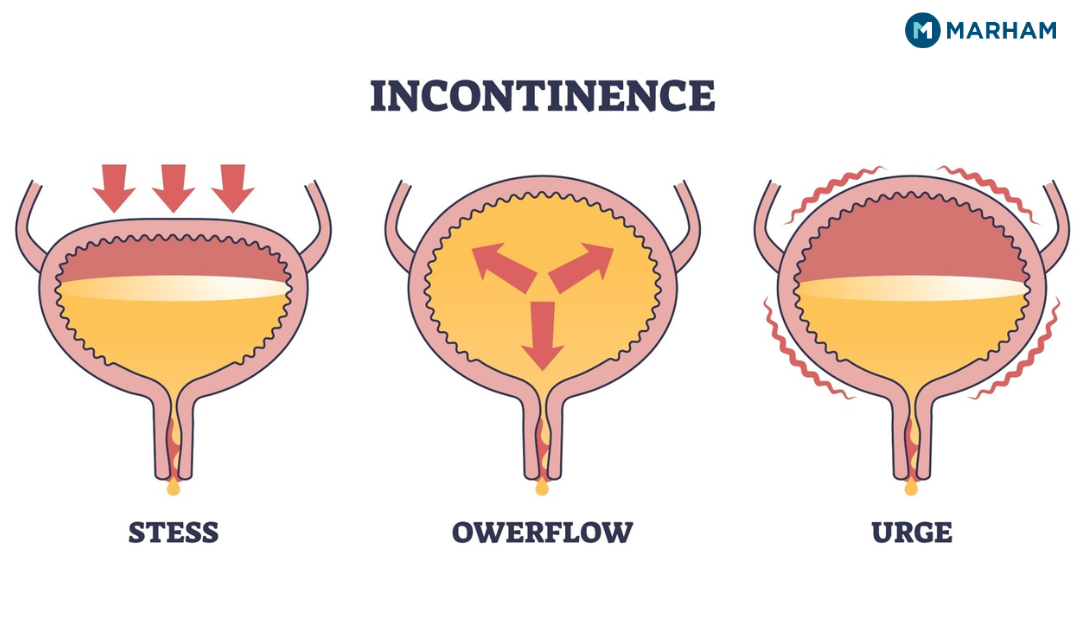
Urinary incontinence is not the same for everyone. It can appear in different forms based on what causes the leakage. The main types include:
1. Stress Incontinence
Stress urinary incontinence is the most common type, especially in women. It happens when urine leaks during activities that put pressure on the bladder, such as coughing, sneezing, laughing, running, or lifting heavy objects. Weak pelvic floor muscles are usually the main reason.
2. Urge Incontinence
In this type, a person feels a sudden, strong urge to urinate, and cannot reach the bathroom in time. It is sometimes called “overactive bladder.” Even small triggers like hearing running water, drinking a little fluid, or being stressed can cause this sudden urge.
3. Overflow Incontinence
This occurs when the bladder doesn’t empty completely. As a result, urine builds up and leaks out in small dribbles. It is more common in men with prostate problems. However, it can also happen in women with weak bladder muscles or nerve damage.
4. Functional Incontinence
In this type, the bladder itself may be working fine, but physical or mental health issues make it hard to get to the bathroom on time. For example, someone with arthritis may not move quickly, or someone with dementia may not recognize the need to use the toilet.
5. Mixed Incontinence
As the name shows, this is a combination of two types which are stress incontinence and urge incontinence. For example, a person may leak both when sneezing and when they suddenly feel a strong urge to urinate.
Not sure which type you have? Book an online consultation with the best urologists in Lahore, Karachi, or Islamabad through Marham. Get a proper diagnosis and personalized treatment plan from the comfort of your home.
Urinary Incontinence Diagnosis
To find out the exact cause of urinary incontinence, doctors use a mix of medical history, physical examination, and specific tests.
Step 1: Medical History & Bladder Diary
Your doctor may ask you to keep a bladder diary for a few days. This includes noting how much fluid you drink, how often you urinate, when leakage happens, and how urgent the urge feels. This simple record gives doctors a clear picture of your bladder habits.
Step 2: Physical Examination
A physical exam may be done to check for underlying issues. For women, this includes a pelvic exam to look at the bladder and pelvic floor muscles. For men, a prostate exam may be performed.
Step 3: Basic Tests
- Urinalysis: A simple urine test to check for infection, blood, or other problems.
- Post-Void Residual (PVR) Test: Measures how much urine is left in the bladder after urination. It is done with an ultrasound or a catheter.
Step 4: Advanced Tests
If more information is needed, doctors may suggest:
- Urodynamic Testing: This checks bladder pressure and function while filling and emptying.
- Cystoscopy: In this test, a thin tube with a camera is inserted into the bladder to see inside.
- Ultrasound Imaging: This test creates images of the bladder and urinary tract.
- Stress Test: It observes leakage while you cough or bear down with a full bladder.
These tests help doctors understand the type and cause of incontinence, so they can choose the most effective treatment for you.
Urinary Incontinence Treatment
The right treatment of urinary incontinence depends on the type and severity of the problem. A doctor will recommend the best option after examining your condition. Common treatment methods include:
1. Lifestyle Changes
Simple changes can make a big difference. Cutting down on caffeine and alcohol, staying hydrated in the right way, and keeping a healthy weight all reduce extra pressure on the bladder.
2. Pelvic Floor (Kegel) Exercises
Kegel exercises strengthen the muscles that control urination. With regular practice, many people notice significant improvement in leakage problems.
Some simple pelvic floor exercises include:
- Basic Kegel: Tighten the muscles you use to stop urination, hold for 5 seconds, then relax for 5 seconds. Repeat 10–15 times, 2–3 times a day.
- Quick Flicks: Quickly tighten and relax the pelvic muscles several times in a row.
- Bridge Pose: Lie on your back, bend your knees, lift your hips, and squeeze your pelvic floor muscles. Hold for a few seconds, then relax.
- Squats with Squeeze: While doing a squat, gently engage your pelvic muscles for extra strengthening.
Consistency is the key. Over time, these exercises can greatly reduce symptoms and improve bladder control.
3. Bladder Training
This involves scheduling bathroom visits and gradually increasing the time between urinations. Gradually, it helps you regain bladder control.
4. Medications
Specific medicines for urinary incontinence relax the bladder muscles and decrease sudden urges, especially in urge incontinence.
5. Medical Devices
For women, doctors sometimes recommend devices like pessaries, which support the bladder and prevent leakage.
6. Surgery
In severe or persistent cases, surgical options may be considered to provide long-term relief.
Ready to start your treatment? Connect with Pakistan’s best gynecologists and urologists through Marham. Read verified patient reviews and book your appointment in minutes.
Prevention Tips for Urinary Incontinence
How do you fix incontinence? A few simple habits can go a long way in keeping your bladder healthy. By making small changes in your daily routine, you can reduce the risk of urinary incontinence and improve overall well-being.
- Stay active and avoid obesity
- Perform pelvic floor exercises daily
- Limit caffeine and alcohol intake
- Treat chronic coughs and constipation early
- Go for regular health checkups after childbirth or menopause
When to Consult a Doctor
If urinary incontinence problems are affecting your daily life, don’t delay seeking help. In Pakistan, thousands silently struggle due to embarrassment, but doctors handle these cases every day.
Through Marham, you can:
- Find and book the best urologists and gynecologists in Pakistan
- Read patient reviews before booking
- Choose between in-clinic visits or video consultation
- Get treatment in complete privacy at home
Conclusion
Urinary incontinence issues may be common but they are not normal and should never be ignored. With timely diagnosis and treatment, you can regain control, improve confidence, and live without constant worry.
Don’t let embarrassment hold you back. Take the first step toward a healthier, worry-free life. Book your consultation through Marham today and find the best treatment for urinary incontinence!
