
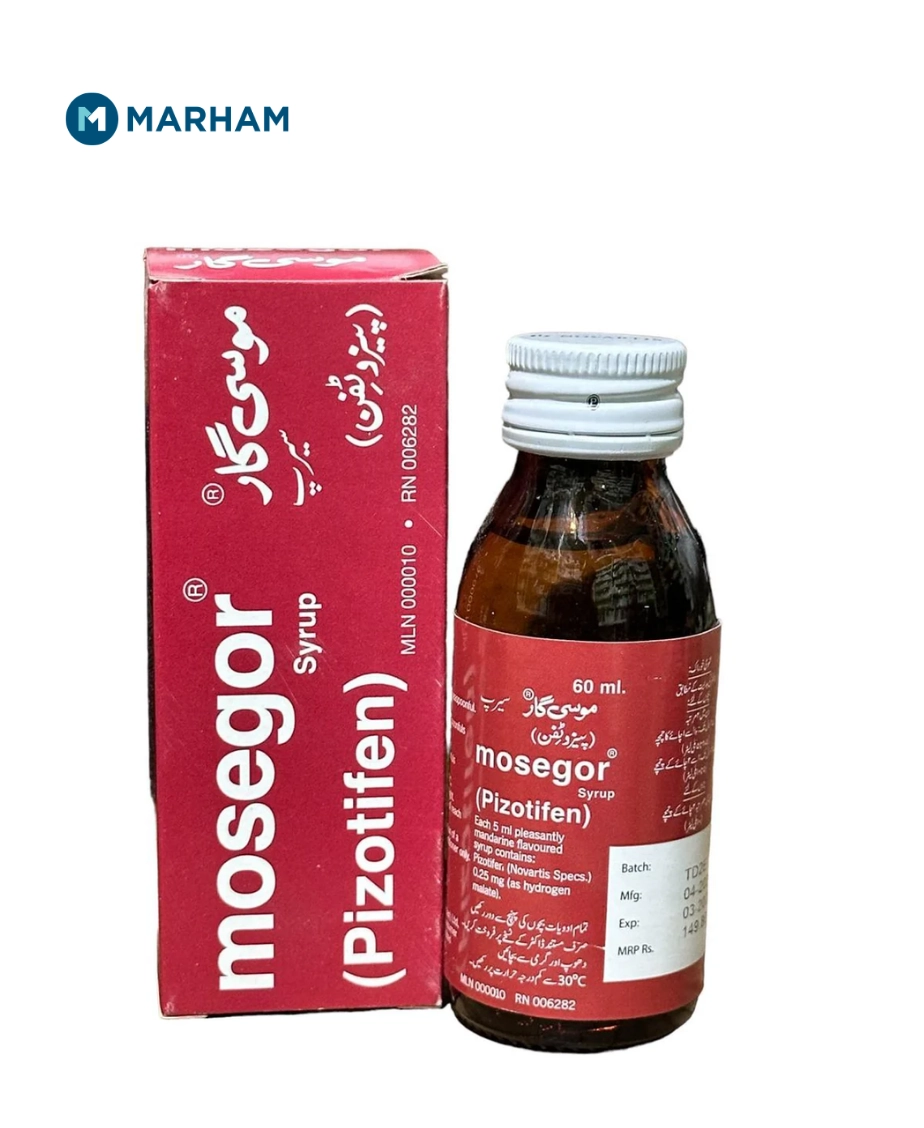
Mosegor Syrup Uses
About Mosegor Syrup
Mosegor syrup is primarily used for preventing migraine and cluster-type headaches. It contains Pizotifen, which works by blocking certain serotonin receptors (5-HT₂). This reduces the frequency and severity of migraine attacks. Besides its anti-migraine role, it may also help stimulate appetite, especially in underweight individuals.
Mosegor Syrup Uses
Mosegor syrup is commonly used for:
- Preventing migraine headaches
- Preventing cluster (Horton’s) headaches
- Stimulating appetite / supporting weight gain in undernutrition or appetite loss situations
- Reducing migraine symptoms such as nausea and vomiting
- Treating allergic conditions such as hay fever
- Easing menopause-related issues like hot flashes and sweating
- Aiding sleep due to its sedative properties
- Reducing anxiety and stress
- Preventing motion sickness during long-distance travel
- Maintaining serotonin levels
Mosegor Syrup Dosage and Administration
Always use mosegor syrup exactly as prescribed by your doctor.
Typical Dose:
- Usually started at 0.5 mg/day, which corresponds to 10 ml of the syrup.
- Dose may be adjusted based on patient response.
How to Take:
- Shake the bottle well before use.
- Measure accurately using a measuring cup or syringe.
- Can be taken with or without food, as per doctor’s instructions.
- If you forget a dose: take it when you remember the same day.
- Do not double up for the next dose.
Mosegor Syrup Warnings
Do not use mosegor syrup if you:
- Are allergic to Pizotifen or any ingredient in the syrup.
- Have narrow-angle glaucoma.
- Have a history of urinary retention (e.g., enlarged prostate).
- Have severe liver or kidney disease.
- Are under 2 years old.
Mosegor Syrup Precautions
Talk to your doctor before using mosegor syrup if you:
- Have a history of epilepsy.
- Have heart or blood vessel problems.
- Have a high blood pressure.
- Are pregnant or breastfeeding.
- Drink alcohol or have a history of alcohol abuse.
Mosegor Syrup Side Effects
Common side effects of mosegor syrup may include:
- Increased appetite
- Weight gain
- Drowsiness or sedation
- Dizziness
- Dry mouth
- Nausea
- Mild gastrointestinal discomfort
- Depression
- Hallucinations
- Agitation
- Aggression
- Tingling sensation
Serious side effects are less common but could include:
- Unusual weakness or fatigue
- Headache (paradoxically)
If you experience anything severe (e.g., allergic reaction, very strong sedation, mood changes), seek medical advice immediately.
Storage Instructions
- Store mosegor syrup in a cool, dry place
- Store it away from direct sunlight.
- Keep the bottle tightly closed when not in use.
- Keep out of reach of children.
- Store below 25°C.
Packaging and Quantity
Mosegor syrup is commonly available in 60 ml bottles. There is also a 120 ml version available.
Prescription Requirement
Mosegor syrup typically requires a doctor’s prescription in Pakistan.
Get Expert Advice on Marham Before Using Any Medicine
Marham helps you connect with qualified doctors for expert medical advice. You can easily book online or in‑person appointments through the Marham website, mobile apps, or by calling 0311‑1222398.
Frequently Asked Questions about Mosegor Syrup
Is mosegor syrup an antihistamine?
Can mosegor syrup cause weight gain?
Is it safe to drive after taking mosegor?
What is the price of mosegor syrup in Pakistan (60 ml)?
What are mosegor syrup uses in Urdu?
What is the Mosegor Syrup price in Pakistan?
Disclaimer
Marham shares expert-reviewed information to support your health journey. The information on this page is only to guide and inform you. For any personal advice, it’s always best to check with a medical professional.
Reviewed by

Farwa Hassan
Consult a Doctor Online
Top-rated, PMDC-verified doctors you can book online today — ghar baithe.

Dr. Muhammad Waqar Saeed
Nephrologist · MBBS(SMC), MRCPS (Glasgow), MACP (Member of American College of Physicians), Pg Diploma in Renal Medicine (University Of South Wales, UK), American Certified Kidney Health Coach, Certificate in Peritoneal Dialysis Catheter Insertion (Royal Preston Hospital, Preston, UK)

Dr. Muhammad Awais Latif
Orthopedic Surgeon · MBBS, FCPS

Dr. Muhammad Rizwan Ali
Orthopedic Surgeon · MBBS, FCPS (Orthopedic Surgery), FCPS (Spine Surgery)