


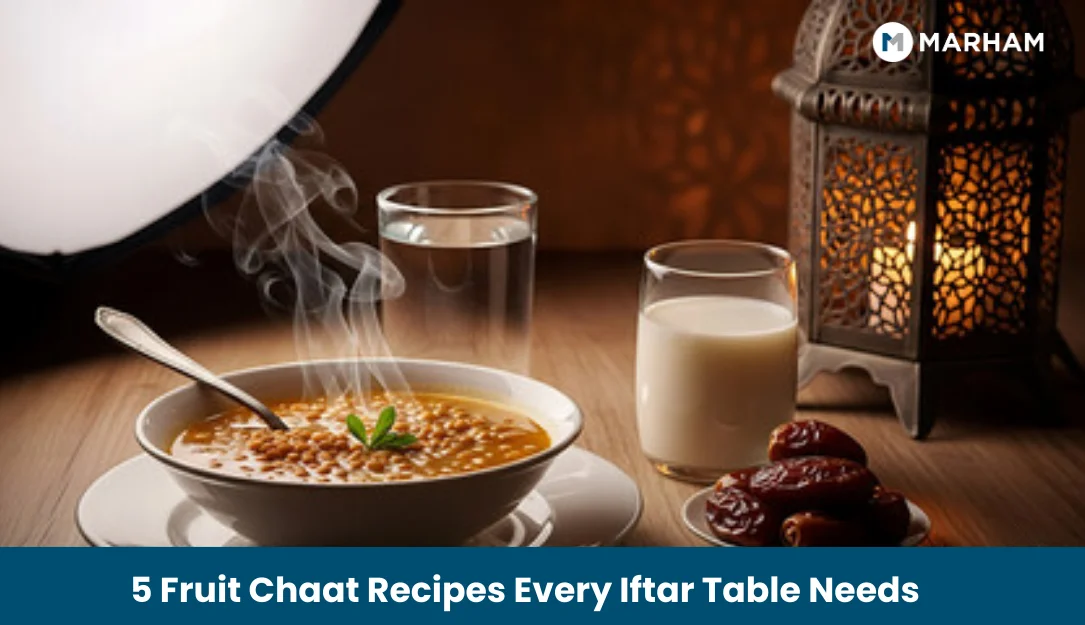
Have you ever sat at the dastarkhwan right before Maghrib, staring at pakoras and samosas, and wondered why you feel terrible an hour after eating all of it? Most of us grow up thinking iftar is about eating as much as possible the moment the azaan hits. But the truth is that choosing the best foods to break your fast with decides whether you feel fresh for Taraweeh or end up lying on the sofa like a deflated balloon. Your dadi probably already knew this when she handed you a khajoor and a glass of water before letting you touch anything else.
7 Iftar Foods Your Body Needs
1. Dates and Water (کھجور اور پانی)
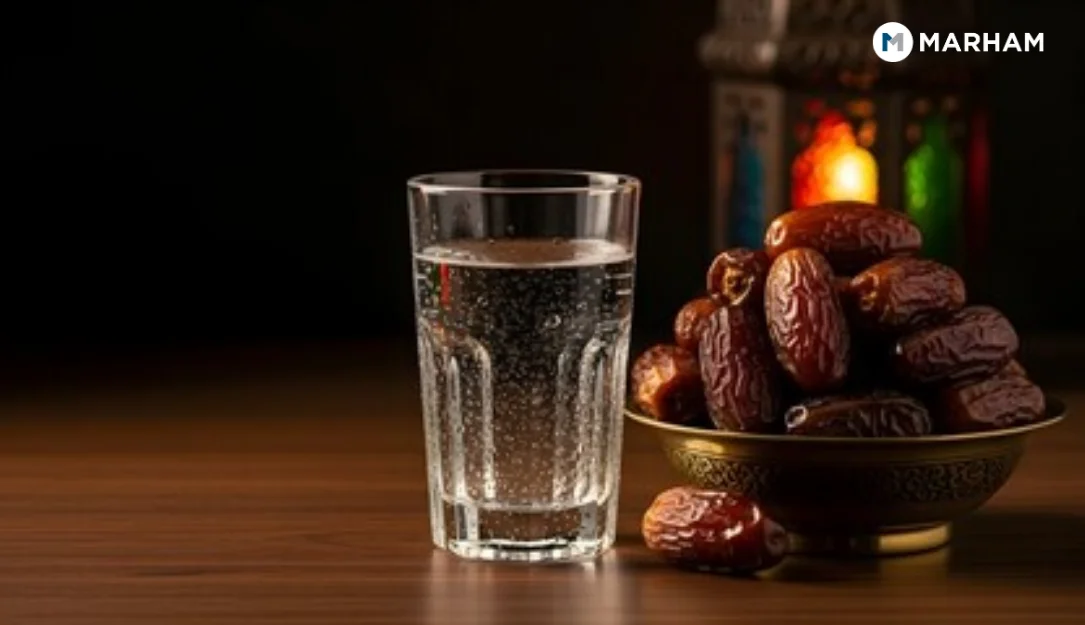
There is a reason every elder in your family insists on breaking the fast with dates first. Khajoor contains natural sugars like glucose and fructose that give your body a gentle energy lift without the crash you get from fried snacks. They are also packed with potassium, magnesium and fiber that start restoring your electrolytes from the very first bite. Two to three dates with room temperature water is all you need to wake your digestive system up softly. Skip the ice cold water because your stomach has been empty all day and shocking it with freezing water only leads to cramps.
2. Warm Soup or Yakhni (یخنی / سوپ)
That pot of chicken yakhni simmering on your ammi’s stove all afternoon is genuinely one of the best parts of Ramadan. Soup hydrates you, provides minerals from the broth and introduces nutrients without putting any pressure on a stomach that has been resting all day. Think of it this way: if your car has been parked all day you warm up the engine before driving. Your stomach works the same way. A cup of soup before the main course is the difference between feeling light and feeling stuffed.
3. Fresh Fruits and Fruit Chaat (تازہ پھل)
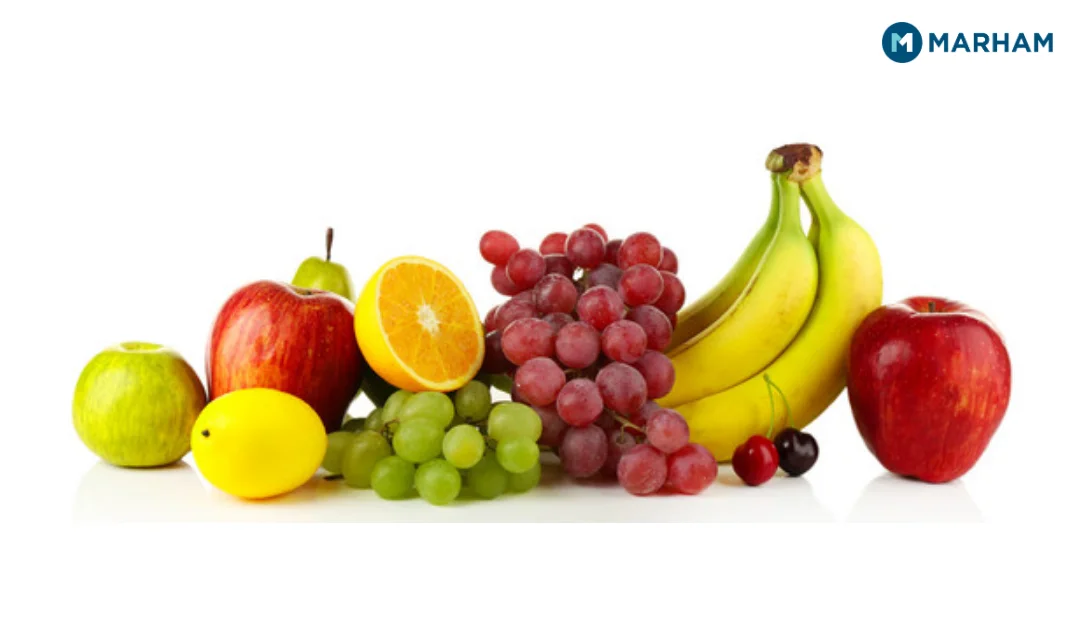
Fruit chaat with chaat masala and a squeeze of lemon is practically a Ramadan institution in Pakistan. Watermelon is a superstar because it is over 90% water, perfect for rehydration. Bananas bring potassium that helps with muscle cramps and that shaky feeling some people get while fasting. Oranges give you vitamin C to keep your immunity strong. The key is eating fruits at the beginning of iftar rather than as dessert because your body absorbs nutrients much better when your stomach is not already packed with rice and curry.
4. Yogurt or Lassi (دہی / لسی)
Dahi is a permanent resident in every Pakistani fridge and during Ramadan it becomes even more important. Yogurt is full of probiotics that keep your gut working smoothly and help you digest everything else you eat at iftar. A glass of namkeen lassi with a pinch of salt and roasted zeera can prevent that horrible bloated feeling that makes Taraweeh uncomfortable. The calcium and protein also help maintain your energy through the evening. Skip packaged flavored yogurts loaded with sugar and stick to homemade dahi. Your nani was right about that one.
5. Eggs (انڈے)
Eggs might be the most underrated iftar food in Pakistan. One boiled egg gives you around 6 grams of protein along with vitamin D and B12, exactly what your brain and muscles need after a full day without food. Eating protein early in your meal after a fast helps control appetite for hours, meaning you will not be raiding the kitchen at midnight. A quick masala omelette with green chilies, a boiled egg with chana chaat or a simple anda paratha are all excellent choices. Cheap, quick and exactly what your body needs.
6. Sweet Potato (شکرقندی)
The shakarkandi wala outside the masjid is honestly one of the best nutritionists in your neighborhood. Sweet potatoes have a lower glycemic index than regular potatoes, meaning they raise your blood sugar gently instead of causing a spike and crash. They are loaded with fiber, beta carotene and potassium. A roasted shakarkandi with lemon and chaat masala is the kind of iftar food that fills you up and does not leave you regretting your choices an hour later.
7. Oats or Daliya (دلیہ)
I know daliya at iftar sounds boring but hear me out. Oats are complex carbohydrates that release energy slowly over hours instead of all at once. That fried samosa gives you a ten minute burst and then drops you flat. A bowl of daliya keeps you going through Taraweeh and beyond. Throw in some chopped dates, crushed almonds and a drizzle of honey and suddenly it is an iftar bowl that tastes great and is actually good for you.
افطار میں کیا کھائیں | Urdu Summary
رمضان میں افطار کا وقت سب سے اہم ہوتا ہے کیونکہ پورا دن روزہ رکھنے کے بعد جسم غذائیت کا محتاج ہوتا ہے۔ کھجور اور پانی سے افطار کریں کیونکہ اس میں قدرتی شکر اور معدنیات ہوتی ہیں۔ یخنی یا سوپ معدے کو آہستہ آہستہ کھانے کے لیے تیار کرتا ہے۔ تازہ پھل وٹامنز اور پانی سے بھرپور ہوتے ہیں۔ دہی یا لسی ہاضمے کو بہتر بناتے ہیں۔ انڈے پروٹین کا بہترین ذریعہ ہیں۔ شکرقندی اور دلیہ پوری رات توانائی فراہم کرتے ہیں۔ تلی ہوئی اشیاء سے پرہیز کریں تاکہ رمضان میں صحت مند رہیں۔
What to Avoid at Iftar
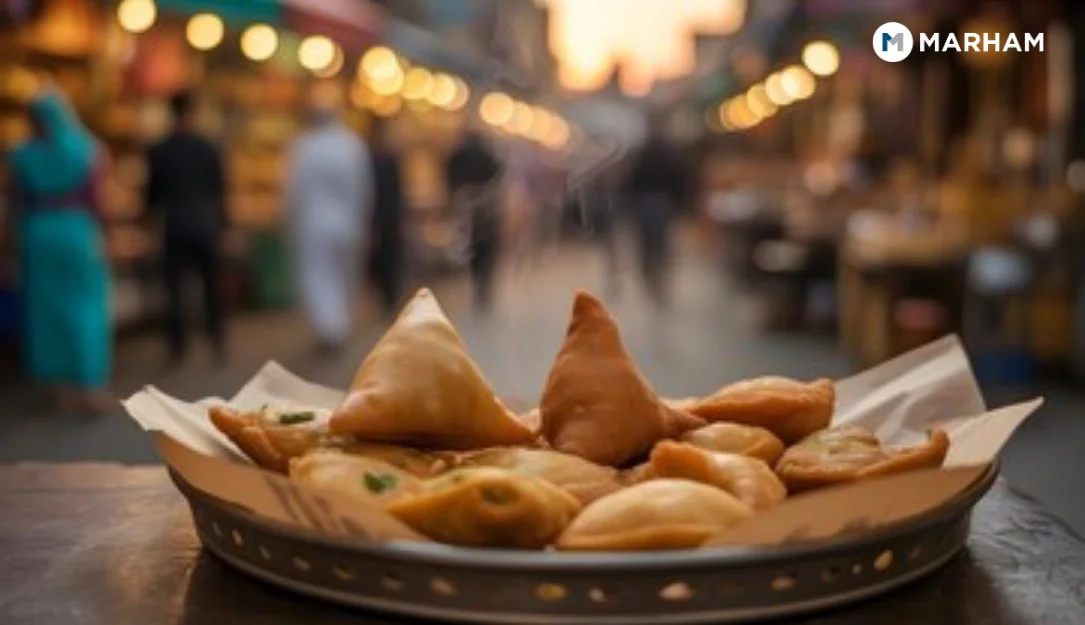
Fried foods like pakoras and samosas are the number one reason people feel heavy and bloated after iftar. Your stomach has been empty all day and the first thing you throw at it is deep fried dough soaked in oil. Sugary drinks like Rooh Afza and cola dump massive amounts of sugar into your bloodstream, give you a twenty minute high and then crash you harder than before. Plain water, fresh lassi or lemon water hydrate you properly without the sugar rollercoaster. And finally, overeating in general stretches a stomach that has physically shrunk during fasting hours. Eat slowly, start light and give yourself a gap between initial iftar and the main meal.
Side Effects and Cautions
Poor iftar choices over 30 days can cause acid reflux from spicy fried foods on an empty stomach, unexpected weight gain from consuming more calories between iftar and sehri than normal days, and constipation from too little fiber and water. Pregnant and breastfeeding women should be especially careful about nutrition during Ramadan and consult their doctor before fasting. If you have diabetes or blood pressure issues, your iftar foods directly affect your condition and personalized guidance is essential.
You can consult a qualified nutritionist through Marham by calling or WhatsApp at 0311 1222398 to plan your iftar around your specific health needs.
Conclusion
Choosing the best foods to break your fast with does not require fancy ingredients. Start with dates and water, ease into eating with soup and fruits, prioritize protein and complex carbs over fried snacks, and give your stomach time to adjust. These foods are affordable, available everywhere in Pakistan and most are already part of our Ramadan traditions. Start with just one small change to your iftar routine this Ramadan and you will feel the difference by the first week.
