


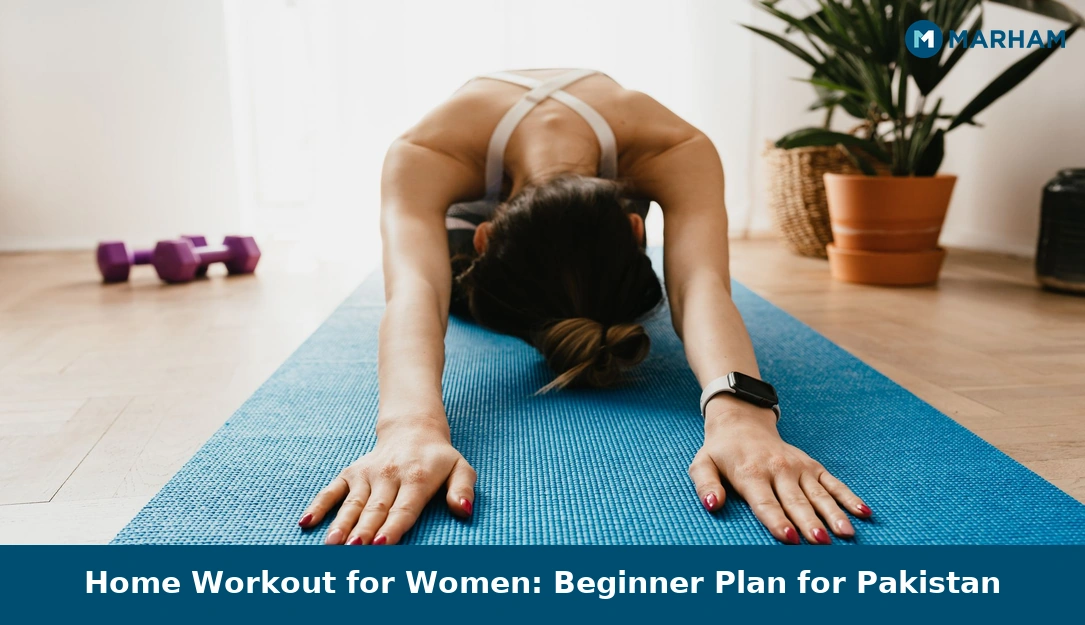
Many women in Pakistan want to get fit but face real barriers: no nearby gym, safety concerns about going out alone, family responsibilities, and the sheer expense of a monthly membership. The good news is that a well-structured home workout for women can be just as effective as the gym, especially in the early months when building the habit matters more than the equipment.
According to the WHO’s 2020 physical activity guidelines, adults need at least 150 minutes of moderate-intensity aerobic activity per week, plus muscle-strengthening activity on two or more days. Most Pakistani women are not meeting even half of that, partly because outdoor exercise feels inaccessible and gym culture is still limited in many cities. A home routine removes those barriers entirely.
This guide covers a practical weekly plan, the best bodyweight exercises for beginners, how to make it work during Ramadan, and when it makes sense to get professional support.
گھر میں خواتین کی ورزش
گھر میں ورزش کرنا پاکستانی خواتین کے لیے ایک بہترین آپشن ہے کیونکہ اس میں نہ جم کی فیس لگتی ہے اور نہ باہر جانے کی ضرورت ہوتی ہے۔ ہفتے میں تین سے چار دن، صرف تیس منٹ کی ورزش سے وزن کنٹرول، ہڈیوں کی مضبوطی اور ذہنی سکون میں نمایاں فرق آ سکتا ہے۔ اسکواٹس، پلانک، لنجز اور پش اپس جیسی بنیادی مشقیں بغیر کسی آلات کے گھر کے کسی بھی کمرے میں کی جا سکتی ہیں۔ رمضان المبارک میں افطار کے بعد ہلکی ورزش کرنا محفوظ اور فائدہ مند ہو سکتا ہے۔ اگر آپ کو پی سی او ایس، تھائرائیڈ یا کوئی دوسری طبی تکلیف ہو تو ورزش شروع کرنے سے پہلے کسی ماہر سے مشورہ ضرور کریں۔
Why Home Workouts Work So Well for Pakistani Women
Home workouts remove the three biggest obstacles Pakistani women face: cost, commute, and privacy. You don’t need a dupatta-friendly gym, a car, or a babysitter. A 3 by 2 metre space in your bedroom or drawing room is enough for a full bodyweight session.
There is also a real safety dimension here. Many women in Lahore, Karachi, and Islamabad report feeling uncomfortable walking or jogging outdoors, particularly in the evening. A home routine sidesteps that entirely. You control the time, the pace, and the environment.
For women managing PCOS (polycystic ovary syndrome), a hormonal condition that affects roughly 1 in 5 women in South Asia according to research published in the Journal of Human Reproductive Sciences, regular movement at home is one of the most accessible ways to support insulin sensitivity and manage weight. You don’t need a gym to get that benefit.
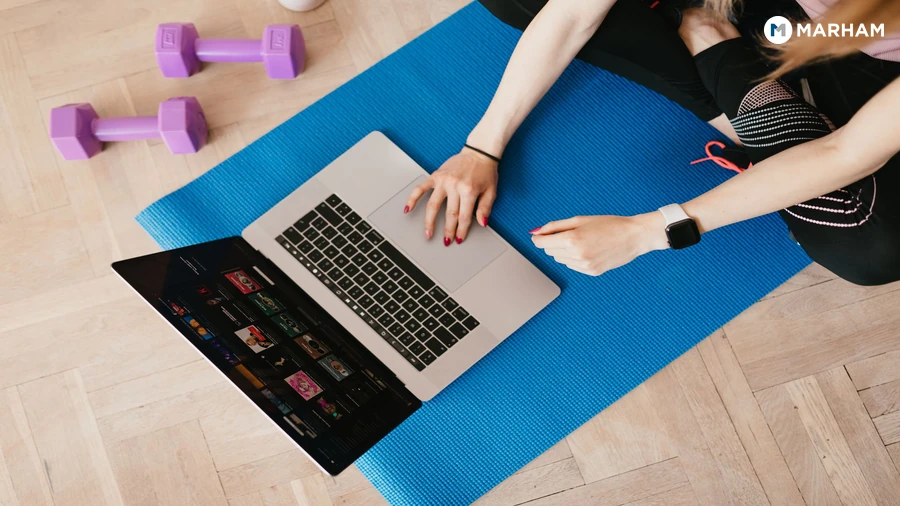
Best Bodyweight Exercises for Beginners at Home
These six moves target the major muscle groups with zero equipment. They form the foundation of any beginner home workout plan for women.
- Squats — work the thighs, glutes, and core. Keep your back straight and lower as if sitting into a chair.
- Push-ups — strengthen the chest, shoulders, and triceps. Do them on your knees if you’re just starting out.
- Glute bridges — lie on your back, feet flat, and lift your hips. Excellent for the lower back and glutes.
- Lunges — step one foot forward and lower your back knee toward the floor. Alternating legs builds balance and leg strength.
- Plank — hold a straight-arm or forearm position for 20 to 30 seconds. Builds core stability without straining the lower back.
- High knees — jog in place, driving your knees up to hip height. A simple cardio move that raises your heart rate fast.
Start with 2 sets of 10 to 12 repetitions for each exercise. As you get stronger over the first 3 to 4 weeks, move to 3 sets.
A Simple Weekly Home Workout Plan for Women
Consistency beats intensity every time, especially for beginners. Here is a realistic 4-day structure that fits around household duties, work, and prayer times.
| Day | Session Type | Duration |
|---|---|---|
| Monday | Strength (squats, lunges, glute bridges) | 25 to 30 min |
| Tuesday | Rest or light walk indoors | 15 min |
| Wednesday | Cardio (high knees, jumping jacks, spot jogging) | 20 to 25 min |
| Thursday | Rest | — |
| Friday | Full body (all 6 exercises above) | 30 min |
| Saturday | Core focus (planks, leg raises, bicycle crunches) | 20 min |
| Sunday | Rest | — |
This gives you 4 active days and 3 rest days, which matches the WHO recommendation for muscle-strengthening activity on at least 2 days per week, with adequate recovery in between.
How to Start Your Home Workout: Step-by-Step
Following a structure on day one prevents the most common beginner mistake: doing too much, getting sore, and quitting.
- Clear a space the night before. Move the charpai or coffee table aside. Lay down a folded dastarkhan or a basic yoga mat (available at most Lahore and Karachi sports shops for around Rs 800 to Rs 1,500) to cushion your knees and wrists.
- Warm up for 5 minutes. March in place, do arm circles, and gently swing each leg forward and back. Cold muscles tear more easily than warm ones.
- Work through your chosen exercises at a pace where you can still hold a short conversation. If you can’t speak at all, slow down.
- Rest 30 to 60 seconds between sets. Use this time to drink water, not to scroll your phone — you’ll lose the warm-up benefit.
- Cool down with 5 minutes of gentle stretching. Stretch the thighs, calves, and lower back. This reduces next-day soreness, which is the main reason beginners skip their second session.
- Log what you did. Write it in a notebook or the notes app on your phone: which exercises, how many reps, how you felt. Tracking progress is the single strongest predictor of long-term consistency, according to behavioural research in exercise adherence.
- Increase gradually. Add one more rep or five more seconds of plank every week. This principle, called progressive overload, is how bodyweight training keeps delivering results as you get stronger.
HIIT vs Strength Training: What Works Better for Women at Home?
Both have a place, but they serve different goals.
| HIIT (High-Intensity Interval Training) | Strength Training | |
|---|---|---|
| What it is | Short bursts of intense cardio with brief rest periods | Bodyweight or resistance-based exercises targeting muscle groups |
| Best for | Burning calories quickly, improving cardiovascular fitness | Building muscle, boosting resting metabolism, improving bone density |
| Session length | 15 to 25 minutes | 25 to 40 minutes |
| Good for PCOS | Moderate HIIT can help; very intense sessions may raise cortisol | Highly recommended — improves insulin sensitivity |
| Beginner-friendly | Start with low-impact versions (no jumping) | Yes, bodyweight is an ideal starting point |
For most Pakistani women starting out, a mix of both works better than choosing one. Three days of strength-focused bodyweight work and one day of moderate cardio per week is a practical starting point. Women with PCOS or thyroid conditions should check with a doctor before doing high-intensity sessions, as very intense exercise can sometimes worsen hormonal imbalance in the short term.
Home Workouts During Ramadan: What to Know
Ramadan is the time of year when most Pakistani women abandon their routines entirely. It doesn’t have to be that way.
The safest window for exercise during Ramadan is 60 to 90 minutes after Iftar, once you’ve had water and a light meal. At this point, your body is re-hydrated and your blood sugar has stabilised. Avoid exercising just before Iftar when you’re dehydrated, and skip high-intensity sessions in the first week while your body adjusts to the new schedule.
A 20-minute gentle strength session after Iftar, three times a week, is enough to maintain the fitness you’ve built. It also helps manage the weight gain that many women experience from heavy Iftar meals followed by long periods of sitting.
When to See a Specialist About Your Fitness or Weight
Home workouts are a great starting point, but some situations call for professional guidance. If you’ve been exercising consistently for 8 to 12 weeks and aren’t seeing any change in energy, weight, or strength, it’s worth ruling out an underlying condition. Thyroid disorders and PCOS are both common in Pakistani women and can significantly affect how the body responds to exercise.
Persistent joint pain during or after workouts, unusual breathlessness, or dizziness during light exercise are signs you should speak to a doctor before continuing. Consulting a nutritionist in Pakistan can also help you pair your workout plan with a realistic eating approach suited to a desi diet, since exercise alone rarely produces significant weight loss without dietary adjustment.
For women who also want to review their overall health alongside starting a fitness routine, the health checklist for Pakistani women in their 20s is a useful starting point to know which screenings and baseline checks are worth doing.
Get Expert Guidance from Marham
Starting a home workout routine is straightforward for most women, but pairing it with the right nutrition plan and knowing your baseline health numbers makes a real difference to results. Many Pakistani women are exercising consistently but not seeing progress because of unaddressed hormonal conditions like PCOS or hypothyroidism, or because their diet is working against their effort.
Marham connects you with verified nutritionists in Pakistan who consult online from anywhere in the country. A short online session, typically 20 to 30 minutes, can help you build a meal plan that works with roti, dal, and a desi household schedule rather than against it. If you suspect a hormonal issue is affecting your weight or energy, Marham’s endocrinologists in Pakistan are also available for online consultations without the wait of a hospital visit.
Frequently Asked Questions
Is home workout enough for weight loss in Pakistan?
Yes, home workouts can support weight loss when combined with a calorie-appropriate diet. Exercise alone rarely produces significant weight loss; what you eat matters at least as much as how you move. A consistent bodyweight routine three to four times a week, paired with smaller portions of desi staples like roti and rice, gives the best results.
How many days a week should a woman work out at home?
The WHO recommends at least 150 minutes of moderate activity per week for adults. For beginners, three to four sessions of 25 to 30 minutes each is a realistic and sustainable target. Rest days are not optional — muscles repair and grow during recovery, not during the workout itself.
Is cardio or strength training better for women trying to lose weight?
Both work, but strength training has an edge for long-term results. Building muscle raises your resting metabolic rate, meaning you burn more calories even when sitting. A 24-week study cited by Healthline found that strength training increased women’s metabolic rate by nearly 4%, equivalent to around 50 extra calories burned per day at rest.
Can I do home workouts during Ramadan?
Yes, with timing adjustments. Exercise 60 to 90 minutes after Iftar when you’re re-hydrated and fed. Keep sessions to 20 to 25 minutes and stick to moderate-intensity moves like squats, lunges, and light cardio. Avoid high-intensity training in the pre-Sehri window as dehydration increases injury risk.
How long does it take to see results from a home workout?
Most women notice improved energy and mood within 2 to 3 weeks. Visible changes in body composition typically take 6 to 8 weeks of consistent training and dietary adjustment. Results vary based on starting fitness level, diet, sleep, and any underlying hormonal conditions.
Do I need equipment for an effective home workout?
No. Bodyweight exercises like squats, push-ups, lunges, and planks can build real strength and improve cardiovascular fitness with zero equipment. If you want to progress further after a few months, a basic resistance band (available in Lahore and Karachi markets for around Rs 500 to Rs 800) adds enough variety to keep challenging your muscles.
Should women with PCOS exercise differently at home?
Women with PCOS generally benefit from regular moderate exercise, particularly strength training, which helps improve insulin sensitivity. Very high-intensity sessions may temporarily raise cortisol levels, which can worsen hormonal symptoms in some women. Starting with 3 days of bodyweight strength work per week and monitoring how you feel is a sensible approach. Consulting an endocrinologist is advisable if symptoms are not well controlled.
Conclusion
A home workout for women doesn’t need to be complicated or expensive to work. Three to four sessions a week, a cleared floor space, and a consistent schedule built around your household routine is genuinely enough to improve strength, energy, and body composition over time. The Pakistani context adds its own nuances — Ramadan scheduling, small living spaces, PCOS prevalence, and a diet heavy in carbohydrates — but none of these are obstacles that can’t be worked around with a little planning.


