


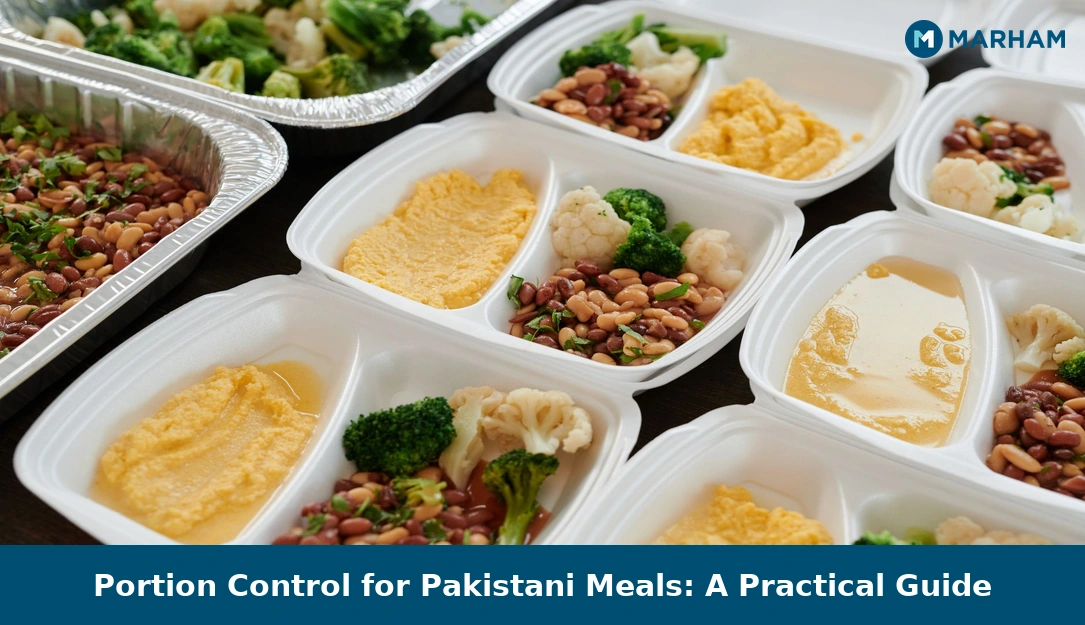
Most Pakistanis don’t overeat because they lack willpower. They overeat because the portions served at home, at weddings, and at roadside dhabas are genuinely enormous — and nobody taught them what a reasonable amount actually looks like on a plate.
According to the Pakistan National Health Survey 2023, over 40% of Pakistani adults are overweight or obese, with the rate rising fastest in urban women between 25 and 45. Yet the most common advice people receive is to “eat less” — which tells you nothing about how much less, or how to apply that to a plate of daal chawal or a Sunday biryani.
This guide fixes that. It gives you a concrete, desi-food-specific framework for portion control that works with the food you already cook at home — not against it.
کھانے کی مقدار پر قابو: اہم نکات
پاکستانی کھانوں میں حصے کا اندازہ لگانا مشکل ہو سکتا ہے، خاص طور پر جب گھر میں بڑے پیالے اور پلیٹیں استعمال ہوں۔ اپنے ہاتھ کو پیمانے کے طور پر استعمال کریں: ایک مٹھی چاول یا دال، ہتھیلی کے برابر گوشت، اور آدھی پلیٹ سبزیاں۔ روٹی کو دن میں دو سے تین چھوٹی روٹیوں تک محدود رکھیں اور کھانے سے پہلے ایک گلاس پانی پئیں۔ بریانی یا پراٹھا کھانا ضروری نہیں کہ چھوڑیں — بس مقدار کم رکھیں اور ساتھ میں سلاد یا رائتہ شامل کریں۔
What Portion Control Actually Means
Portion control means choosing a deliberate, appropriate amount of food before you start eating — not stopping halfway through a full plate. A portion is what you put on your plate; a serving is the standardised amount defined on a nutrition label. The two are rarely the same, especially in Pakistani households where dishes are placed in the centre of the table and everyone helps themselves repeatedly.
The goal isn’t to eat tiny amounts. It’s to eat the right amount for your body’s actual needs — enough to feel satisfied, not stuffed.
Key Takeaways
- Portion control works with Pakistani food — you don’t need to quit roti or biryani.
- The hand guide is the most practical tool: no scales, no apps needed.
- Eating from smaller plates can reduce intake by 20 to 30% without feeling deprived.
- Drinking a glass of water 20 to 30 minutes before a meal can reduce how much you eat.
- A standard meal should be roughly half sabzi or salad, a quarter protein (daal, chicken, or egg), and a quarter starch (roti or rice).
- Overeating at gatherings is a specific Pakistani challenge — a simple pre-plan helps.
The Hand Portion Guide for Desi Foods
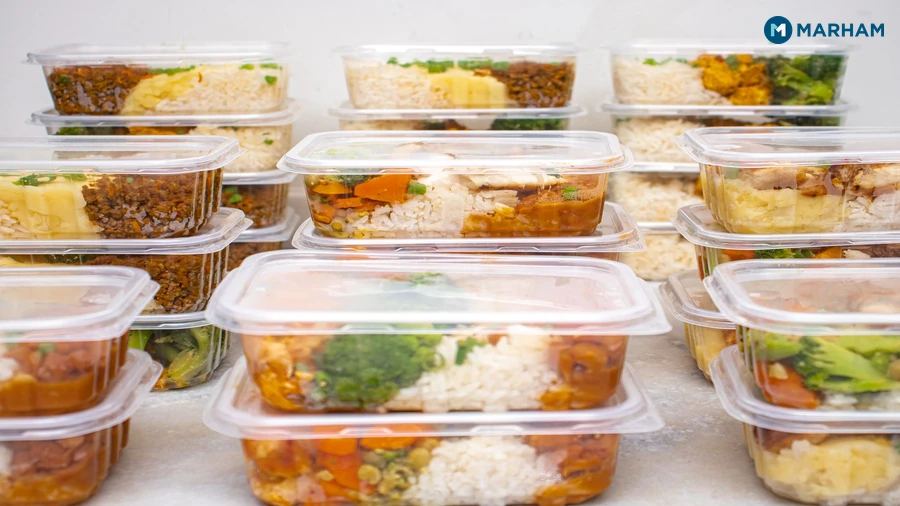
Measuring cups are impractical at the dinner table. Your hand is always with you and scales roughly to your body size, making it a reliable everyday guide. Here’s how it maps to Pakistani staples:
| Food | Recommended Portion | Hand Reference |
|---|---|---|
| Cooked rice or biryani | 150 to 180g | One closed fist |
| Roti (whole wheat) | 1 to 2 medium | Each roti roughly the span of your palm |
| Daal (cooked) | 150 to 200ml | One cupped hand |
| Chicken or mutton (boneless) | 85 to 100g | Flat palm, thickness of a deck of cards |
| Sabzi / curry (vegetable) | 150 to 200g | Two cupped hands |
| Ghee or cooking oil | 1 teaspoon per person | Tip of your thumb |
These aren’t rigid numbers. They’re starting points. A taller, more active person will need more; a sedentary person will need less. The point is to make the decision consciously, before the food disappears from the serving dish.
7 Practical Portion Control Tips for Pakistani Eating Habits
Most global portion control advice tells you to “use smaller plates” and “eat slowly” — which is correct, but misses the specific patterns that make overeating so easy in a Pakistani household. Here’s what actually helps:
- Serve yourself once, then move the serving dish away. The biggest driver of overeating at desi meals isn’t hunger — it’s proximity. When the biryani pot sits in the middle of the table, second and third helpings happen almost automatically. Serve a deliberate plate, then put the dish in the kitchen.
- Switch to a side plate for rice and roti. Pakistani dinner plates are large — often 30cm or more in diameter. A standard side plate (20 to 22cm, available at any Lahore or Karachi general store for Rs. 150 to 250) makes the same portion look like a full meal. Research published by the National Institutes of Health (NIH) confirms that people consistently eat less when the same amount of food is served on a smaller plate.
- Start with raita, salad, or a bowl of yakhni (bone broth). Eating a light starter before the main course reduces how much you eat overall. A small bowl of dahi raita or a kachumber salad before the rice course fills part of the stomach with low-calorie food, so you naturally take less rice or roti.
- Apply the roti rule: decide before you sit down. Most people eat as many rotis as the person next to them, or as many as the basket holds. Decide in advance — one or two medium rotis — and stick to it. A medium whole-wheat roti contains roughly 70 to 80 calories and about 15 grams of carbohydrate, according to standard nutritional data. Two rotis with daal and sabzi is a nutritionally complete, well-portioned meal for most adults.
- Fill half your plate with sabzi or salad first. This is the desi version of the “plate method” used by dietitians. Load the plate with bhindi, palak, tinda, or any seasonal vegetable before adding the starch. Vegetables are high in fibre and water, so they take up space and slow digestion without adding many calories. This works especially well in summer when Karachi and Lahore markets are full of affordable, fresh seasonal produce.
- Eat without a screen. Distracted eating is one of the most consistent predictors of overeating, according to research reviewed by the NIH. Watching a drama or scrolling while eating disconnects you from your body’s fullness signals. The brain takes roughly 15 to 20 minutes to register satiety after the stomach starts filling — if you’re distracted, you’ll eat past that point every time.
- At dawats and gatherings, eat a small snack beforehand. Arriving hungry at a Pakistani wedding or family gathering is a reliable route to overeating. A small handful of roasted chana or a boiled egg before you leave home takes the edge off hunger so you can make calmer choices at the buffet table.
Portion Control During Ramadan
Ramadan creates a specific overeating pattern that most Pakistani nutrition guides ignore entirely. After a long fast, the instinct is to eat as much as possible at iftar — which often means fried pakoras, samosas, chaat, and then a full dinner within an hour or two.
The practical fix is to break the fast with dates and water first, wait 10 to 15 minutes, then eat a moderate portion of the main meal. This gives the stomach time to register some satiety before you load it further. Sehri is the other trap: eating a very large sehri to “prepare” for the fast often just means eating a heavy meal at 4am that the body has no time to use.
Nutritionists in Pakistan generally recommend a sehri that includes protein (eggs, dahi) and complex carbs (dalia or whole-wheat roti) in moderate portions, rather than a large paratha-heavy meal.
Portion Control vs. Calorie Counting: Which Works Better?
| Approach | Pros | Cons |
|---|---|---|
| Portion control | No apps or scales needed; works with any food | Requires practice to estimate accurately |
| Calorie counting | Precise; good for tracking progress | Time-consuming; hard to apply to desi home cooking |
| Combination | Most accurate | Requires more effort initially |
For most Pakistani home cooks, portion control is the more sustainable starting point. Calorie counting is genuinely difficult when your dal makhani is cooked in a shared pot with an unknown amount of oil. Learning to recognise appropriate portions by sight and hand is a skill that travels to any table.
When to See a Nutritionist
Portion control alone may not be enough if you have an underlying condition that affects appetite, metabolism, or blood sugar — such as diabetes, hypothyroidism, or PCOS. If you’ve been eating smaller portions consistently for six to eight weeks and haven’t noticed any change in weight or energy, that’s worth investigating with a professional.
Consulting a nutritionist in Pakistan can help you identify whether your portions are actually appropriate for your specific calorie needs, activity level, and health status. A qualified dietitian can also give you a structured meal plan built around Pakistani foods — not a generic Western template.
Get Personalised Portion Advice on Marham
Working out the right portions for your body on your own can be genuinely confusing, especially if you have a condition like diabetes or hypertension that changes what “appropriate” looks like. Many people in Pakistan also struggle to find a nutritionist who understands desi cooking rather than recommending a diet built around salads and grilled chicken.
Marham connects you with verified nutritionists in Pakistan who consult online, so you can speak to one from Lahore, Karachi, Islamabad, or anywhere else without a clinic visit. A short online consultation typically takes 15 to 20 minutes and can give you a portion plan tailored to the food you actually eat at home — roti, daal, rice, and all.
Frequently Asked Questions
How many rotis should I eat per day for weight loss?
For most adults aiming to lose weight, two to three medium whole-wheat rotis per day is a reasonable target, spread across meals. Each medium roti contains roughly 70 to 80 calories, so two rotis with daal and sabzi fits comfortably within a calorie-controlled day.
Can I eat biryani and still control my portions?
Yes. One closed fist of biryani (roughly 150 to 180g) is a reasonable single portion. Pair it with raita and a salad rather than naan, and avoid going back for seconds. The problem with biryani isn’t the dish itself — it’s the size of the serving.
Does drinking water before meals actually help with portion control?
For older adults, drinking about 500ml of water 20 to 30 minutes before a meal has been shown to reduce food intake at that meal, according to a study reviewed by the NIH. The effect is less consistent in younger adults, but replacing sugary drinks like chai with sugar or cola with water during the meal still reduces overall calorie intake.
How do I avoid overeating at Pakistani weddings and family gatherings?
Eat a small protein-rich snack before you go — a boiled egg or a handful of roasted chana works well. At the buffet, fill half your plate with salad first, then choose one main starch (rice or naan, not both) and a protein. Eat slowly and avoid the dessert table until you’ve waited 15 minutes after the main course.
Is portion control enough for weight loss, or do I also need to exercise?
Portion control creates the calorie deficit needed for weight loss, and exercise supports it by increasing how many calories your body burns. Both together produce better results than either alone. That said, diet has a larger effect on weight than exercise for most people, so getting portions right is the higher priority to start with.
Can portion control help manage blood sugar in people with diabetes?
Yes, and it’s one of the first strategies recommended by diabetes educators. Eating consistent, moderate portions of carbohydrate-containing foods — roti, rice, fruit — helps prevent the large blood sugar spikes that follow oversized meals. If you have diabetes, a nutritionist can help you map portion sizes to your specific glucose targets.
What is the easiest way to start portion control at home without scales or apps?
Use the hand guide described in this article. One fist of cooked rice or daal, a palm-sized piece of protein, two cupped hands of sabzi, and one to two rotis is a well-proportioned desi meal for most adults. No equipment needed.
Conclusion
Portion control for Pakistani meals isn’t about eating less of everything you love — it’s about eating a deliberate amount. The hand guide, the smaller-plate swap, and a few simple habits around gatherings and Ramadan can make a real difference without turning every meal into a calorie calculation. Start with one change at a time, and give your body a few weeks to adjust before deciding whether it’s working.


