


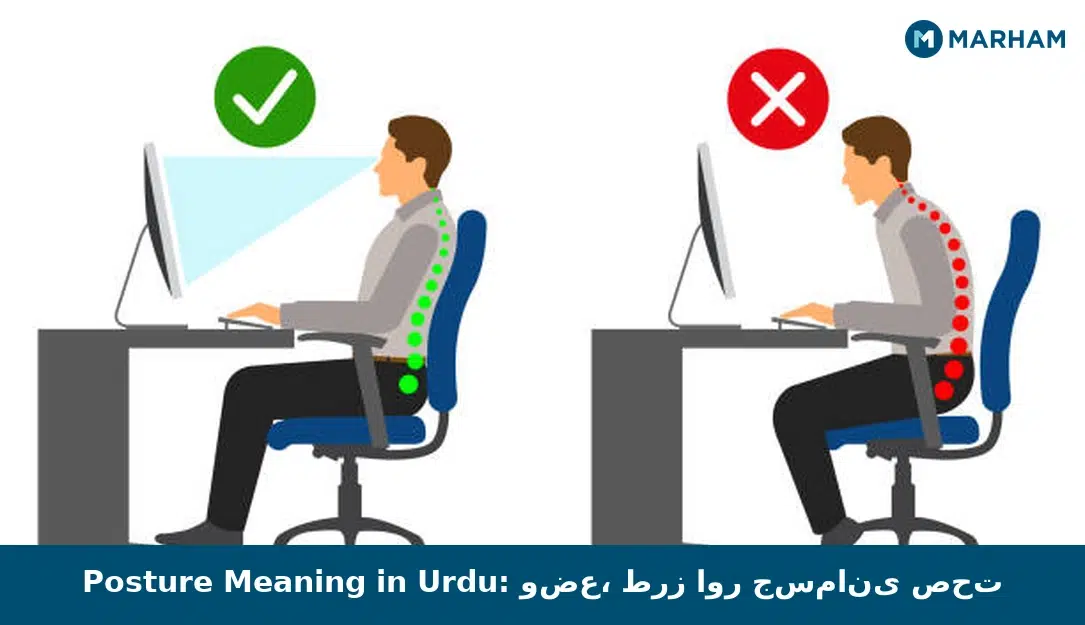

Posture meaning in Urdu comes up often in health conversations, physiotherapy notes, and school textbooks, yet most people have only a vague sense of what the word actually covers. In everyday Urdu, the closest equivalents are وضع (waza), طرز (tarz), اندازِ جسم, and کیفیت (kafiyat), each carrying a slightly different shade of meaning depending on context.
For Pakistani readers, this matters more than it might seem. Whether you spend hours hunched over a desk in a Lahore office, sit cross-legged on the floor during family meals, or scroll through your phone while lying on a charpai, every position your body holds repeatedly shapes your spine over time. According to the WHO, low back pain is now the leading cause of disability worldwide, and poor posture is one of the most modifiable contributing factors.
This guide explains the Urdu meaning clearly, covers what good and bad posture actually look like, and gives practical steps grounded in Pakistani daily life, not generic global advice.
Posture in Urdu
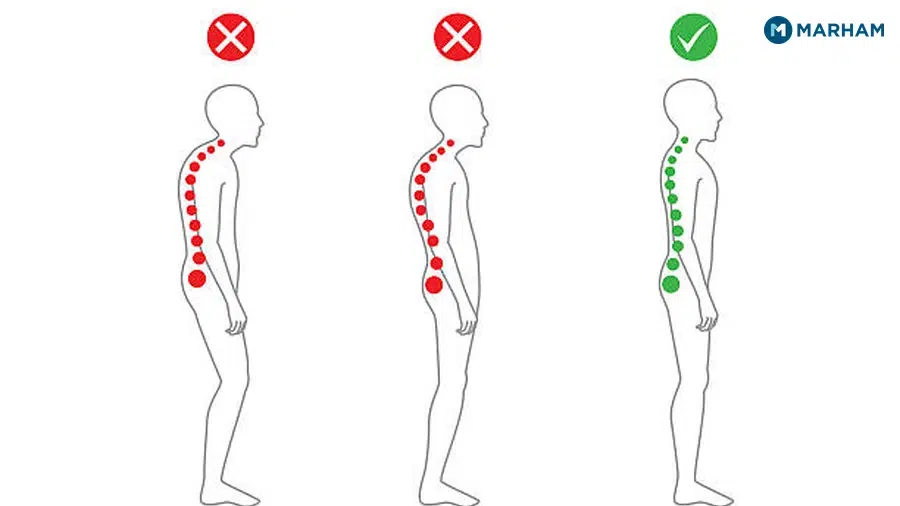
پوسچر (posture) کا اردو میں مطلب وضع یا طرز ہے، یعنی جسم کو بیٹھنے، کھڑے ہونے یا چلنے کے دوران جس انداز میں رکھا جائے۔ اچھی وضع (good posture) وہ ہوتی ہے جس میں ریڑھ کی ہڈی اپنی قدرتی حالت میں ہو اور جسم کا وزن برابر تقسیم ہو۔ بری وضع (bad posture) میں کمر جھکی ہوئی، گردن آگے کی طرف نکلی ہوئی اور کندھے اندر کی طرف مڑے ہوتے ہیں۔ پاکستان میں موبائل فون کا زیادہ استعمال، گھنٹوں بیٹھ کر کام کرنا اور چارپائی پر غلط انداز میں لیٹنا بری وضع کی عام وجوہات ہیں جو کمر اور گردن کے درد کا سبب بنتی ہیں۔
What Does Posture Mean in Urdu: The Key Terms
Posture in Urdu translates to several related words, each used in a slightly different context. Knowing all of them helps when reading a doctor’s note or a physiotherapy prescription.
| English Term | Urdu Word | Roman Urdu | Context of Use |
|---|---|---|---|
| Posture (general) | وضع | Waza | Most common in medical and everyday speech |
| Posture (style/manner) | طرز | Tarz | Used in formal or literary Urdu |
| Posture (bearing/gait) | اندازِ جسم | Andaz-e-Jism | Describes how someone carries themselves |
| Good posture | اچھی وضع | Achi Waza | Correct alignment of spine and body |
| Bad posture | بری وضع | Buri Waza | Slouching, hunching, or misalignment |
| Posture correction | وضع کی اصلاح | Waza ki Islah | Used in physiotherapy contexts |
When a Pakistani doctor or physiotherapist says “آپ کی وضع درست نہیں” (your posture is not correct), they mean the alignment of your spine, shoulders, and pelvis is off in a way that strains muscles and joints over time.
What Good Posture Actually Looks Like
Good posture means your body is aligned so that the least possible strain falls on muscles and ligaments. Standing correctly, your ears sit directly above your shoulders, your shoulders above your hips, and your hips above your ankles. The spine keeps its natural S-shaped curve, not a straight rod and not an exaggerated arch.

Sitting correctly, your feet rest flat on the floor, your knees are roughly level with your hips, and your lower back has gentle support. Your screen should be at eye level so your neck stays neutral. Many Pakistani office workers in Karachi and Islamabad sit with their monitor too low, which pulls the head forward and adds roughly 10 kg of extra load on the cervical spine for every inch the head drifts forward, according to research published in Surgical Technology International.
For fatigue meaning in Urdu and its causes, poor posture is one of the least-recognized contributors. Muscles working harder than they should to hold a misaligned body tire out faster, leaving you feeling drained by mid-afternoon even without heavy physical activity.
Effects of Bad Posture on Health in Pakistan
Bad posture is not just about appearance. Sustained misalignment causes a chain of physical problems that Pakistani patients frequently present with, often without realizing posture is the root cause.
Neck and back pain. This is the most common consequence. Prolonged slouching strains the muscles and ligaments along the spine, and the pain typically starts as stiffness that worsens toward the end of a workday. Pakistani software developers, teachers, and students who spend 6 to 8 hours at a desk without adjusting their position are especially vulnerable.
Muscle fatigue and body aches. A slouching posture forces muscles to work harder than they need to, as noted in research from the journal Surgical Technology International. The result is generalized soreness across the upper back, shoulders, and neck that many people dismiss as tiredness.

Reduced lung capacity. Sitting hunched over compresses the chest cavity. A study published in the Journal of Physical Therapy Science found that forward head posture and rounded shoulders measurably reduce respiratory muscle strength. Breathing becomes shallower without the person noticing.
Digestive discomfort. Slouching compresses the abdominal organs. This can slow digestion and contribute to bloating and acid reflux, a complaint that general physicians in Karachi see frequently in desk workers who also eat a heavy desi lunch (biryani, daal, roti) and return immediately to a hunched sitting position.
Headaches. Tension in the neck muscles from forward head posture often radiates upward and causes tension-type headaches, particularly at the base of the skull.
One habit specific to Pakistan that makes things worse: the widespread use of smartphones while lying flat on a charpai or a low takht, with the neck bent at a sharp angle. This position puts the cervical spine under sustained stress that a brief walk or stretch will not fully undo.
How to Improve Posture at Home: 6 Practical Steps
These steps are shaped around Pakistani daily habits, not a generic Western office setup.
- Set your phone at eye level. Most Pakistanis hold their phone at chest or lap level, which bends the neck 30 to 60 degrees forward. Prop your phone against a pillow or use a stand so the screen is level with your face, whether you’re sitting on a sofa or on the floor.
- Use a rolled dupatta or towel as lumbar support. You don’t need an expensive ergonomic chair. Roll a firm dupatta or a small folded towel and place it between your lower back and the chair back. This maintains the natural inward curve of the lumbar spine and reduces lower back strain significantly.
- Adjust your desk or table height when studying or working. A common problem in Pakistani homes is studying at a low dining table or floor dastarkhwan while sitting cross-legged. If you must sit on the floor, use a wall for back support and keep the book or laptop raised on a cushion so your neck stays neutral.
- Take a standing break every 45 minutes. Set a timer on your phone. Stand, roll your shoulders back gently, and walk to the kitchen for water. This 2-minute break relieves muscle fatigue and resets your spinal alignment before it becomes painful.
- Strengthen your core with simple floor exercises. A weak core (the muscles around your abdomen and lower back) is the main reason posture collapses under sustained sitting. Planks, bridge poses, and cat-cow stretches done on a prayer mat for 10 minutes each morning build the muscle support your spine needs. No gym required.
- Sleep on a medium-firm mattress with a supportive pillow. Many Pakistanis sleep on a very soft gadda (mattress) that lets the spine sag. If replacing the mattress isn’t possible, placing a thin firm foam board under it helps. A pillow that keeps your head aligned with your spine (not propped too high) prevents neck stiffness in the morning.
When to See a Specialist for Posture Problems
Most posture-related discomfort improves with the habit changes above within 4 to 6 weeks. Some situations warrant professional assessment sooner.
See a doctor if your back or neck pain is severe, if it radiates down your arm or leg (which may suggest nerve compression), if you notice numbness or tingling in your hands, or if the pain does not improve after a few weeks of consistent posture correction. These symptoms may point to an underlying spinal condition that needs imaging and a specialist’s opinion. Consulting a neurologist in Pakistan is appropriate when nerve-related symptoms are present alongside posture problems.
Physiotherapists in Pakistan, particularly those practicing in Lahore and Karachi, routinely assess and treat posture-related musculoskeletal pain with targeted exercise programs. A structured physiotherapy plan is more effective than a posture belt alone, which at best serves as a reminder to sit straight rather than a long-term correction tool.
Consult a Specialist on Marham
Living with persistent neck stiffness, chronic lower back ache, or unexplained fatigue that worsens after a long day of sitting is worth taking seriously. These symptoms often have a postural component that a qualified specialist can identify and address far more precisely than any home remedy.
Marham connects you with verified nutritionists in Pakistan for diet-related concerns and with neurologists in Pakistan for nerve or spine-related symptoms, all through online consultations available from anywhere in the country. A short consultation, typically 15 to 20 minutes, can clarify whether your symptoms need physiotherapy, imaging, or simply a structured set of exercises you can follow at home.
Frequently Asked Questions
What is posture meaning in Urdu?
Posture in Urdu is وضع (waza) or طرز (tarz), meaning the way the body is held or positioned while sitting, standing, or moving. In medical contexts, وضع is the most commonly used term in Pakistan.
What is good posture called in Urdu?
Good posture is called اچھی وضع (achi waza) in Urdu. It refers to body alignment where the spine maintains its natural curve, the shoulders are relaxed and back, and the head sits directly above the shoulders.
What are the main causes of bad posture in Pakistan?
The most common causes in Pakistan include prolonged mobile phone use with the neck bent forward, long hours of desk work without lumbar support, and sitting on low furniture like floor dastarkhwans or soft charpais that don’t support the spine.
Can bad posture cause headaches?
Yes, bad posture can contribute to tension-type headaches. Forward head posture tightens the muscles at the back of the neck and base of the skull, which can radiate as a headache. Correcting your sitting position and taking regular breaks often reduces their frequency.
How long does posture correction take?
Most people notice reduced discomfort within 4 to 6 weeks of consistent habit changes. Building the core muscle strength needed for lasting improvement typically takes 2 to 3 months of regular exercise.
When should I see a doctor for posture-related pain?
See a doctor if your pain is severe, if it travels down your arm or leg, if you feel numbness or tingling in your hands or feet, or if symptoms don’t improve after 4 to 6 weeks of postural changes. These signs may indicate nerve involvement that needs professional evaluation.
Is a posture correction belt useful?
A posture belt can be a helpful reminder to sit straight, but it doesn’t strengthen the muscles that hold posture on its own. Physiotherapists generally recommend using it short-term alongside targeted exercises, not as a standalone solution.
Conclusion
Posture meaning in Urdu is straightforward: وضع (waza) or طرز (tarz), the way you hold your body. What isn’t straightforward is how quietly bad posture accumulates into real pain over months and years of Pakistani daily life, from phone scrolling on a charpai to sitting cross-legged at a low table. The good news is that small, consistent changes, a rolled dupatta for lumbar support, a phone held at eye level, a 10-minute morning floor routine, make a genuine difference without any special equipment or gym membership.


