




Push-ups are one of those exercises that almost every Pakistani man has attempted at some point, whether in a school PT class in Lahore, during army prep, or on a bedroom floor during a lockdown. No gym membership, no equipment, no cost. Just your body weight and a few feet of space.
What makes them worth taking seriously is that the benefits go well beyond the arms and chest most people think about. South Asians, including Pakistanis, carry a disproportionately high risk of cardiovascular disease compared to Western populations, according to research published in the Lancet. A 10-year Harvard study of over 1,000 active men found that those who could complete 40 or more push-ups had a significantly lower risk of cardiovascular events compared to those who could manage fewer than 10. That’s a meaningful finding for any Pakistani man thinking about his heart health without access to a gym.
This guide covers what push-ups actually do to your body, how to do them correctly, who should modify them, and the honest limits of the exercise.
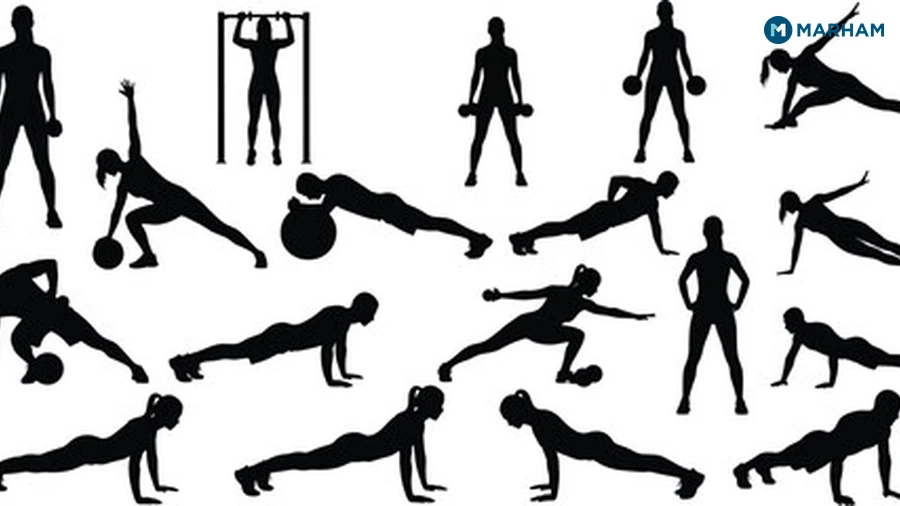
Push Ups ke Fayde in Urdu
پش اپس ایک سادہ مگر انتہائی مؤثر ورزش ہے جو آپ گھر میں بغیر کسی آلے کے کر سکتے ہیں۔ یہ ورزش سینے، کندھوں، بازوؤں اور پیٹ کے پٹھوں کو مضبوط بناتی ہے۔ روزانہ پش اپس کرنے سے دل کی صحت بہتر ہوتی ہے، ہڈیاں مضبوط ہوتی ہیں اور جسمانی توازن بہتر ہوتا ہے۔ پاکستان میں جہاں جم تک رسائی ہمیشہ آسان نہیں، وہاں پش اپس ایک قابل اعتماد اور مفت ورزش کا بہترین متبادل ہیں۔ تاہم، درست طریقے سے کرنا ضروری ہے تاکہ چوٹ سے بچا جا سکے۔
Key Takeaways
- Push-ups are a compound exercise, meaning they work multiple muscle groups at the same time: chest, shoulders, triceps, core, and even the lower back.
- A Harvard study found men who could do 40+ push-ups had a significantly lower risk of cardiovascular disease than those who could do fewer than 10.
- Proper form matters more than high rep counts, especially for beginners.
- Push-ups every other day (3 to 4 times per week) is more effective for muscle growth than doing them daily without rest.
- Beginners in Pakistan can start with wall push-ups or knee push-ups and progress over 4 to 6 weeks.
- Push-ups cannot spot-reduce belly fat, but they do build muscle and raise metabolism, supporting overall weight management.
What Muscles Do Push-Ups Work?
Push-ups are a compound movement, which means they recruit several muscle groups in a single rep rather than isolating one. The primary muscles worked are the pectorals (chest), deltoids (shoulders), and triceps (back of the upper arm). The core muscles, including the abdominals and obliques, engage throughout every rep to keep the body in a straight line. The lower back, glutes, and even the quadriceps act as stabilisers.
This multi-muscle engagement is why push-ups are classified as a functional exercise. Functional strength means the muscles you build translate directly into everyday tasks: carrying a gas cylinder up stairs in a Karachi apartment building, lifting a child, or pushing a loaded cart at a local market. Consulting a nutritionist in Pakistan alongside a bodyweight training plan can help you align your diet with your fitness goals for faster, more sustainable results.
8 Push Ups Benefits Backed by Evidence

1. Builds Upper Body Strength Without a Gym
Push-ups build strength in the chest, shoulders, and triceps through progressive resistance. As you get stronger, you can increase reps, slow down the tempo, or move to harder variations like decline push-ups. For Pakistani men and women who don’t have access to a gym or can’t afford a monthly membership (which ranges from around PKR 2,000 to PKR 8,000 per month in major cities), push-ups offer a zero-cost alternative that genuinely works.
2. Strengthen the Core and Lower Back
Every push-up rep requires the core to brace and stabilise the spine. A review published in the Journal of Functional Morphology and Kinesiology found that core stability exercises, including push-ups, may help reduce chronic lower back pain and improve movement in people with general back issues. This matters for office workers in Islamabad and Lahore who spend 8 to 10 hours seated, a habit that weakens the lumbar muscles over time.
3. Support Cardiovascular Health
When done at higher repetitions or as part of a circuit, push-ups raise the heart rate enough to provide a mild cardiovascular stimulus. The Harvard study published in JAMA Network Open (2019) tracked over 1,100 active middle-aged men and found that those who completed 40 or more push-ups in under 30 seconds were 96% less likely to experience a cardiovascular event over the following decade compared to those who could do fewer than 10. South Asians have a genetically elevated cardiovascular risk, so any accessible, no-cost exercise that supports heart health is worth taking seriously.
4. Improve Posture
Weak chest and shoulder muscles contribute to rounded shoulders and a hunched upper back, a posture problem common in people who spend long hours on a phone or laptop. Push-ups strengthen the muscles that pull the shoulders back and hold the spine upright. When performed with correct form, they also train the scapular muscles (the flat bones at the back of the shoulder), which play a direct role in postural alignment.
5. Build Bone Density
Push-ups are a weight-bearing exercise. Each rep places mechanical load on the wrist, elbow, and shoulder joints, and research shows this type of loading stimulates bone-forming cells, helping maintain or improve bone density over time. This is particularly relevant for Pakistani women over 35, given that osteoporosis (a condition where bones become thin and brittle) is underdiagnosed in Pakistan and often only discovered after a fracture.
6. Raise Metabolism and Support Weight Management
Push-ups build lean muscle mass. Muscle tissue burns more calories at rest than fat tissue does, so increasing muscle through regular push-ups can raise your resting metabolic rate over time. Push-ups alone won’t burn belly fat; research confirms you cannot target fat loss in a specific body part. But combined with a balanced Pakistani diet that moderates refined carbohydrates like white rice and maida (refined wheat flour), push-ups contribute meaningfully to overall body composition.
7. Strengthen Joints and Reduce Injury Risk
The shoulder and elbow joints are stabilised by small muscles and tendons that are often neglected. Push-ups strengthen these stabilisers gradually, which can reduce the risk of shoulder injuries during other activities like cricket, weightlifting, or even carrying heavy bags. This is one reason sports coaches in Pakistan include push-ups in conditioning routines for young cricketers and football players.
8. Require No Equipment and No Space
A standard push-up needs roughly 1.5 metres of floor space. That’s achievable in a Karachi studio apartment, a hostel room in Lahore, or a courtyard in a village in Punjab. During Ramadan, when gym routines often break down, a short set of push-ups before Sehri or after Iftar (once digestion has settled, about 60 to 90 minutes after eating) keeps the training habit alive without demanding much energy or time.
How to Do a Push-Up Correctly: Step-by-Step

- Start in a high plank position. Place your hands slightly wider than shoulder-width apart on the floor. Your body should form a straight line from your heels to the top of your head.
- Engage your core before you move. Tighten your abdominals as if bracing for a light punch. This protects the lower back throughout the movement.
- Lower your chest toward the floor. Bend your elbows at roughly a 45-degree angle from your torso, not flared out to 90 degrees. Lower until your chest is about 2 to 3 cm from the ground.
- Push back up in a controlled motion. Exhale as you press up. Don’t lock your elbows at the top; keep a slight bend to maintain tension.
- Keep your hips level throughout. A sagging lower back or raised hips are the two most common form errors. Both reduce effectiveness and increase injury risk.
- Start with a manageable number. Pakistani beginners with no training background can start with 5 to 8 clean reps per set, 2 to 3 sets, three times a week. Quality beats quantity every time.
- Progress gradually. Add 1 to 2 reps per set each week. Most people reach 20 clean reps per set within 6 to 8 weeks of consistent practice.
Push-Up Variations: Which One Is Right for You?
| Variation | Best For | Difficulty |
|---|---|---|
| Wall push-up | Absolute beginners, elderly, post-injury rehab | Very easy |
| Knee push-up | Beginners building baseline strength | Easy |
| Standard push-up | Intermediate trainees | Moderate |
| Wide-grip push-up | Greater chest activation | Moderate |
| Diamond push-up | Triceps focus | Hard |
| Decline push-up | Upper chest and shoulder emphasis | Hard |
Who Should Be Careful with Push-Ups?
Push-ups are safe for most healthy adults, but some people should modify or avoid them. Anyone with an existing wrist, elbow, or shoulder injury should consult a doctor before starting. People who have had a recent cardiac event should not use push-ups as a cardiovascular tool without medical clearance. Pregnant women, particularly in the second and third trimester, should switch to wall push-ups or incline push-ups to avoid pressure on the abdomen.
If you experience sharp pain in any joint during a push-up (not muscle fatigue, but sharp joint pain), stop immediately. Persistent discomfort that doesn’t resolve with rest deserves professional evaluation. A general physician or specialist on Marham can help rule out a structural issue before it becomes a more serious injury.
Get Fitness Guidance from Marham
Many Pakistanis start a push-up routine with good intentions but plateau after two to three weeks because their diet, rest, or progression plan isn’t aligned with their goals. Eating three rotis with daal and chai is a reasonable diet, but if you’re trying to build muscle, your protein intake may need to be assessed.
Marham connects you with verified nutritionists in Pakistan who consult online from anywhere in the country, including smaller cities where specialist access is limited. A short consultation, typically 15 to 20 minutes, can help you build a diet and exercise plan that actually fits your routine, your budget, and your body.
Frequently Asked Questions
What muscles do push-ups work?
Push-ups primarily work the chest (pectorals), shoulders (deltoids), and triceps. They also engage the core, lower back, and glutes as stabilising muscles with every rep.
Do push-ups burn belly fat?
Push-ups don’t directly burn belly fat. Research confirms you can’t target fat loss in one specific area. But push-ups build muscle, which raises your resting metabolism and supports overall fat loss over time.
How many push-ups should I do per day as a beginner in Pakistan?
Start with 5 to 8 clean reps per set, 2 to 3 sets, three times a week. Focus on form before increasing numbers. Most beginners reach 15 to 20 reps per set within 6 to 8 weeks.
Is it okay to do push-ups every day?
Doing push-ups every day without rest days can lead to overuse injuries and slow muscle recovery. Fitness experts generally recommend 3 to 4 sessions per week, allowing 48 hours of rest between sessions for muscles to repair and grow.
Are push-ups good for the heart?
Yes, when done at higher reps or as part of a circuit. A Harvard study published in JAMA Network Open found men who could do 40 or more push-ups had a significantly lower cardiovascular risk than those who could do fewer than 10.
Can push-ups help with weight loss?
Push-ups support weight loss indirectly by building lean muscle, which raises your metabolic rate. They work best when combined with a calorie-appropriate diet rather than as a standalone weight-loss tool.
When is the best time to do push-ups in Pakistan?
Morning push-ups before breakfast work well for most people. During Ramadan, doing them 60 to 90 minutes after Iftar, once digestion has settled, is a practical and sustainable option.
Conclusion
Push-ups remain one of the most practical and accessible exercises available to Pakistani men and women across every income level and city. The evidence behind them is solid: upper body strength, core stability, cardiovascular support, and bone health, all without a single piece of equipment. Start with proper form, progress gradually, rest between sessions, and pair the habit with a diet that supports your goals.


