


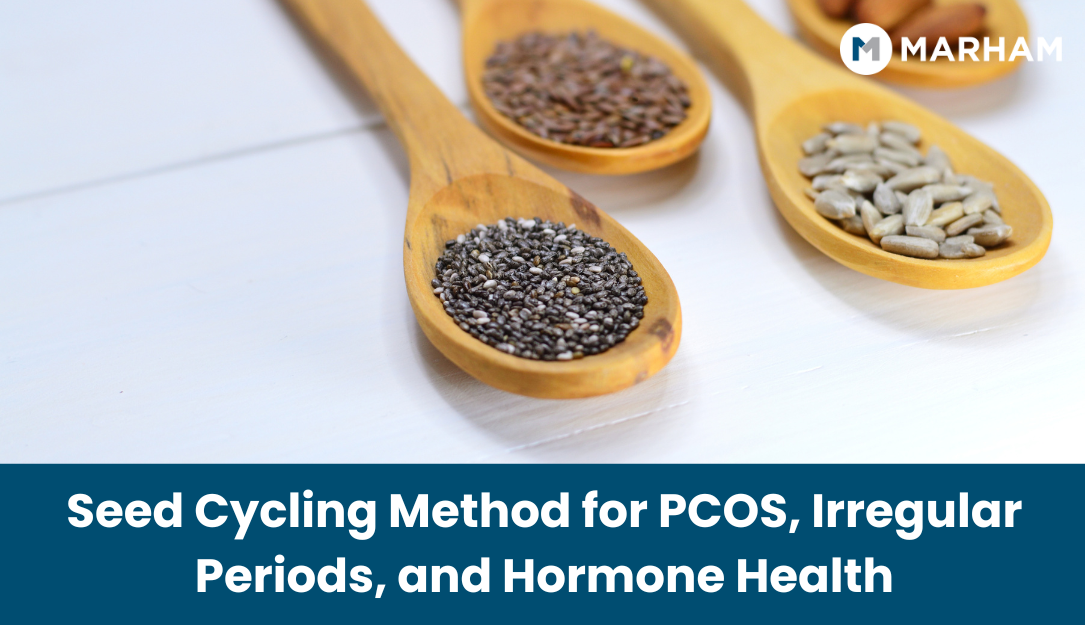
Have your periods been unpredictable lately? Or maybe you’re dealing with painful cramps and mood swings that seem to come out of nowhere? You are not alone in suffering from this condition. Hormonal dysfunction affects millions of women in the world.
Different medical treatments are trying to manage this fluctuation, but women are mostly attracted to the natural approach. One such method is seed cycling. A simple practice that regulates hormones and prevents dysfunction.
In this blog, we will look at how the seed cycling method works, its benefits, and side effects. This natural approach helps you to overcome many problems, such as hormonal balancing, PCOS, and irregular periods.
 What is the Seed Cycling Method?
Seed cycling is a simple dietary practice that helps women balance hormones. It involves consuming specific seeds at a specific time of the menstrual cycle. Based on the idea that certain seeds can help balance estrogen and progesterone.
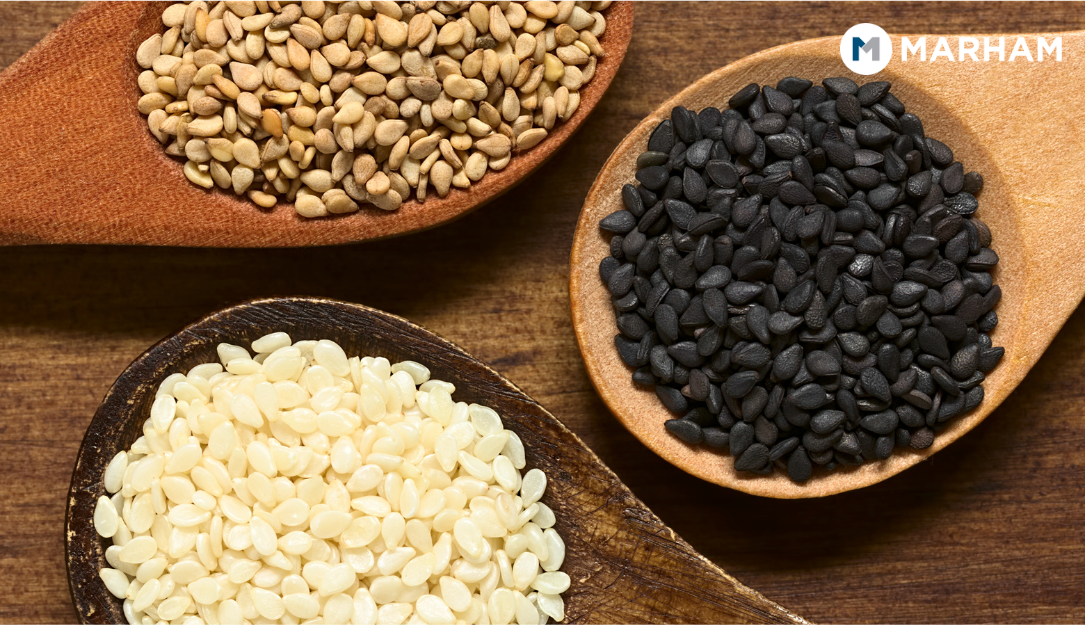
The seeds involved in this are flax seeds, pumpkin seeds, sesame and sunflower seeds. They are taken in pairs, such as flax seeds and pumpkin seeds are used in the first half of the cycle, and sesame seeds and sunflower seeds are used in the second half of the cycle.
How to practice Seed Cycling?
Seed cycling aims to support your body’s natural hormone fluctuations by providing specific nutrients during each phase of your cycle. Each seed contains unique nutrients that help in metabolism and hormone regulation. The methodology to use seeds is below:
Phase 1: Follicular Phase (Days 1-14)
In the first half of your cycle, estrogen levels start to rise. These two seeds help your body balance that hormone naturally.
Seeds Used: 1 tablespoon flax seeds + 1 tablespoon pumpkin seeds daily
Flax Seeds
Flax seeds are rich in lignans, which are plant compounds that act as phytoestrogens. They can help metabolize excess estrogen and support healthy estrogen levels. Flax seeds are also packed with omega-3 fatty acids, which reduce inflammation and support overall hormone health. The fiber in flax seeds helps eliminate excess hormones through the digestive system.
Pumpkin Seeds
Pumpkin seeds are an excellent source of zinc, which is crucial for progesterone production in the upcoming luteal phase. They also contain magnesium, which supports hundreds of bodily functions, including hormone production. The omega-3 fatty acids in pumpkin seeds help reduce inflammation that can interfere with hormone balance.
Phase 2: Luteal Phase (Days 15-28)
In this phase, progesterone becomes the dominant hormone. These seeds help your body maintain that balance.
Seeds Used: 1 tablespoon sesame seeds + 1 tablespoon sunflower seeds daily
Sesame Seeds
Sesame seeds contain lignans that help block excess estrogen, which is important during the luteal phase when progesterone should be dominant. They’re also rich in zinc and vitamin E, both of which support progesterone production. Sesame seeds provide calcium and magnesium, which can help reduce PMS symptoms like cramping and mood swings.
Sunflower Seeds
Sunflower seeds are loaded with selenium, a mineral that supports the liver in detoxifying excess hormones. They are rich in vitamin E, which is essential for progesterone production. Vitamin B in sunflower seeds supports energy levels and mood during the luteal phase, when many women experience PMS symptoms.

Benefits of Seed Cycling
Scientific research specifically on the seed cycling method is limited, but many women report experiencing various benefits from this practice:
-
Hormone Balance:
The nutrients in these seeds may help support natural hormone production and metabolism. It helps in the balancing of estrogen and progesterone levels.
-
Regular Menstrual Cycles:
Many women report that seed cycling helps regulate irregular periods, creating more consistent cycle lengths over time.
-
PCOS Management:
Women with polycystic ovary syndrome (PCOS) often struggle with hormonal imbalances. The seed cycling method may help manage symptoms by supporting insulin sensitivity and reducing inflammation.
-
PMS Relief:
The vitamins, minerals, and healthy fats in these seeds may help reduce common PMS symptoms, including bloating, mood swings, breast tenderness, cramping, and headaches.
-
Seed Cycling for Fertility:
These seeds regulate hormones that help in conception.
-
Skin:
Hormonal acne often improves when hormone levels are balanced, and many women notice better skin after a few months of seed cycling.
-
Better Mood and Energy:
These seeds help in the management of mood swings and energy.
-
Menopause Support:
Seeds cycling helps in perimenopause or menopause symptoms and complications such as hot flashes and mood changes.
Ways to Consume Your Seeds
The beauty of the seed cycling method is how easy it is to add to your diet:
- Blend into smoothies
- Sprinkle on yogurt, oatmeal, or cereal
- Mix into salads
- Add to soups
- Stir into energy balls or protein bars
- Mix with nut butter
- Add to baked goods
- Blend into sauces or dressings
- Simply mix with water or juice
Consult with a nutritionist before adding seeds to your diet.
Does the Seed Cycling Method Really Work?
The honest answer is: it depends. There is no extensive scientific research specifically on seed cycling. Most evidence is anecdotal, meaning it comes from women’s personal experiences rather than rigorous scientific studies. Results vary significantly from person to person, and what works for one woman may not work for another.
Seed cycling is not a magic cure for serious hormonal disorders. It works best as part of an overall healthy lifestyle that includes a balanced diet, regular exercise, stress management, and adequate sleep. It should not replace medical treatment for diagnosed conditions like PCOS, endometriosis, or thyroid disorders.
Many functional medicine practitioners and naturopaths recommend seed cycling as a gentle, food-based approach to hormone support. Even if the specific cycling protocol doesn’t work as theorized, you’re still adding nutrient-dense foods to your diet, which benefits your overall health.
Seed Cycling Side Effects
The seed cycling method is generally safe for most women, but there are some precautions to consider:
Possible Side Effects:
- Digestive issues, like gas or bloating
- Allergic reactions if you have seed or nut allergies
- Changes in bowel movements
Who Should Consult a Doctor First:
- Women with diagnosed hormone disorders
- Those taking hormone medications or birth control
- Pregnant or breastfeeding women
- Anyone with hormone-sensitive conditions
- People taking blood thinners
Connect with the best doctor in Pakistan through Marham.
Conclusion
Seed cycling method is a natural way to regulate hormones. It is beneficial for different menstrual conditions, such as PCOS, irregular periods, and menopause. Different seeds are used in this method according to the menstrual phase, such as flax seeds, sesame seeds in the first half of the menses, and pumpkin seeds, and sunflower seeds are used in the second half of the menses.
Hormonal issues can be frustrating, and sometimes you just need a professional to help figure things out. Marham makes it easy to find and talk to experienced gynecologists who actually get what you’re going through. We are also connecting with the specialities through online and in-person sessions.
Remember that every woman’s body is unique, and what works for others may not work the same way for you.
