


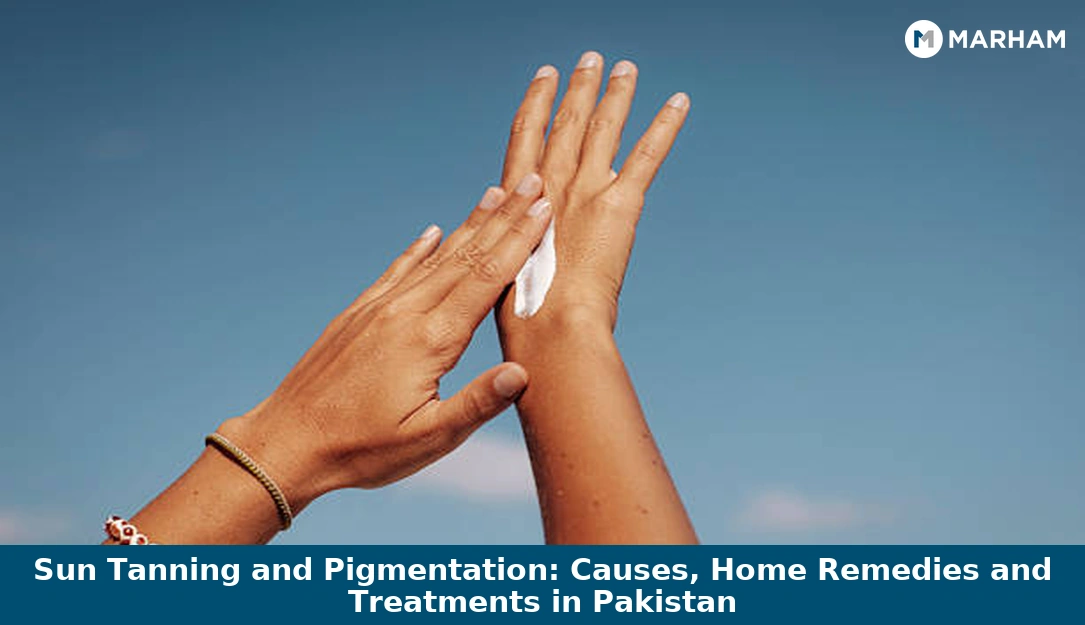
Summer in Pakistan is relentless. Between April and August, UV index readings across Karachi, Lahore, and Islamabad regularly hit 10 or above, the level the WHO classifies as “very high” to “extreme.” Anyone spending time outdoors, whether commuting, working on a construction site, or just running errands, comes home with noticeably darker skin on their face, neck, and arms.
Most people call this “tanning” and reach for a fairness cream. But not all skin darkening is the same, and treating the wrong type the wrong way can make things worse, not better. Understanding what is actually happening in your skin is the first step toward fixing it.
Sun Tanning and Pigmentation: What Is the Difference?
Sun tanning and pigmentation are related but not identical. A tan is a temporary darkening caused by your skin producing extra melanin (the pigment that gives skin its colour) in response to UV radiation. It typically fades on its own within a few weeks as your skin sheds dead cells. Pigmentation disorders, such as melasma, post-inflammatory hyperpigmentation (PIH), or sunspots, involve a deeper or more persistent overproduction of melanin that does not fade easily without targeted treatment.
The practical difference matters: a fresh tan from a day at the beach responds to exfoliation and sunscreen. Melasma, which appears as symmetrical brown patches on the cheeks and forehead and is often triggered by hormonal changes, requires dermatologist-supervised treatment. Treating melasma with a home scrub will not work, and using harsh DIY acids on it can trigger more PIH.
Sun Tanning in Urdu
دھوپ سے ٹیننگ اور رنگت کی تبدیلی پاکستان میں گرمیوں کا ایک عام مسئلہ ہے۔ جب سورج کی الٹرا وائلٹ شعاعیں جلد پر پڑتی ہیں تو جلد میں میلانن نامی رنگدار مادہ زیادہ بننے لگتا ہے جس سے جلد سانولی ہو جاتی ہے۔ ہلکی ٹیننگ چند ہفتوں میں خود بخود ختم ہو سکتی ہے، لیکن میلازما یا پوسٹ انفلامیٹری ہائپر پگمنٹیشن جیسے مسائل کے لیے ماہر امراض جلد سے مشورہ ضروری ہے۔ گھریلو ٹوٹکے ہلکی ٹیننگ میں مددگار ہو سکتے ہیں، لیکن گہری یا مستقل رنگت کی تبدیلی کے لیے پیشہ ورانہ علاج زیادہ مؤثر ہوتا ہے۔ سن اسکرین کا روزانہ استعمال اور دھوپ سے بچاؤ سب سے اہم احتیاطی تدبیر ہے۔
Why Pakistani Skin Is Particularly Vulnerable
South Asian skin sits in the middle of the Fitzpatrick scale (types III to V), which means it produces melanin readily but is also highly prone to post-inflammatory hyperpigmentation. Any irritation, including a harsh scrub, a poorly diluted acid, or even a pimple, can leave a dark mark that outlasts the original problem by months.
Pakistan’s UV environment makes this worse. Pakistan’s climate involves strong UV rays that increase melanin production, leading to a darker skin tone. Lahore and Karachi both sit at latitudes where the sun is near-overhead for much of the year, and pollution adds oxidative stress on top of UV damage. Dermatologists in Karachi see patients with stubborn pigmentation year-round, not just after summer.
| Skin Concern | Cause | Fades on Its Own? | Needs a Dermatologist? |
|---|---|---|---|
| Fresh sun tan | UV-triggered melanin surge | Yes, in 2 to 4 weeks | Usually not |
| Sunspots / age spots | Cumulative UV damage | Rarely | Often |
| Melasma | Hormonal + UV trigger | No | Yes |
| Post-inflammatory hyperpigmentation (PIH) | Inflammation (acne, rash, injury) | Slowly, months to years | Sometimes |
| Freckles | Genetic + UV | Partially | Optional |
Home Remedies That Actually Help (and What to Skip)
For a mild, recent tan, a few kitchen-shelf ingredients have genuine, if modest, evidence behind them. The key word is gentle. South Asian skin responds badly to over-scrubbing and strong acids.
What works:

- Besan (gram flour) and dahi (yoghurt) mask: besan acts as a mild mechanical exfoliant, while yoghurt contains lactic acid, a gentle alpha-hydroxy acid that helps shed pigmented surface cells. Mix two tablespoons of besan with enough fresh dahi to make a paste, apply for 15 minutes, then rinse with cool water. Use two to three times a week. This is a staple in Pakistani households for good reason.
- Aloe vera gel: a small study found that aloe vera may help suppress melanin release. Apply fresh gel from an aloe plant (widely available in local nurseries in Lahore and Islamabad for around PKR 100 to 200 per cutting) or a pure store-bought gel, leave on for 20 minutes, then rinse. It also soothes sun-irritated skin.
- Vitamin C serum: over-the-counter serums containing stabilised vitamin C (ascorbic acid) can inhibit tyrosinase, the enzyme that drives melanin production. Apply a few drops to clean skin before sunscreen each morning. Look for concentrations of 10% to 20% on the label.
- Niacinamide: this B-vitamin ingredient, found in many affordable serums now stocked in pharmacy chains across Pakistan, reduces the transfer of melanin to surface skin cells. It is well-tolerated even on sensitive skin.
What to skip:
- Undiluted lemon juice: a popular desi remedy, but applying straight lemon juice to the face and then stepping outside is a recipe for phototoxic burns. Going out into the sun with lemon or other citrus juice on your skin, even if you tried to wash it off, can make irritation worse and may even lead to chemical burns. If you want to use lemon, dilute it heavily with water and apply only at night, never before sun exposure.
- Harsh physical scrubs (walnut shell, coarse sugar): these create micro-tears in the skin and trigger PIH, particularly on South Asian skin types. Gentle chemical exfoliation is safer.
- Fairness creams with unlisted steroids: some over-the-counter brightening creams sold in local markets contain undisclosed corticosteroids. Long-term use thins the skin, causes rebound darkening, and can lead to steroid-induced acne. Always check for a registered drug licence number.
A Step-by-Step Routine to Fade Sun Tan at Home
- Cleanse gently in the morning. Use a mild, fragrance-free face wash. Avoid anything labelled “whitening” with undisclosed ingredients.
- Apply a vitamin C or niacinamide serum. A 10% niacinamide serum costs PKR 800 to 1,500 at most pharmacies in Karachi and Lahore. Apply a pea-sized amount to the face and neck.
- Use SPF 50 sunscreen, every single day. Apply a full teaspoon for the face and neck, not a thin smear. Reapply every two hours if you are outdoors. This is the single most important step: no brightening treatment works if you keep adding UV damage on top.
- In the evening, use a besan-dahi mask or aloe vera. Alternate between the two on different nights. Leave on for 15 to 20 minutes, then rinse with cool water.
- Moisturise after every wash. Tanned, sun-damaged skin is often dehydrated. A simple unscented moisturiser, widely available for under PKR 500 at pharmacy chains across Pakistan, helps the skin barrier recover.
- Wear protective clothing outdoors. A light cotton dupatta or full-sleeve shirt blocks UV more reliably than any cream. In Karachi’s coastal humidity, a breathable cotton layer is more comfortable than it sounds.
- Be patient. A mild tan takes two to four weeks to fade with consistent care. Deeper or older tans take longer. If there is no visible change after six weeks of consistent routine, the concern is likely pigmentation rather than tan, and a dermatologist visit makes sense.
When Home Remedies Are Not Enough
Home care has real limits. If dark patches are symmetrical across both cheeks or the forehead, if they appeared during pregnancy or after starting hormonal contraceptives, or if they have not budged after weeks of consistent sunscreen use, you are likely dealing with melasma rather than a simple tan. Melasma requires prescription-strength treatments such as topical agents (including hydroquinone under medical supervision), chemical peels, or laser toning, not a besan mask.
Similarly, dark marks left by old acne (PIH) can take six to twelve months to fade even with the right routine. A dermatologist in Pakistan can assess whether a prescription-strength retinoid, azelaic acid, or a clinic-based peel would accelerate results. Attempting to self-treat stubborn PIH with strong DIY acids often makes things worse.
For reference, treatment costs in Pakistan range from PKR 5,000 to PKR 50,000 per session for clinical procedures such as chemical peels and laser therapy, depending on the clinic and the area being treated. Mild pigmentation often responds to a few peel sessions at the lower end of that range.
Also worth reading: summer skin problems in Pakistan including sun damage
Get Expert Skin Advice from Marham
Finding a qualified dermatologist can feel difficult, especially outside major cities. Long clinic queues and the cost of in-person consultations put many people off seeking help until a skin concern becomes serious. That is a shame, because early assessment makes a real difference for conditions like melasma, which worsens with each summer if left unmanaged.
Marham connects you with verified dermatologists in Pakistan who consult online from anywhere in the country. A short online consultation, usually 15 to 20 minutes, can clarify whether what you are seeing is a simple tan, melasma, PIH, or something else, and give you a personalised plan rather than a generic internet routine. If you have already tried home remedies for several weeks without results, that is a good time to book a consultation. You can also read about effective ways to remove tanning before Eid for a more targeted guide.
Frequently Asked Questions
Is sun tan permanent?
A regular sun tan is not permanent. Without intervention, a suntan usually starts to fade within a few weeks, because the body sheds dead skin cells and replaces them with new ones. However, repeated, cumulative UV damage can cause sunspots and pigmentation changes that are much harder to reverse.
How do I remove sun tan from my face at home?
Gentle exfoliation and consistent sunscreen use are the most effective at-home steps. A besan and dahi mask two to three times a week, combined with a niacinamide or vitamin C serum and daily SPF 50, can visibly lighten a mild tan within three to four weeks.
What is the difference between sun tan and pigmentation?
A sun tan is a temporary, even darkening from UV exposure that fades as skin renews. Pigmentation refers to persistent dark patches or spots caused by excess melanin, often from hormonal changes (melasma), old acne marks (PIH), or cumulative sun damage. Pigmentation does not fade on its own the way a fresh tan does.
Can I use lemon juice to remove tan?
Lemon juice should not be applied undiluted or used before going outdoors. It can cause phototoxic burns on sun-exposed skin. If you want to use it, dilute it heavily with water and apply only at night as a spot treatment, then rinse thoroughly before sleeping.
When should I see a dermatologist for pigmentation?
See a dermatologist if dark patches are symmetrical on both sides of the face, if they appeared during or after pregnancy, if they have not improved after six weeks of consistent sunscreen and home care, or if a mole or dark spot changes shape or colour. These signs suggest a condition beyond a simple tan that needs professional assessment.
Conclusion
Sun tanning and pigmentation are common concerns for Pakistani skin, but they are not the same problem and do not respond to the same solutions. A fresh tan responds well to gentle exfoliation, kitchen-shelf remedies like besan and dahi, and consistent SPF 50 use. Deeper pigmentation, especially melasma or PIH, needs a dermatologist’s eye and often a prescription-strength plan. The most important habit, regardless of which category you fall into, is daily sunscreen. No cream or remedy works if UV damage keeps accumulating.


