



Loud snoring is one of those things Pakistani families tend to laugh off. A heavy sleeper in the next room, a father who rattles the windows — it becomes part of the household background noise. But snoring is not always harmless, and knowing the difference between ordinary snoring and something more serious can genuinely protect your health.
A cross-sectional study conducted at Aga Khan University Hospital in Karachi found that roughly 12% of participants screened were at high risk for obstructive sleep apnea (OSA), a condition where breathing repeatedly stops during sleep. Pakistan also has a high prevalence of the factors that make OSA more likely — obesity, hypertension, and a sedentary lifestyle — which means the condition is probably far more common here than most people realise.
This guide explains what separates simple snoring from sleep apnea, the warning signs that matter, the health risks of leaving it untreated, and when it’s time to speak to a doctor.
خراٹے اور نیند کی بیماری
خراٹے لینا بہت سے لوگوں میں عام ہے، لیکن یہ ہمیشہ بے ضرر نہیں ہوتے۔ اوبسٹرکٹو سلیپ ایپنیا (OSA) ایک ایسی حالت ہے جس میں نیند کے دوران سانس بار بار رک جاتا ہے، جس سے خون میں آکسیجن کی سطح گر جاتی ہے۔ اگر رات کو خراٹوں کے ساتھ دم گھٹنے یا ہانپنے کی آوازیں آئیں، اور دن میں بہت زیادہ نیند آئے، تو یہ سنجیدہ علامات ہو سکتی ہیں۔ پاکستان میں یہ مسئلہ موٹاپے، بلند فشارِ خون اور بے قاعدہ نیند کی وجہ سے بڑھتا جا رہا ہے، اس لیے بروقت تشخیص اور علاج بہت ضروری ہے۔
Snoring vs Sleep Apnea: What Is the Difference?
Snoring is the sound produced when air flows past relaxed tissue in the throat, causing those tissues to vibrate. On its own, snoring is a noise problem. Sleep apnea is a medical condition where breathing actually stops, partially or completely, multiple times during the night.
The key distinction is what happens to airflow. With simple snoring, air keeps moving — it’s just noisy. With obstructive sleep apnea, the airway collapses enough to cut off airflow for ten seconds or longer per episode. According to the American Academy of Sleep Medicine (AASM), these pauses can occur dozens or even hundreds of times in a single night, each time dropping blood oxygen levels and forcing a brief, partial awakening that the person may not remember.
Not everyone who snores has sleep apnea. But most people with sleep apnea do snore — and the louder and more frequent the snoring, the greater the likelihood of OSA.
| Feature | Simple Snoring | Obstructive Sleep Apnea (OSA) |
|---|---|---|
| Breathing during sleep | Continues normally | Stops repeatedly (10+ seconds) |
| Oxygen levels | Stays normal | Drops during pauses |
| Daytime sleepiness | Rarely | Very common |
| Gasping or choking sounds | No | Yes |
| Health risks | Minimal | Significant (heart, brain, blood pressure) |
| Diagnosis needed | No | Yes (sleep study) |
7 Warning Signs That Snoring Has Become Sleep Apnea
These are the signals that separate a noisy sleeper from someone who needs medical evaluation. If you recognise several of these, the snoring is worth taking seriously.
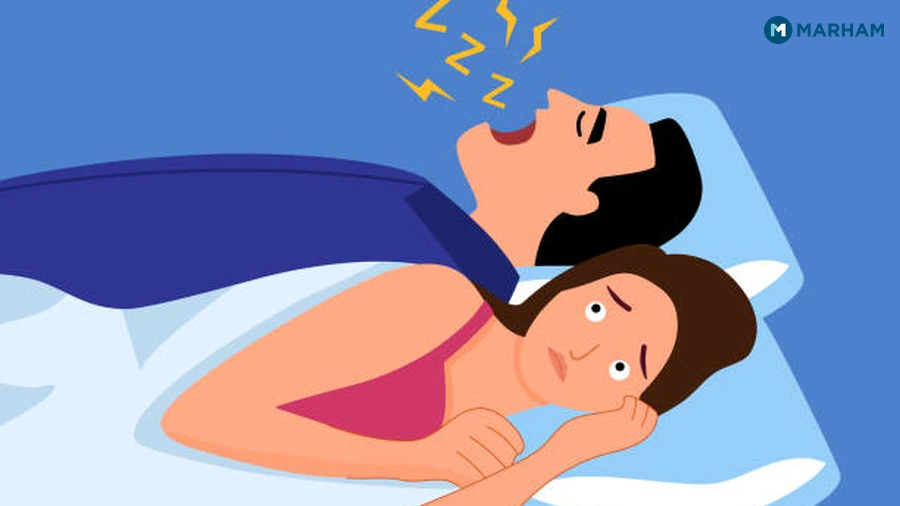
- Witnessed pauses in breathing — a bed partner notices you stop breathing, then gasp or snort awake. This is the most reliable sign.
- Choking or gasping during sleep — waking up suddenly, struggling for air, even if you don’t fully remember it.
- Excessive daytime sleepiness — feeling drowsy after a full night of sleep, nodding off during conversations, meals, or while sitting in traffic.
- Morning headaches — caused by low oxygen levels overnight, particularly common in Pakistani patients with OSA, as noted in a study published in PMC (2020).
- Unrefreshing sleep — waking up feeling as tired as when you went to bed, regardless of how many hours you slept.
- Difficulty concentrating or memory lapses — the brain never reaches deep restorative sleep, so cognitive function suffers.
- Mood changes and irritability — fragmented sleep over weeks and months affects emotional regulation.
A person with obstructive sleep apnea may have all of these symptoms or only a few. The absence of loud snoring does not rule out OSA — some people have it silently.
Who Is at Higher Risk in Pakistan?
Certain factors make sleep apnea significantly more likely. Pakistani men over 40 who carry weight around the neck and abdomen are among the highest-risk group, though women are not exempt, particularly after menopause.
Risk factors to know:
- Obesity or being overweight, especially with a larger neck circumference
- Hypertension, which is both a risk factor and a consequence of OSA
- Type 2 diabetes
- A family history of snoring or sleep apnea
- Nasal congestion or a deviated nasal septum
- Smoking
- Sleeping on your back consistently
One Pakistani-specific pattern worth noting: during Ramadan, many people shift their sleep schedule significantly, sleeping in shorter, fragmented blocks across the night and day. For someone already prone to OSA, this disrupted rhythm can worsen daytime sleepiness and make symptoms more noticeable. If snoring and fatigue feel worse in the weeks after Ramadan, that’s a useful clue worth mentioning to a doctor.
Health Risks of Untreated Sleep Apnea
This is where snoring stops being a nuisance and becomes a clinical concern. Untreated OSA is associated with a range of serious conditions, according to research published in BMC Neurology.
- Hypertension: Every time breathing pauses, the body’s stress response spikes blood pressure. Over months, this contributes to chronic high blood pressure.
- Heart disease: OSA is associated with irregular heart rhythms (arrhythmias), heart attack, and heart failure.
- Stroke: Repeated drops in blood oxygen and disrupted sleep raise stroke risk, particularly in people who already have other cardiovascular risk factors.
- Type 2 diabetes: Poor sleep quality affects how the body processes glucose, making blood sugar harder to control.
- Road accidents: Daytime sleepiness from untreated OSA is a recognised cause of road traffic accidents. A study conducted at Aga Khan University, Karachi noted that daytime sleepiness from sleep apnea correlates with road traffic accidents, which are already a significant burden in Pakistan.
- Depression and anxiety: Chronic sleep deprivation from OSA is associated with mood disorders, per research published in BMC Neurology (2008).
Leaving OSA untreated doesn’t just affect sleep quality. It shortens healthy years. The good news is that effective treatment, once diagnosed, can reverse many of these risks.
How Is Sleep Apnea Diagnosed?
A sleep study (polysomnography) is the standard diagnostic tool. It monitors breathing, oxygen levels, heart rate, and sleep stages overnight. In Pakistan, this can be done in a hospital sleep lab or, increasingly, through a home sleep apnea test using portable monitoring equipment, which tends to be more affordable and accessible outside major cities.
A pulmonologist or ENT specialist (ear, nose, and throat doctor) typically orders and interprets the test. General physicians in Lahore, Karachi, and Islamabad often refer patients with suspected OSA to these specialists for formal evaluation.
Self-reporting tools like the Epworth Sleepiness Scale (a short questionnaire scoring how likely you are to doze off in everyday situations) and the Berlin Questionnaire are sometimes used as a first screen before a full sleep study.
How Is Sleep Apnea Treated?
Treatment depends on the severity of the condition and any underlying causes.
- Lifestyle changes first: Weight loss reduces the tissue pressing on the airway and is one of the most effective interventions for mild to moderate OSA. Even a modest reduction in weight can improve symptoms noticeably.
- Sleep position: Sleeping on your side rather than your back reduces airway collapse for many people. A simple trick used in Pakistan: sew a tennis ball into the back of a sleep shirt so you don’t roll onto your back.
- Avoid alcohol and sedatives before bed: These relax throat muscles further and worsen airway collapse.
- CPAP therapy: Continuous Positive Airway Pressure (CPAP) is the most effective treatment for moderate to severe OSA. The machine delivers a steady stream of air through a mask, keeping the airway open throughout the night. CPAP machines are available in Pakistan, with basic models starting from around PKR 35,000 to 60,000, though pricing varies by city and supplier.
- Oral appliances: Dental devices that reposition the jaw can help in milder cases.
- Surgery: In some cases, especially when structural issues like enlarged tonsils or a deviated septum are contributing, surgical correction may be recommended.
- Treat contributing conditions: Managing hypertension, diabetes, or nasal congestion properly can reduce OSA severity alongside the above steps.
Get Expert Advice from Marham
Many people in Pakistan live with undiagnosed sleep apnea for years, assuming their fatigue is from work stress or that snoring is just a family trait. Getting a proper evaluation is straightforward and can make a real difference to both daily energy and long-term health.
If you or someone in your household snores loudly, wakes up gasping, or feels persistently tired despite sleeping enough hours, it’s worth speaking to a specialist. Consult a neurologist in Pakistan or an ENT specialist through Marham for an online or in-clinic consultation without a long wait. A short consultation can clarify whether a sleep study is needed and what the next steps look like.
Marham also connects you with cardiologists in Pakistan if your snoring has been accompanied by high blood pressure or heart-related symptoms, since OSA and cardiovascular health are closely linked.
Frequently Asked Questions
Does snoring always mean sleep apnea?
No. Most people who snore don’t have sleep apnea. Snoring becomes a concern when it’s loud, nightly, and accompanied by gasping, choking, or daytime fatigue. A sleep study is the only way to confirm whether OSA is present.
Can you have sleep apnea without snoring?
Yes. Some people with OSA don’t snore noticeably, particularly women. Symptoms like excessive daytime sleepiness, morning headaches, and waking up feeling unrefreshed can indicate sleep apnea even without loud snoring.
Is sleep apnea dangerous if left untreated?
Yes, untreated OSA is associated with hypertension, heart disease, stroke, type 2 diabetes, and an increased risk of accidents due to daytime drowsiness. Managing it early reduces these risks significantly.
How is sleep apnea diagnosed in Pakistan?
A sleep study (polysomnography) is the standard test. It can be done in a hospital sleep lab or at home using a portable device. A pulmonologist or ENT specialist typically orders it. Home sleep tests are increasingly available and more affordable than lab-based studies.
What is the best treatment for sleep apnea?
For moderate to severe OSA, CPAP therapy is the most effective treatment. Lifestyle changes like weight loss and side sleeping also help. The right approach depends on severity and underlying causes, so a specialist’s evaluation is needed before starting treatment.
When should I see a doctor about snoring?
See a doctor if your snoring is loud and frequent, if a bed partner has noticed you stop breathing or gasp during sleep, or if you feel excessively tired during the day despite a full night’s sleep. These signs warrant a proper evaluation rather than waiting.
Can sleep apnea cause high blood pressure in Pakistan?
Yes. Each time breathing pauses, the body releases stress hormones that spike blood pressure. Over time, this contributes to chronic hypertension. Between 30% and 40% of adults with high blood pressure also have sleep apnea, according to the AASM. Treating OSA can help bring blood pressure down.
Conclusion
Snoring is common in Pakistan, but it’s not always harmless. The line between ordinary snoring and obstructive sleep apnea comes down to whether breathing actually stops during the night and how your days feel as a result. If you recognise the warning signs — gasping, unrefreshing sleep, morning headaches, or persistent daytime fatigue — getting evaluated is the right call. Effective treatment exists, and addressing OSA early protects the heart, brain, and overall quality of life.
