


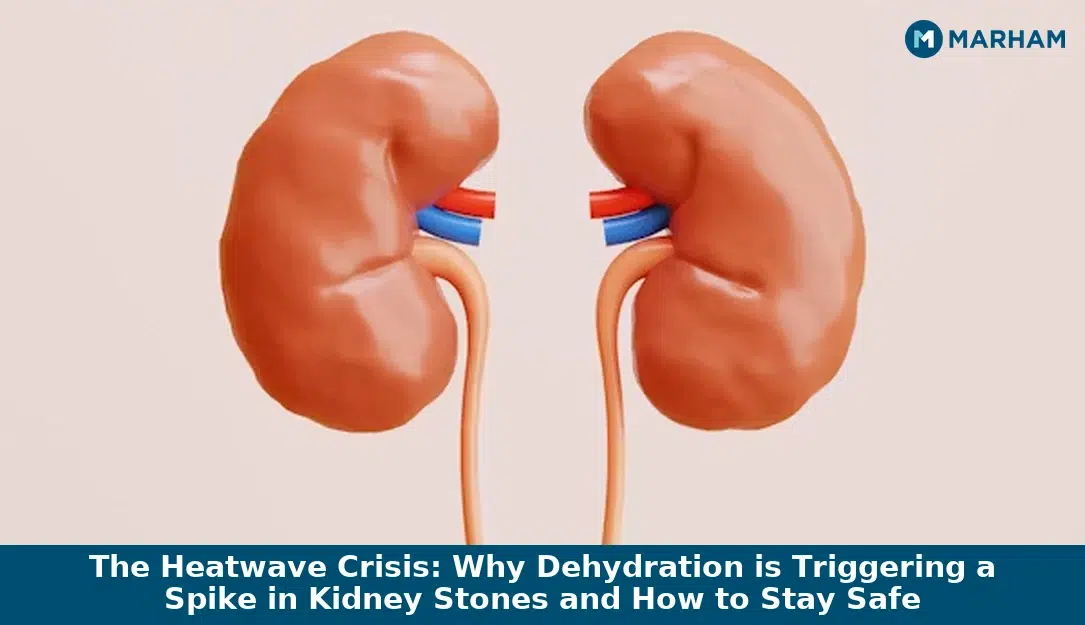
Every Pakistani summer brings the same warnings about heatstroke and fainting. There is a quieter crisis that gets far less attention. As temperatures climb past 45 degrees in many cities, urologists across the country see a sharp rise in one painful condition: kidney stones, known in Urdu as گردے کی پتھری (gurday ki pathri).
Quick Answer
During a heatwave your body loses water through sweat, your urine becomes concentrated, and the minerals in it crystallise more easily into stones. This is why kidney stones in summer rise sharply across Pakistan. Drinking enough water is the single most effective way to stay safe.
If you are already feeling sharp pain in your back or side during this heat, do not wait it out. You can consult a urologist on Marham quickly from home.
Why Do Kidney Stones Spike in Summer?
The link is simple. In hot weather your body sweats heavily to stay cool, and a large amount of fluid leaves the body without you always noticing. If you do not replace that water, there is less left to make urine.
Less urine means everything dissolved in it becomes more concentrated. The salts and minerals that normally flush out safely now sit in a thick, crowded fluid where they can stick together and grow. This is why doctors see the same pattern every year, with stone cases climbing as the temperature rises.
How Dehydration Forms a Kidney Stone
Your urine carries minerals such as calcium, oxalate, and uric acid. When you are well hydrated, these stay dissolved and pass out without trouble. When you are dehydrated, the urine volume drops and these minerals reach high concentrations.
At that point they begin to crystallise. The most common stones in this part of the world are calcium oxalate stones. Uric acid stones are also common in hot climates, because dehydration makes the urine more acidic, which helps uric acid harden into stones.
The less water you drink, the more concentrated your urine becomes, and concentrated urine is the perfect setting for kidney stones to form.
Who Is Most at Risk During a Heatwave?
Some people are far more exposed than others during the hot months.
- Outdoor workers like labourers, farmers, traffic police, and delivery riders
- People who exercise or play sports in the heat
- Anyone who has had a kidney stone before
- People who simply do not drink enough water through the day
- Those who avoid water on purpose to cut down on bathroom trips during work or travel
- People fasting through long, hot summer days
Sharp Pain in Your Back or Side?

Book a PMC verified Urologist near you or consult online from home. No extra charges for booking.
Or call the Marham helpline: 0311 1222398
Warning Signs of a Kidney Stone
A small stone may pass quietly, but a larger one can be intensely painful. Watch for these signs.
- Sharp pain in the back, side, or lower abdomen that comes in waves
- Pain that spreads down toward the groin
- Blood in the urine, which may look pink, red, or brown
- Nausea and vomiting
- A burning feeling when passing urine, or a frequent urge to go
- Fever and chills, which can mean an infection
Hydration Check: What Your Urine Colour Tells You
Your urine is the easiest daily guide to whether you are drinking enough.
| Urine Colour | What It Means |
|---|---|
| Pale yellow or clear | Well hydrated, keep it up |
| Dark yellow | Mild dehydration, drink water now |
| Amber or brown | Strong dehydration, drink and rest in the shade |
Drinks and Foods: Helpful vs Harmful
| Helpful | Best Limited |
|---|---|
| Plain water through the day | Sugary sodas and energy drinks |
| Lemon water, which adds helpful citrate | Too much salt and salty snacks |
| Fresh fruits and vegetables | Large amounts of red meat |
How to Stay Safe and Prevent Kidney Stones This Summer
The good news is that heat related stones are largely preventable with steady habits.
- Drink water through the whole day, not just when you feel thirsty. By the time you feel thirst, you are already dehydrated.
- Aim to keep your urine pale yellow. That is a better guide than counting glasses.
- In heavy heat or hard work, drink more, and add a glass or two for every hour of heavy sweating.
- Add a squeeze of lemon to your water for its protective citrate.
- Cut back on salt, sugary drinks, and very large meat portions.
- Eat water rich fruits and vegetables.
- If you work outdoors, drink at fixed intervals rather than waiting for a break.
If you have ever had a stone before, ask a doctor about a check, since stones often come back.
Are You Drinking Enough This Summer?
This is not a diagnosis. It is a quick way to see if you are at risk right now. Answer yes or no in your head.
- Is your urine dark yellow for most of the day?
- Do you work or spend long hours outdoors in the heat?
- Do you drink fewer than six to eight glasses of water a day?
- Have you had a kidney stone before?
- Do you hold back on water to avoid bathroom trips?
If you said yes to even two of these, increase your water today and consider a urologist check.
When to See a Doctor
Get medical help without delay if you notice any of the following.
- Severe or sudden pain in your back, side, or lower abdomen
- Blood in your urine
- Pain along with fever and chills
- Vomiting that will not stop
- Trouble passing urine, or passing very little
A urologist can confirm a stone with a simple scan and guide treatment. You can consult a urologist on Marham from home if the heat makes travel hard.
Do Not Ignore Kidney Stone Pain
16,000+ PMC verified doctors across 100+ specialties. Book a urologist in person or online in minutes.
Helpline: 0311 1222398 (9:00 AM to 11:00 PM)
گرمی کی لہر اور گردے کی پتھری: پانی کی کمی کا خطرہ
پاکستان میں گرمیوں کے دوران گردے کی پتھری کے مریضوں میں واضح اضافہ دیکھنے میں آتا ہے۔ اِس کی بڑی وجہ پانی کی کمی ہے۔ شدید گرمی میں جسم پسینے کے ذریعے بہت سا پانی خارج کر دیتا ہے، اور اگر اُتنا پانی واپس نہ پیا جائے تو پیشاب گاڑھا ہو جاتا ہے۔
گاڑھے پیشاب میں موجود نمکیات اور معدنیات آپس میں جم کر پتھری بنا لیتے ہیں۔ یہی وجہ ہے کہ پانی کی کمی پتھری بننے کا سب سے بڑا سبب ہے۔ دھوپ میں کام کرنے والے مزدور، کسان اور وہ لوگ جو کم پانی پیتے ہیں، سب سے زیادہ خطرے میں ہوتے ہیں۔
بچاؤ کا سب سے آسان طریقہ یہ ہے کہ دن بھر تھوڑا تھوڑا پانی پیتے رہیں اور پیاس کا انتظار نہ کریں۔ کوشش کریں کہ پیشاب کا رنگ ہلکا زرد رہے۔ نمک اور میٹھے مشروبات کم کریں اور تازہ پھل اور سبزیاں کھائیں۔
اگر کمر یا پہلو میں شدید درد ہو، پیشاب میں خون آئے یا بخار کے ساتھ درد ہو تو فوراً ڈاکٹر سے رجوع کریں۔ مرہم پر آپ گھر بیٹھے ماہر امراضِ گردہ و مثانہ یعنی یورولوجسٹ سے مشورہ لے سکتے ہیں۔
Frequently Asked Questions
Can dehydration cause kidney stones?
Yes. Dehydration lowers your urine volume and concentrates the minerals in it, which makes them crystallise into stones. This is why stone cases rise in the summer heat.
How much water should I drink in summer to prevent kidney stones?
Most people need more than the usual six to eight glasses in hot weather. A simple rule is to drink enough to keep your urine pale yellow, and to add more when you sweat heavily.
What are the first signs of a kidney stone?
The earliest signs are often sharp pain in the back or side that comes in waves, pain spreading toward the groin, and sometimes blood in the urine or nausea.
Does lemon water help prevent kidney stones?
It can help. Lemon contains citrate, which makes it harder for some stones to form. It works best alongside plenty of plain water and a lower salt diet.
Which doctor should I see for kidney stones?
A urologist treats kidney stones and can confirm them with a scan. A general physician can also do the first assessment and refer you if needed.
Final Thoughts
Kidney stones in summer are not bad luck. They are the direct result of a body running low on water in extreme heat. The same heatwave that drains you of fluids is quietly setting the stage for one of the most painful conditions a person can face.
The fix is in your hands. Drink steadily, watch your urine colour, and act early on any warning sign. A bottle of water today is far cheaper than a hospital visit tomorrow.


