

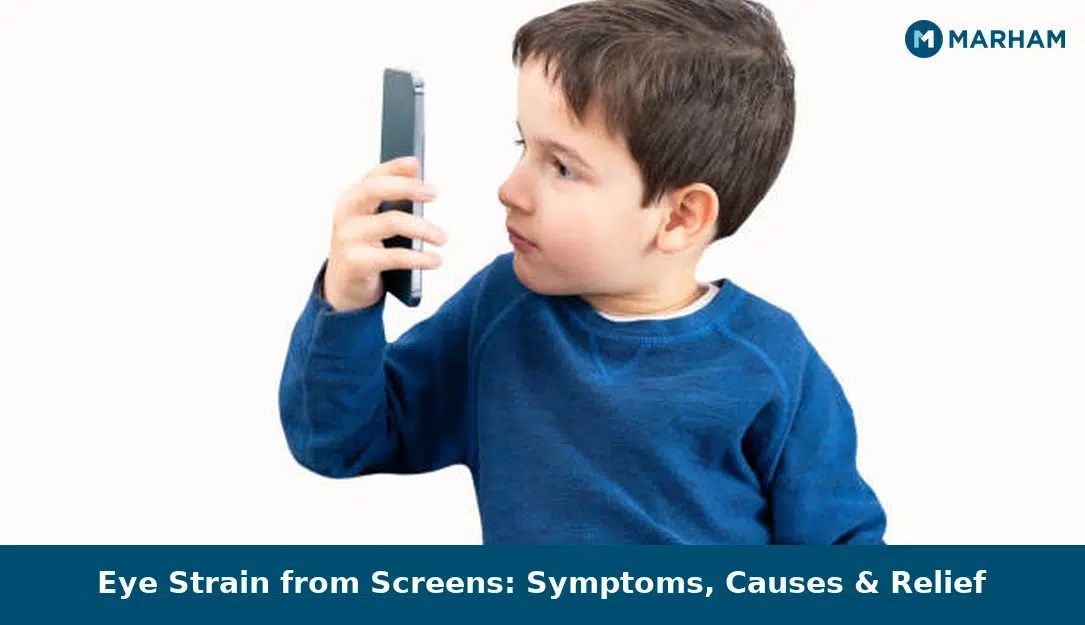
Screen time in Pakistan has climbed sharply over the past few years. Students attend online classes, office workers spend six to eight hours on laptops, and most people scroll through their phones well into the night. By the end of the day, a familiar discomfort sets in: tired, burning eyes that struggle to focus.
A study published in the Khyber Medical University Journal (2023) found that 74.1% of medical students at Khyber Medical College Peshawar reported at least one symptom of digital eye strain, with headache and eye pain being the most common complaints. That figure is striking, but it matches what eye specialists across Lahore and Karachi see in their clinics every week.
The good news is that eye strain from screens is almost always reversible. The right habits, applied consistently, make a real difference.
What Is Eye Strain from Screens?
Eye strain from screens, also called digital eye strain or computer vision syndrome, is a group of eye and vision symptoms that develop after prolonged use of digital devices such as laptops, smartphones, and tablets. The discomfort arises because screens demand constant, unblinking focus at a fixed near distance, which fatigues the eye’s focusing muscles over time. Symptoms typically ease once screen use stops, though they can linger if the underlying habits are not changed.
Symptoms of Digital Eye Strain to Watch For
Digital eye strain produces both eye-specific and body-wide symptoms. Recognising them early helps you act before the discomfort becomes a daily pattern.
Eye symptoms:
- Dry, burning, or itching eyes
- Blurred or double vision
- Redness and watering
- Difficulty shifting focus between near and far objects
- Sensitivity to light
Body symptoms:
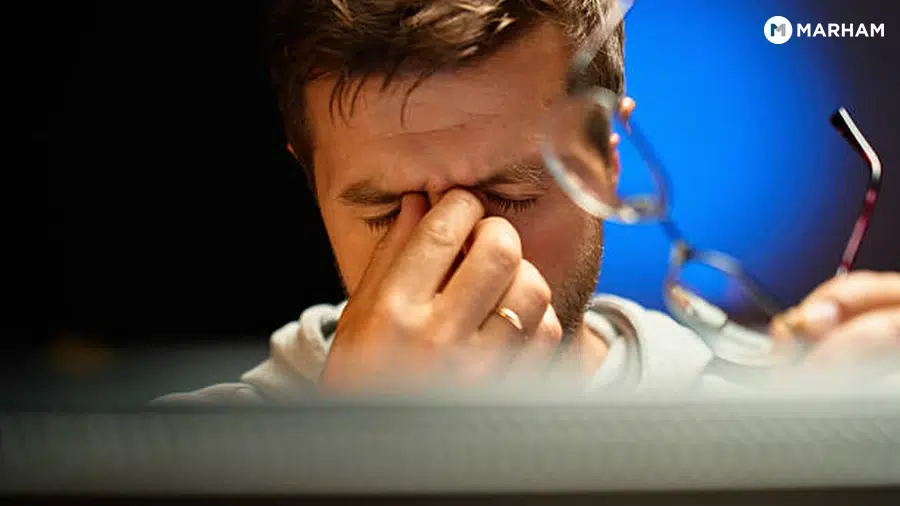
- Headache, often felt around the temples or forehead
- Neck, shoulder, or upper back pain from poor posture
- Difficulty concentrating
One mechanism worth understanding: screen work reduces your blink rate from a normal 15 to 20 blinks per minute down to roughly 4 to 7 blinks per minute, according to research cited by Cleveland Clinic (2026). Blinking is what spreads the tear film across the eye’s surface. Blink less, and the cornea dries out faster, which is why that gritty, sandy feeling is so common after a long session on a laptop.
In Pakistan, air-conditioned offices and study rooms add another layer. AC lowers indoor humidity, which accelerates tear evaporation even further. The combination of reduced blinking and dry air is why eye strain tends to feel worse in Karachi’s summer months when AC runs all day.
Why Screens Strain Your Eyes More Than Books
Printed text is static, high-contrast, and reflects ambient light. A screen emits its own light, has lower contrast than print, and the image is made up of tiny pixels that your eyes must constantly re-resolve. understanding the cornea of the eye helps explain why the eye’s surface is so sensitive to these demands.
Additional factors that make screens harder on Pakistani eyes specifically:
- Load-shedding brightness swings. When power cuts force a switch to UPS or generator supply, screen brightness often spikes or dims unpredictably. Eyes constantly adjusting to changing brightness tire faster.
- Small phone screens in dim rooms. Many students in Lahore and Islamabad study on smartphones at night with the room light off, creating a high-contrast glare situation that strains the eyes significantly.
- Uncorrected refractive errors. The same Peshawar study found refractive errors (myopia, hyperopia, or astigmatism) in 40% of students. An uncorrected prescription forces the eyes to work harder on every screen task.
Eye Strain from Screens in Urdu
اسکرین سے آنکھوں کی تھکاوٹ، جسے ڈیجیٹل آئی اسٹرین یا کمپیوٹر وژن سنڈروم بھی کہتے ہیں، پاکستان میں طلبہ اور دفتری ملازمین میں بہت عام ہو گئی ہے۔ پشاور کے خیبر میڈیکل کالج میں کی گئی ایک تحقیق کے مطابق 74 فیصد سے زائد طلبہ نے آنکھوں کی تھکاوٹ کی کم از کم ایک علامت رپورٹ کی۔ آنکھوں میں جلن، دھندلا پن، سر درد اور گردن کا درد اس کی عام علامات ہیں۔ ہر 20 منٹ بعد 20 سیکنڈ کے لیے 20 فٹ دور کسی چیز کو دیکھنا، یعنی 20-20-20 کا اصول، سب سے مؤثر احتیاطی تدبیر ہے۔ اگر آرام کے باوجود علامات برقرار رہیں تو کسی آنکھ کے ماہر سے مشورہ ضرور کریں۔
How to Relieve Eye Strain from Screens: 7 Practical Steps
These steps are grounded in guidance from the American Academy of Ophthalmology and are adapted for the Pakistani work and study environment.

- Follow the 20-20-20 rule. Every 20 minutes, look at something at least 20 feet away for 20 seconds. Set a phone timer or use a free app reminder. This gives the eye’s focusing muscles a genuine rest.
- Blink deliberately and completely. Remind yourself to blink fully, especially during long reading or coding sessions. A sticky note on your monitor that says “blink” sounds trivial but works.
- Position your screen correctly. Keep the screen roughly an arm’s length away (about 50 to 70 cm) and slightly below eye level. Looking slightly downward reduces how much of the eye’s surface is exposed to air, which slows tear evaporation.
- Match screen brightness to the room. Your screen should not be noticeably brighter or dimmer than the surrounding environment. In Pakistani offices with fluorescent tube lighting, reduce screen brightness to around 50 to 60% and enable night mode after sunset.
- Use lubricating eye drops if needed. Over-the-counter artificial tears (available at any pharmacy in Pakistan for roughly Rs. 150 to Rs. 400 per bottle) can relieve dryness during long sessions. Choose preservative-free drops if you use them more than four times a day, as preservatives can irritate with frequent use.
- Take a proper break every two hours. Step away from the screen entirely for five to ten minutes. A chai break, which most Pakistani office workers already take, is actually a natural eye-rest opportunity. Use it: look out a window, let your eyes relax at distance.
- Get your eyes tested if symptoms persist. An uncorrected refractive error is one of the most common reasons eye strain does not improve despite good habits. An eye test at a local optician in Lahore, Karachi, or Islamabad typically costs Rs. 500 to Rs. 1,500 and can identify whether glasses or an updated prescription would help.
What About Blue Light Glasses?
Blue light blocking glasses are widely sold in Pakistan and heavily marketed as a solution for screen-related eye fatigue. The evidence, however, is more nuanced. According to the American Academy of Ophthalmology (2024), blue light from digital screens does not cause eye strain or eye disease. The discomfort comes from how we use screens, not from the blue light itself.
A large systematic review found no significant difference in eye strain symptoms between blue-blocking lenses and standard clear lenses during screen tasks. That does not mean the glasses are useless: some people find them comfortable, and they may help with sleep if worn in the evening by reducing light stimulation before bed. But they are not a substitute for the 20-20-20 rule, correct screen distance, or an up-to-date glasses prescription.
If you already wear glasses, ask your optician about an anti-reflective coating. That reduces glare from screen surfaces and overhead lights, which is a more evidence-backed benefit than blue light filtering alone.
When Should You See an Eye Specialist?
Most eye strain from screens resolves within a day of rest and improved habits. See an ophthalmologist or eye specialist in Pakistan if you notice any of the following:
- Symptoms that do not improve after a few days of reduced screen time
- Persistent headaches that start behind the eyes
- Blurred vision that does not clear after blinking or resting
- left eye twitching or involuntary eye movements that are new
- Any sudden change in vision
These could point to an underlying refractive error, dry eye disease, or another condition that needs proper evaluation rather than just a screen break.
Key Takeaways
- Eye strain from screens (digital eye strain or computer vision syndrome) is caused by prolonged near-focus on digital devices, not by blue light alone, according to the American Academy of Ophthalmology (2024).
- A study at Khyber Medical College Peshawar (Khyber Medical University Journal, 2023) found 74.1% of students reported at least one digital eye strain symptom, with headache and eye pain most common.
- Screen use drops the blink rate from 15 to 20 blinks per minute to roughly 4 to 7, drying out the eye’s surface and causing the gritty, burning sensation.
- The 20-20-20 rule (every 20 minutes, look 20 feet away for 20 seconds) is the single most evidence-backed habit for reducing eye strain.
- Pakistani-specific factors such as AC-dry-air, load-shedding brightness swings, and uncorrected refractive errors worsen digital eye strain and deserve attention.
- Symptoms that persist beyond a few days of rest, or any sudden vision change, warrant a visit to an eye specialist.
Speak to an Eye Specialist on Marham
If your eyes are consistently sore, dry, or blurry after screen use and the habits above haven’t helped after a week or two, it’s worth getting a professional opinion. An underlying refractive error or dry eye condition can make digital eye strain significantly worse, and neither shows up on a self-checklist.
Book a consultation with a verified eye specialist on Marham from anywhere in Pakistan, including cities where specialist access is limited. A short online consultation can clarify whether you need an updated prescription, medicated eye drops, or simply a structured screen-time plan you can follow at home.
Frequently Asked Questions
Is eye strain from screens permanent?
Eye strain from screens is not permanent. According to the American Academy of Ophthalmology, digital eye strain does not cause lasting structural damage to the eyes. Symptoms typically resolve with rest and improved screen habits, though persistent symptoms should be evaluated by a doctor.
Does blue light cause eye strain?
Blue light from screens does not directly cause eye strain, according to the American Academy of Ophthalmology (2024). Eye strain is caused by prolonged near-focus, reduced blinking, and poor screen setup. Blue light glasses may help some people sleep better in the evening but are not a primary treatment for eye strain.
What is the 20-20-20 rule for eyes?
The 20-20-20 rule means every 20 minutes, you look at something at least 20 feet away for 20 seconds. This gives the eye’s focusing muscles a brief rest and is the most widely recommended strategy for reducing digital eye strain during long screen sessions.
Can eye strain cause headaches?
Yes, eye strain commonly causes headaches, typically felt around the temples or forehead. A study from Rawalpindi teenagers published in the Pakistan Armed Forces Medical Journal (2019) found headache was the most frequently reported symptom, affecting 47.3% of participants with screen-related eye complaints.
When should I see a doctor for eye strain?
See a doctor if symptoms do not improve after a few days of reduced screen time and better habits, if you have persistent blurred vision, or if you experience any sudden change in vision. These may indicate an uncorrected refractive error or dry eye disease that needs treatment.
Are artificial tears safe to use daily for screen-related dry eyes?
Preservative-free artificial tears are generally safe for daily use and are recommended by eye specialists for screen-related dryness. Drops containing preservatives are fine for occasional use but can irritate the eye if used more than four times a day. Ask a pharmacist or doctor for guidance on the right type.
Can children get eye strain from screens?
Yes, children can develop digital eye strain, and the risk increases with screen time. Pakistani students attending online classes on smartphones are particularly vulnerable. Regular breaks, correct screen distance, and limiting recreational screen time after study hours all help reduce the risk.
Conclusion
Eye strain from screens is one of the most common complaints among Pakistani students and working adults, and it’s almost entirely preventable with consistent habits. The 20-20-20 rule, correct screen distance, deliberate blinking, and matching screen brightness to the room cover most of the problem. For anyone whose symptoms don’t settle with these adjustments, an eye test to check for an uncorrected refractive error is the logical next step. Screens aren’t going away, but sore, tired eyes at the end of every day don’t have to be the norm.