


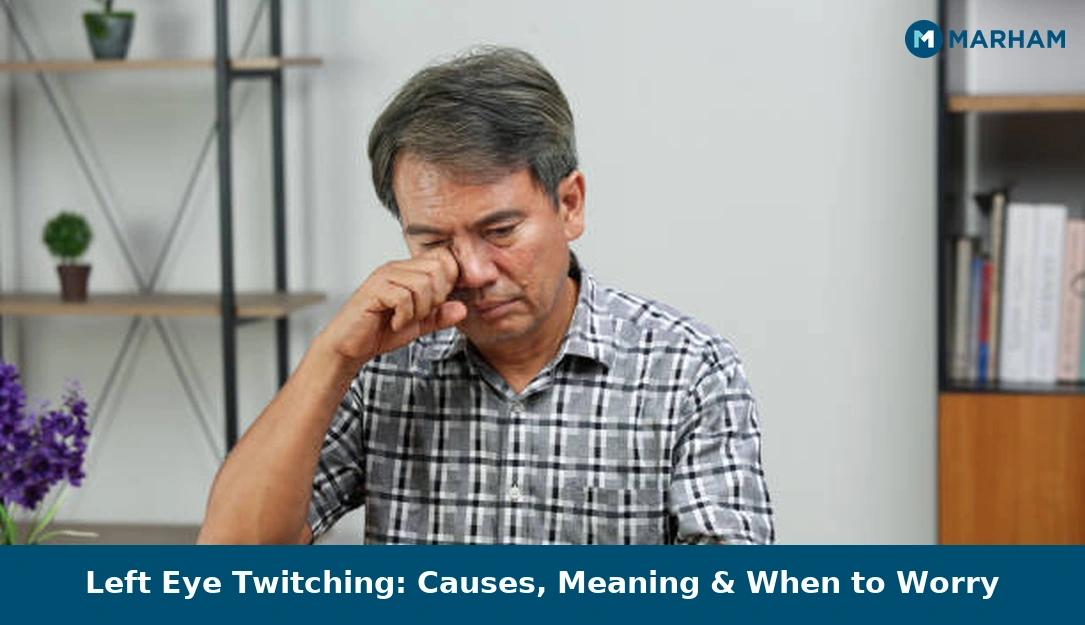
That fluttering sensation in your left eyelid is one of those things that hits at the worst possible moment — during a meeting at work, in the middle of a long university lecture, or after a third cup of chai in one afternoon. It feels more obvious to you than it looks to anyone else, and it usually disappears before you can even describe it to someone.
In Pakistan, the left eye twitching carries a lot of cultural weight. Many people still associate baayi aankh pharakna with bad luck or an impending event, and the question comes up frequently on Islamic forums too. Medically, though, the twitch has nothing to do with luck or omens — it is a muscle spasm, and your body is usually telling you something simple and fixable.
Below you will find the real causes, a plain explanation of the three types of eye twitching, honest red flags to watch for, and practical steps you can take right now to make it stop.
Quick Answer
Left eye twitching (known medically as myokymia, or in Urdu as baayi aankh ka pharakna) is almost always harmless. The most common causes are stress, lack of sleep, too much caffeine, and digital eye strain. Most twitches stop on their own within a few hours or days. If yours lasts more than two weeks, spreads to other parts of your face, or comes with vision changes, see a doctor promptly.
بائیں آنکھ کا پھڑکنا | Baayi Aankh Ka Pharakna
بائیں آنکھ کا پھڑکنا (myokymia) ایک بے ضرر اور عام مسئلہ ہے جو عام طور پر تھکاوٹ، نیند کی کمی، زیادہ چائے یا کافی پینے، اور موبائل یا لیپ ٹاپ اسکرین پر زیادہ وقت گزارنے سے ہوتا ہے۔ اسلام میں آنکھ پھڑکنے کو کسی برے یا اچھے شگون سے جوڑنا بے اصل بات ہے اور علماء اسے درست نہیں مانتے۔ زیادہ تر معاملات میں آرام کرنے، پانی پینے اور اسکرین سے وقفہ لینے سے یہ خود بخود ٹھیک ہو جاتا ہے۔ اگر پھڑکنا دو ہفتوں سے زیادہ جاری رہے، چہرے کے دوسرے حصوں تک پھیل جائے، یا بینائی متاثر ہو، تو فوری طور پر کسی آنکھ کے ماہر (ophthalmologist) سے رجوع کریں۔
What Is Left Eye Twitching? The 3 Types Explained
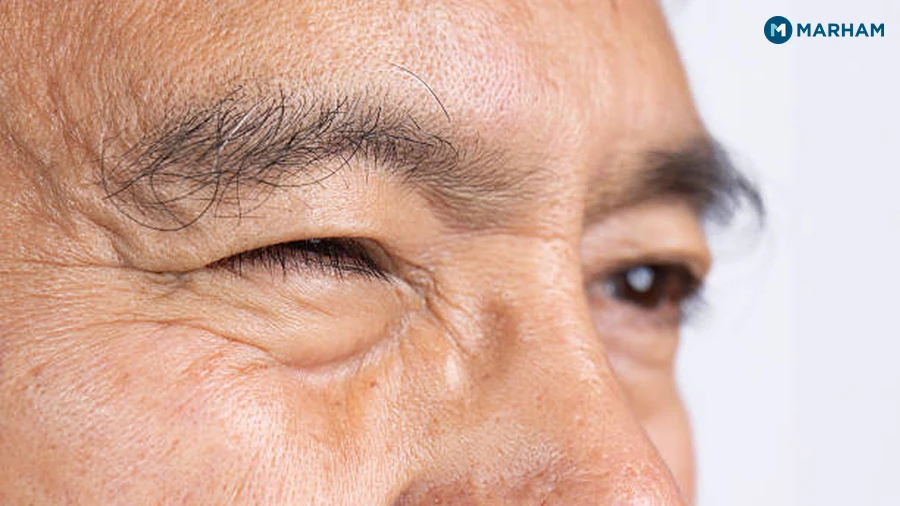
Left eye twitching refers to an involuntary, repetitive spasm of the eyelid muscle. It can affect the upper lid, the lower lid, or both. Clinically, there are three distinct types, and telling them apart matters because they have very different implications.
| Type | What It Feels Like | How Long It Lasts | Serious? |
|---|---|---|---|
| Eyelid Myokymia | Mild, rhythmic flutter of one lid | Minutes to a few days | No — almost always benign |
| Benign Essential Blepharospasm | Forceful, involuntary closure of both eyes | Weeks to months, progressive | Rarely — needs specialist review |
| Hemifacial Spasm | Twitching on one whole side of the face | Persistent, may worsen | Yes — requires neurological evaluation |
The vast majority of Pakistanis who notice their left eye twitching have simple eyelid myokymia. Blepharospasm and hemifacial spasm are uncommon. According to the US National Institute of Neurological Disorders and Stroke, hemifacial spasm is more common in women and in people of Asian descent, which is worth knowing for South Asian patients.
7 Common Left Eye Twitching Causes in Pakistan
Most left eye twitching causes are rooted in daily habits. Here are the ones that come up most often in Pakistani patients, along with what is actually happening physiologically.
- Stress and anxiety. Raised cortisol levels make nerve endings more excitable, which can trigger eyelid muscle spasms. Pakistan’s urban workforce — especially in Karachi and Lahore — faces high occupational stress, and many ophthalmologists here report stress as the single most common trigger they hear about.
- Sleep deprivation. Tired muscles are far more prone to involuntary contractions. Getting fewer than six hours regularly is enough to set off recurring twitches.
- Too much caffeine. Three or four cups of strong doodh pati chai per day is normal in many Pakistani households, but that caffeine load can overstimulate the nervous system and trigger eyelid spasms in sensitive individuals. Cutting back for a week often resolves the problem.
- Digital eye strain. Long hours on a mobile screen or laptop — common among students and office workers in Islamabad and Karachi — cause the eye muscles to fatigue. Reduced blink rate during screen use also dries the eye surface, which worsens spasms.
- Dry eyes. Dry eye syndrome (a condition where the eye doesn’t produce enough tears or the tears evaporate too quickly) irritates the eyelid muscles and can trigger persistent twitching. It’s more common in air-conditioned offices and during Pakistan’s dry winter months.
- Magnesium insufficiency. Low magnesium may contribute to muscle spasms throughout the body, including the eyelid. Some evidence supports this link, though it’s weaker than the lifestyle triggers above. A doctor can check your levels with a simple blood test before you consider any supplement.
- Allergies and eye irritation. Seasonal allergies — particularly during spring in Lahore when pollen counts rise — cause eye rubbing, which releases histamine in the eyelid tissues and can provoke twitching.
One detail most online articles miss: eyelid twitching often disappears temporarily when you concentrate hard on a task, talk to someone, or touch a different part of your face. This is a known clinical feature of myokymia and does not mean the problem is psychological.
Left Eye Twitching Meaning in Islam: What the Evidence Says
Many Pakistanis search for the Islamic or spiritual meaning of left eye twitching, and it deserves a direct answer. Islamic scholars, including those at major fatwa platforms, consistently state that attributing good or bad omens to eye twitching (tafaul or superstition) has no basis in authentic Islamic sources and is discouraged. The twitch is a physiological event, nothing more.
Culturally, the belief that a twitching left eye signals bad news is shared across South Asia, parts of Africa, and the Middle East — but these are folk traditions, not religious rulings. There is no scientific evidence linking the side of the twitch to any future event. If the twitching is bothering you, the right response is to look for a physical cause, not a spiritual one.
How to Stop Left Eye Twitching: 6 Steps That Actually Work
These steps address the most common triggers. They’re practical for a Pakistani routine and don’t require a prescription.
- Cut back on chai and coffee for one week. Switch one cup of doodh pati for green tea (sabz chai) or plain warm water with lemon. This alone resolves caffeine-triggered twitching in many cases.
- Prioritise sleep. Aim for seven to eight hours. If late-night mobile use is cutting into your sleep, set a screen-off time at least 30 minutes before bed.
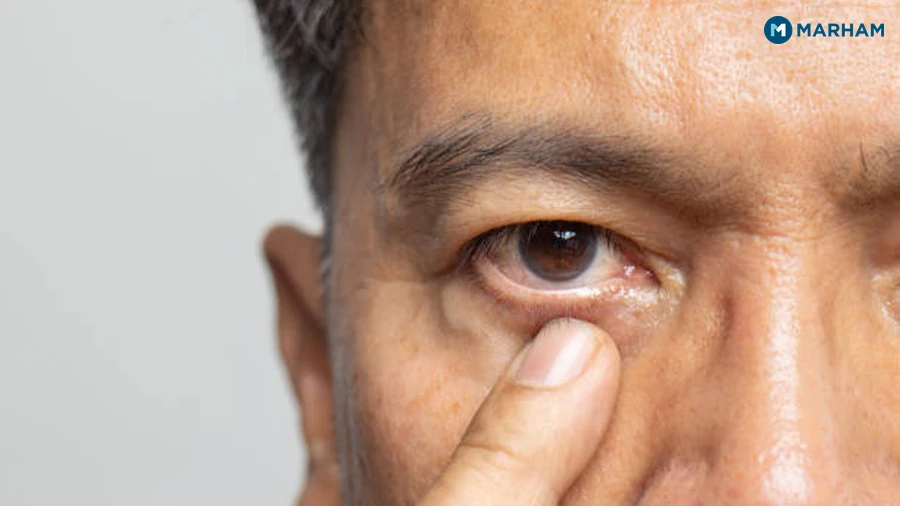
- Apply a warm compress. Soak a clean cloth in warm water and hold it gently over the closed eye for five minutes. This relaxes the orbicularis oculi muscle (the ring-shaped muscle that controls eyelid movement) and provides temporary relief.
- Use lubricating eye drops. Preservative-free artificial tears (available over the counter at most pharmacies in Pakistan for around Rs 200 to Rs 400) relieve dry eye irritation that worsens twitching. Use them two to three times a day if your eyes feel gritty.
- Follow the 20-20-20 rule for screens. Every 20 minutes, look at something 20 feet away for 20 seconds. This reduces eye muscle fatigue significantly during long work or study sessions.
- Reduce stress actively. A 10-minute walk after Asr prayer, light stretching, or even a short nap after Zuhr can lower cortisol enough to reduce nerve excitability. These are small habits, but they add up.
Red Flags: When Left Eye Twitching Is Serious
Eyelid twitching rarely signals anything dangerous, but certain warning signs mean you should not wait it out. See an eye or neurology specialist in Pakistan if you notice any of the following.
- Twitching that lasts more than two weeks without improvement
- The eyelid closes completely with each spasm
- Twitching spreads to your cheek, mouth, or neck on the same side
- Your upper eyelid droops (ptosis)
- You have redness, discharge, or swelling in the eye
- Vision changes accompany the twitching
- You have a known history of neurological conditions
These signs can point to hemifacial spasm, benign essential blepharospasm, or in rare cases, a neurological issue involving the brainstem or facial nerve. A clinical examination by an ophthalmologist, and sometimes an MRI, is needed to rule these out. You can also read more about how the cornea and surrounding eye structures are involved in overall eye health.
If your left eye twitching has lasted more than two weeks, or you’re noticing other facial symptoms alongside it, speaking to a specialist is the right next step. Marham connects you with verified and ophthalmologists across Pakistan for online consultations, so you don’t have to travel or wait for a long appointment slot.
Frequently Asked Questions
Is left eye twitching a sign of something serious?
In most cases, no. Left eye twitching is usually a benign, self-limiting spasm caused by stress, fatigue, or too much caffeine. It becomes a concern only when it lasts beyond two weeks, spreads to the rest of the face, or comes with vision changes or eyelid drooping — in those cases, see a doctor.
What deficiency causes eye twitching?
Low magnesium is the most discussed nutritional link to muscle spasms including eyelid twitching, though the evidence is modest. Claims about vitamin B12 or vitamin D deficiency causing eye twitching are not well-supported by current research. A doctor can check your levels with a simple blood test.
How do I stop my left eye from twitching?
Start by reducing caffeine, getting more sleep, and applying a warm compress to the closed eye for five minutes. Using lubricating eye drops and taking regular screen breaks also helps. Most twitches resolve within a few days once the trigger is addressed.
Does stress cause left eye twitching?
Yes, stress is one of the most common triggers. Elevated cortisol makes nerves more excitable, which can cause the small eyelid muscles to spasm. The effect isn’t immediate — it typically follows a sustained period of stress rather than a single bad moment.
What does left eye twitching mean in Islam?
Islamic scholars consistently state there is no authentic religious basis for treating eye twitching as a good or bad omen. It is a physiological event, not a sign or signal. If the twitching is persistent, the appropriate response is to consult a doctor, not to seek a spiritual interpretation.
Can eye twitching be a sign of a brain problem?
Rarely. Simple eyelid myokymia has no neurological cause. However, hemifacial spasm — where one whole side of the face twitches — can sometimes be linked to a blood vessel pressing on the facial nerve, and in very rare cases to a brainstem lesion. This is why twitching that spreads beyond the eyelid warrants a specialist review.
When should I see a doctor for left eye twitching in Pakistan?
See a doctor if the twitching lasts more than two weeks, if the eyelid closes completely during spasms, if other facial muscles are involved, or if you notice drooping, redness, or vision changes. You can consult a neurologist or ophthalmologist through Marham online without needing to travel.
Conclusion
Left eye twitching causes are almost always ordinary — too much screen time, not enough sleep, one too many cups of chai, or a stretch of high stress. The cultural and Islamic meanings many Pakistanis associate with baayi aankh pharakna have no medical or religious basis, and reassuring yourself on that front is genuinely useful. Simple lifestyle adjustments resolve most cases within days. What matters is knowing the warning signs that separate a harmless spasm from something that deserves professional attention — and acting on those signs promptly when they appear. You can also explore how traditional remedies like arq-e-gulab are used for general eye comfort in Pakistani households, though they are not a substitute for medical evaluation when red flags are present.
This article is for general information only and does not constitute medical advice. Always consult a qualified healthcare professional for diagnosis and treatment.


