

Struggling to see clearly after stepping out of a brightly lit room, or finding it hard to drive on Lahore’s dimly lit streets at night — these are experiences many Pakistanis quietly dismiss as tiredness. They may actually be early signs of night blindness, a condition that deserves attention rather than guesswork.
Night blindness is more common in Pakistan than most people realise. Vitamin A deficiency, which is one of the leading nutritional gaps in South Asia, is a well-documented cause. Research published in PubMed Central found low serum retinol (vitamin A) levels among pregnant women in Karachi, and clinical cases of vitamin A deficiency have been reported across KPK and other provinces. The condition even has local names: in parts of Pakistan it is called shafkoor or shab kori, meaning the inability to see at night.
The good news is that many cases of night blindness are treatable once the underlying cause is identified. Understanding what is actually happening in your eyes is the first step.

رات کا اندھا پن (Night Blindness in Urdu)
رات کا اندھا پن، جسے طبی زبان میں نکٹالوپیا کہا جاتا ہے، ایک ایسی حالت ہے جس میں آنکھیں کم روشنی میں صحیح طرح دیکھنے سے قاصر ہو جاتی ہیں۔ پاکستان میں یہ مسئلہ اکثر وٹامن اے کی کمی، موتیا بند یا آنکھ کی بیماریوں کی وجہ سے ہوتا ہے۔ حاملہ خواتین اور چھوٹے بچے خاص طور پر اس کمی کا شکار ہو سکتے ہیں۔ صحیح تشخیص اور بروقت علاج سے اکثر مریضوں کی بینائی میں نمایاں بہتری آ سکتی ہے۔

What Is Night Blindness (Nyctalopia)?
Night blindness, medically called nyctalopia, is not a disease on its own. It is a symptom that your eyes are struggling to adapt to low-light conditions. The retina at the back of your eye contains two types of photoreceptor cells: cones, which handle colour and bright-light vision, and rods, which are responsible for dim-light and peripheral vision. When rod cells are damaged or deprived of the nutrients they need, night vision suffers.
The term can be misleading. People with night blindness are not completely blind after dark. They typically see reasonably well in daylight but find it genuinely difficult to navigate in dim rooms, on unlit roads, or when transitioning from a bright environment to a darker one.
Key Takeaways
- Night blindness is a symptom of an underlying eye or nutritional problem, not a standalone disease.
- Vitamin A deficiency is the most common preventable cause and is a documented concern in Pakistan.
- Cataracts, nearsightedness (myopia), and glaucoma are other frequent causes.
- Some types are fully treatable; others, caused by genetic conditions, require long-term management.
- Pakistani diets heavy in roti, rice, and dal but low in coloured vegetables may contribute to vitamin A gaps.
- An ophthalmologist (eye specialist) should be consulted for any persistent difficulty seeing at night.
Symptoms of Night Blindness to Watch For
Night blindness does not always announce itself dramatically. The early signs can be subtle and are easy to attribute to other things.
Common symptoms include:
- Difficulty seeing clearly in dim or low-light environments
- Slow adjustment when moving from a bright room to a darker one
- Trouble driving at night, particularly when facing oncoming headlights
- Reduced ability to see stars or objects in a dark room
- Squinting or straining the eyes in low light
- Blurry or hazy vision that worsens after sunset
These problems tend to be worse immediately after being in a brightly lit space, such as walking out of a shop in a busy Karachi market and into a poorly lit street.
Common Causes of Night Blindness in Pakistan
Night blindness has several causes, and the right treatment depends entirely on identifying which one applies.
Vitamin A Deficiency
Vitamin A is essential for producing rhodopsin, the light-sensitive pigment in rod cells. Without enough of it, the rods cannot function properly in low light. According to the American Academy of Ophthalmology, vitamin A deficiency is the leading cause of preventable blindness in children worldwide, affecting an estimated 250,000 to 500,000 children annually. In Pakistan, diets that rely heavily on roti, plain rice, and lentils without sufficient orange or dark-green vegetables can leave people, particularly children and pregnant women, short of this nutrient.
Cataracts
A cataract is the clouding of the eye’s natural lens. It scatters incoming light and makes vision in dim conditions noticeably worse. Cataracts are among the most common eye conditions in Pakistan, partly because of high sun exposure and the growing prevalence of diabetes in Pakistan, which raises cataract risk significantly.
Nearsightedness (Myopia)
Uncorrected or under-corrected nearsightedness makes dim-light vision harder. As the pupil widens at night to let in more light, the refractive error becomes more pronounced, worsening the blur.
Glaucoma and Its Medications
Glaucoma damages the optic nerve and can reduce peripheral and low-light vision. Some medications used to treat glaucoma, particularly eye drops containing pilocarpine, can also cause night vision problems as a side effect.
Retinitis Pigmentosa
This is a group of inherited genetic disorders that cause rod cells in the retina to break down progressively over time. Night blindness is typically the first symptom, followed by narrowing peripheral vision. There is currently no cure for retinitis pigmentosa, though management strategies can help patients adapt.
Other Contributing Factors
Certain medications, including some antihistamines and anti-depressants, may affect night vision. Liver disease can also impair vitamin A absorption since the liver stores this nutrient.
Treatable vs. Non-Treatable Night Blindness: A Quick Comparison
| Cause | Treatable? | Typical Approach |
|---|---|---|
| Vitamin A deficiency | Yes | Dietary changes, supplements |
| Cataracts | Yes | Surgical removal of the cloudy lens |
| Nearsightedness (myopia) | Yes | Corrective glasses or contact lenses |
| Glaucoma | Partially | Medication, surgery to manage pressure |
| Retinitis pigmentosa | No cure | Low-vision aids, adaptive strategies |
| Congenital stationary night blindness | No cure | Brighter lighting, assistive devices |
Foods That Help with Night Blindness
When vitamin A deficiency is the cause, adjusting the diet is a practical first step alongside medical advice. The following foods are good sources of vitamin A or its precursor, beta-carotene, and are readily available in Pakistani markets.
- Gajar (carrots): One of the richest plant sources of beta-carotene. A medium-sized carrot provides roughly 200% of the daily recommended intake of vitamin A. Gajar ka halwa and fresh carrot juice are popular in Pakistan, especially in winter, making this an easy seasonal addition.
- Spinach and palak: Dark-green leafy vegetables are high in beta-carotene. Palak gosht and palak paneer are already part of many Pakistani households’ weekly meals.
- Eggs: Egg yolk contains preformed vitamin A (retinol), which the body absorbs more readily than plant-based beta-carotene. Anda paratha is a common breakfast across Pakistan.
- Liver (kaleji): Beef or chicken kaleji is one of the most concentrated food sources of vitamin A available. A small 50g serving covers the daily requirement several times over.
- Pumpkin and sweet potato: Orange-coloured vegetables are rich in beta-carotene. Kaddu ki sabzi is a budget-friendly option available year-round at local sabzi mandis.
- Mango and papaya: Both fruits are good sources of beta-carotene and are widely available in Pakistan’s summer months. A glass of aam ka juice or a bowl of papaya makes a simple daily addition.
- Fortified cooking oil: Several cooking oils sold in Pakistan are fortified with vitamins A and D. Checking the label when buying tel from your local kiryana store takes seconds and matters.
Note: vitamin A is fat-soluble, meaning it absorbs better when eaten with a small amount of fat. Adding a drizzle of desi ghee or cooking oil alongside beta-carotene-rich vegetables helps the body use them more effectively.
When to See an Eye Specialist
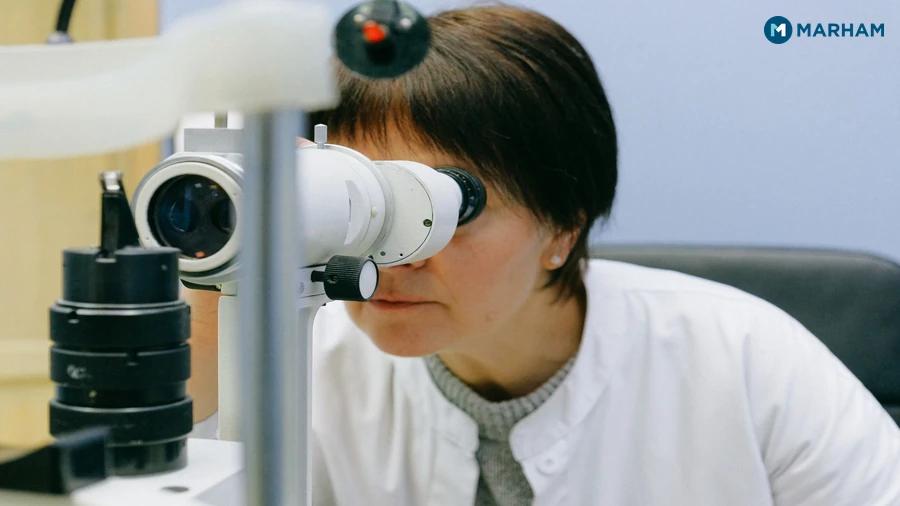
Night blindness that has lasted more than a few weeks, or that is getting noticeably worse, should not be managed with diet alone. Several serious underlying conditions, including glaucoma and retinitis pigmentosa, require professional diagnosis and cannot be identified without an eye examination. Ophthalmologists in Pakistan typically begin with a visual acuity test, a contrast sensitivity test, and a dilated retinal exam. A blood test to check serum retinol (vitamin A) levels may also be ordered if a nutritional cause is suspected. A comprehensive eye check at a private clinic in Lahore or Karachi generally costs between Rs. 1,500 and Rs. 3,500, depending on the tests involved.
If you or a family member is experiencing persistent difficulty seeing at night, consulting a qualified eye specialist (ophthalmologist) in Pakistan through an online or in-person appointment is a sensible first step before the problem progresses.
Night Blindness in Pregnant Women and Children
Pregnant women and young children in Pakistan carry a higher risk of vitamin A deficiency, and therefore night blindness. Research published in PubMed Central (PMC) noted that low serum retinol was detected among pregnant women in peri-urban areas of Karachi, and clinical vitamin A deficiency cases were reported in children under six across multiple provinces. Locally, the visual symptoms of vitamin A deficiency have historically been called shafkoor (inability to see at night) in some communities.
For pregnant women, adequate vitamin A intake through food is important, but supplementation should only be done under medical supervision. High-dose vitamin A supplements can be harmful during pregnancy. A nutritionist in Pakistan can help plan a safe diet that meets the increased nutritional needs of pregnancy without risk.
Get Expert Eye and Nutrition Advice on Marham
Finding the right specialist for an eye concern in Pakistan often means navigating long waiting lists at public hospitals or uncertainty about which doctor to trust. Marham connects patients across Pakistan with verified nutritionists in Pakistan for diet-related causes of night blindness, and with qualified eye specialists for clinical evaluation, all through online consultations that can be booked from any city.
A short online consultation typically takes 15 to 20 minutes and can clarify whether your symptoms point to a nutritional gap, a refractive error that needs glasses, or something that warrants an in-person eye examination. Getting clarity early means faster treatment and better outcomes.
Frequently Asked Questions
Is night blindness curable?
It depends on the cause. Night blindness from vitamin A deficiency or cataracts is generally treatable and often reversible with the right intervention. Night blindness caused by genetic conditions like retinitis pigmentosa has no current cure, though it can be managed with low-vision aids and adaptive strategies.
What vitamin deficiency causes night blindness?
Vitamin A deficiency is the primary nutritional cause of night blindness. Vitamin A is needed to produce rhodopsin, the pigment in rod cells that enables vision in low light. Without enough of it, rod cells cannot function properly in dim conditions.
Can diabetes cause night blindness?
Diabetes does not directly cause night blindness, but it significantly raises the risk of cataracts and other eye conditions that can impair night vision. People with poorly controlled blood sugar should have regular eye check-ups, as diabetic eye complications can develop silently.
What are the early signs of night blindness?
The earliest signs are usually difficulty adjusting when moving from a bright space to a dim one, trouble reading menus or screens in low light, and increased difficulty driving after dark. Many people notice the problem first on the road at night.
Can night blindness be treated at home?
If vitamin A deficiency is the confirmed cause, improving diet with foods like gajar, palak, kaleji, and eggs may help over time. However, night blindness should always be evaluated by a doctor first, since other causes like cataracts or glaucoma require medical or surgical treatment that cannot be addressed at home.
How much vitamin A do I need per day?
The WHO recommends approximately 700 mcg of vitamin A per day for adult women and 900 mcg for adult men. Pregnant and breastfeeding women have higher requirements. Supplements should only be taken under medical guidance, as excess vitamin A can be toxic.
Is night blindness more common in women or men?
Night blindness from vitamin A deficiency is particularly common in pregnant and breastfeeding women due to higher nutritional demands. Genetic forms like congenital stationary night blindness tend to affect males more often. Overall, the risk depends more on diet and underlying conditions than on sex alone.
Conclusion
Night blindness is not something to dismiss as normal ageing or tiredness. For many Pakistani patients, especially children, pregnant women, and people with diets low in coloured vegetables, it is a sign of vitamin A deficiency that can be addressed with straightforward dietary changes and medical support. For others, it may point to cataracts, myopia, or a retinal condition that needs professional care. Either way, the path forward starts with an accurate diagnosis, not guesswork.